
Vujinovic: Minimal weight behind initiative on Kosovo’s integration into NATO, non-recognizing states a fundamental obstacle
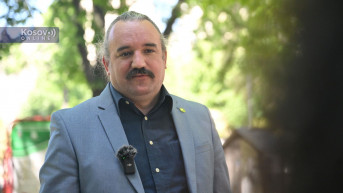
Security studies researcher Nikola Vujinovic said that the draft resolution introduced by two U.S. congressmen expressing support for Kosovo’s integration into NATO carries minimal weight and is practically “a dead letter on paper,” because the U.S. Congress does not decide who becomes a NATO member, while Kosovo’s path toward membership faces the essential obstacle of four states that do not recognize it.
Vujinovic told Kosovo Online that hundreds of similar initiatives are submitted to the U.S. Congress on a weekly basis, which is why this proposal has attracted more attention in the region than in the United States itself.
“Especially given the fact that this initiative was supported by only two congressmen, which is legitimate and formally legally acceptable, but still just two out of several hundred members of Congress... In essence, this initiative is merely a dead letter on paper, and what is more interesting are its motives and possible consequences,” Vujinovic said.
He noted that the resolution was addressed to the U.S. administration and that, even if Congress were to adopt it, it would not oblige the government in Washington to undertake any action on the matter.
Moreover, even if Washington were willing to engage following such a resolution, Vujinovic pointed out that NATO is an alliance whose membership includes four states that do not recognize Kosovo.
“Since a new member is admitted by consensus, I believe that is an obstacle they cannot overcome,” Vujinovic stressed.
He added that, should the resolution eventually be adopted, it would be more interesting to see who within the U.S. Congress supported it.
“How many Republicans, how many Democrats, and how many lawmakers who may be somewhat closer to the Serbian or Albanian side. That is more interesting than the formal procedure itself, because, essentially, the U.S. Congress does not decide who becomes a NATO member,” Vujinovic emphasized.
Speaking about NATO member states that do not recognize Kosovo, Vujinovic said that Spain maintains a firm position on the issue, while there are differing views within Greece.
“We know that Spain and Slovakia are strictly opposed to Kosovo. Romania, due to its increasingly specific relations with the United States regarding military bases and its role in the context of the conflict in Ukraine, has adopted a somewhat softer stance, but it still remains strongly opposed to Kosovo’s independence. Greece is the most problematic case, because we can see that there have been certain calculations and discussions about recognizing Kosovo’s independence. For example, Greece gives full support to Kosovo’s participation in sports federations. On the other hand, it still has not formally recognized Kosovo, because there are evidently certain tensions in relations between Albania, Edi Rama, and the Greek government over their mutual disputes,” Vujinovic said.
He expressed hope that Serbia maintains sufficiently good relations with Greece to prevent Athens from recognizing Kosovo, but admitted that Greece would likely be the first country among the non-recognizers to do so.
Vujinovic also warned that potential NATO membership for Kosovo would be devastating for the security of both the region and Serbia.
“If that were to happen, Serbia would be constrained in its actions toward Kosovo as part of its own territory, and it would mark the definitive end of our relations with the collective West and with the United States, because we cannot accept that part of our territory is occupied. At this moment, while Kosovo is neither fully here nor there, we can somehow ‘digest’ the situation. But if it became a formally completed matter, if Kosovo were sitting at NATO meetings and covered by Article 5 of the Washington Treaty, that would be extremely damaging for the security of the region and Serbia, because the restraint that I attribute to Serbia and the Serbian people in the region at this moment would become meaningless, and we would then enter into calculations that we do not need,” Vujinovic concluded.

0 comments