
Vujinovic: Rutte's visit aimed at confirming NATO’s legitimacy in the Western Balkans
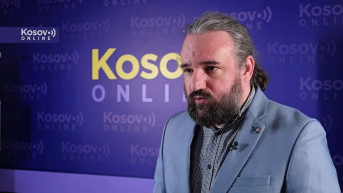
Security studies researcher Nikola Vujinovic assessed that NATO Secretary General Mark Rutte, during his "Balkan tour," conveyed expected messages aimed at confirming the legitimacy of the Alliance in the Western Balkans while also emphasizing the importance of dialogue for Kosovo and the region.
"Rutte’s visit is an attempt to reaffirm NATO’s legitimacy in the Western Balkans. He visited not only the governments in Sarajevo and Pristina but also the EUFOR and KFOR commands. This demonstrates that NATO is the one that has brought peace and stability to the region, guarantees it, and will fight against any attempts to change that," Vujinovic stated for Kosovo Online.
He highlighted that the primary message heard in Pristina was the importance of the dialogue process.
"The main message to Kosovo, but also to the region, is that dialogue is the key priority. Dialogue is the value that must be upheld, with NATO serving as the guarantor of security and political stability in the Balkans. However, what was missing was support for the formation of the Association of Serb Municipalities. I expected this to be mentioned, but it was evidently not on Rutte’s agenda. I also expected him to send some message regarding the formation of the new Kosovo government," Vujinovic said.
He emphasizes that Rutte’s visits to Sarajevo and Pristina were meant to demonstrate NATO’s and the EU’s security relevance.
"In the current international context, NATO as an organization, and especially the EU as a significant part of it, have been pushed to the margins. The US, Russia, and China are discussing major global issues, and the EU, and by extension NATO, need a topic where they can assert dominance. Unfortunately, that topic is the Balkans. I say unfortunately because, in many Balkan-related issues, the EU does not favor the Serbian side," Vujinovic noted.
Analyzing Rutte’s visit to Bosnia and Herzegovina, he expressed surprise at the "conciliatory tone" toward Republika Srpska and its president, Milorad Dodik.
"Despite all the ongoing events shaking Republika Srpska and Bosnia and Herzegovina, I expected him to be much harsher toward Dodik," Vujinovic specified.
He points out that NATO currently sees Bosnia and Herzegovina as a greater security challenge than Kosovo.
"Right now, the security challenges in Bosnia and Herzegovina are more significant, which explains why NATO has reinforced its presence there. Meanwhile, in Kosovo, the issue of forming a new government could generate problems, but not to the same extent. This is primarily because, for the local political elites, NATO's presence and the importance of Western allies are much greater than in Bosnia and Herzegovina," Vujinovic concluded.


0 comments