
Vuksanovic: Expectations from Stoltenberg's successor excessive, situation on the ground much more important for Kosovo
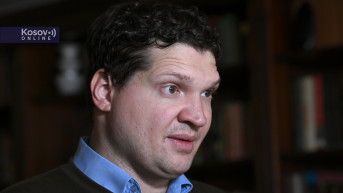
Vuk Vuksanovic, a senior researcher at the Belgrade Centre for Security Policy, emphasizes for Kosovo Online that the new face in the position of NATO Secretary-General – whoever succeeds Stoltenberg – will not bring about a change in the Alliance's approach to Kosovo. He points out that any instability on the ground will have a much greater impact not only on behavior but also on cooperation between Serbia and the Alliance than anything else.
He emphasizes that for the functioning of NATO and its operations, the personnel solution is much less important than what is usually attributed in Serbia and the Balkans, as international officials are expected to suppress their national origins and loyalties when performing these functions.
"However, these minor murmurs regarding who might be Stoltenberg's successor speak more about the relationships within Europe and within the Alliance itself," Vuksanovic explains.
He reminds that at this stage, favorites for this position include outgoing Dutch Prime Minister Mark Rutte, supported by the so-called Quad group: the United States, the United Kingdom, Germany, and France.
"Although it is an unwritten rule that the NATO Secretary-General must be a European, because the US militarily dominates this Alliance, it was still considered that the US, as a key force within NATO, must agree with the choice of a personality. And traditionally, this might have been enough for Mark Rutte to be elected, however, there are murmurs now because Eastern European countries believe that this time they should provide the Secretary-General, and many in the last two years, since the outbreak of the war in Ukraine, argue that the new geopolitical focus of Europe is shifting to Eastern Europe – primarily to those countries that are in contact with Russia," Vuksanovic notes, adding that the three Baltic states, Poland, and Romania stand out in this regard, with Romanian President Klaus Iohannis mentioned as a candidate from Eastern Europe.
He mentions that some in diplomatic circles say that this is somehow Klaus Iohannis's gambit to raise his price – if he cannot get a position in NATO, then he can use that to get a higher position within the EU as compensation.
"So, many diplomatic nuances can decide. However, how much this will affect NATO's cooperation with Serbia, or what is equally important for Serbia regarding NATO, the NATO KFOR mission in Kosovo, it should be noted that this may be useful in terms of personal contact. We have seen that Vucic constantly used the fact that Stoltenberg lived in Belgrade as a child and that his father, as a diplomat, was also in the former Yugoslavia several times, and that might be useful in the field of some diplomatic nuances when establishing contact behind closed doors. But still, it should be said that one should not expect miracles when it comes to what is happening on the ground because there are stronger structures and stronger directives when it comes to the survival of these structures," Vuksanovic says.
According to him, at this moment, the presence of KFOR on the ground is important for both Belgrade and NATO, especially considering that there has been an increase in the number of KFOR members in the last year.
"For Serbia, this is primarily important for stability in northern Kosovo. Although a return to war in the Balkans is not expected, no one can exclude tensions anymore, not even violent incidents, especially since the relationship between Belgrade and Pristina has been on a downward trend, especially since Kurti came to power in Pristina," our interlocutor says.
Expectations that Iohannis's election would bring a more understanding approach towards Serbia regarding Kosovo, Vuksanovic assesses as "hyperbolic."
"It is partially true that the Dutch government has been considered for decades in Belgrade and other capitals of the former Yugoslavia as some kind of bad, strict policeman who might be ready to impose stricter conditions on local governments in the Balkans on issues such as EU membership or other issues. However, even if Iohannis from Romania were elected, it might provide a greater opportunity for charm behind closed doors, but it is still only at the level of diplomatic nuances and interpersonal finesse. Ultimately, the functioning of KFOR on the ground will primarily depend on what is determined by their mandate, which is Resolution 1244, but also on the events on the ground. Any instability will have a much greater impact not only on behavior but also on cooperation between Serbia and the Alliance than anything else," Vuksanovic concludes.


0 comments