
Vuksanovic: Militarization of the Western Balkans is underway; Kurti is using it to "wrestle" with Belgrade
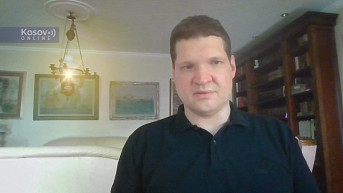
Vuk Vuksanovic, a senior researcher at the Belgrade Centre for Security Policy, says that there is an ongoing "militarization of the public and political space" in the Western Balkans but that larger-scale incidents should not be expected.
"I don't believe we will see a return to war, but I do believe we will see a certain degree of militarization of the public and political space in the region. Most countries, particularly Serbia and Croatia, are essentially replacing their outdated military arsenals from the time of the Yugoslav People's Army. On one hand, this process is natural given the passage of time, but it is also being used as a political lever of influence, both in the international arena and within domestic politics," Vuksanovic said for Kosovo Online.
According to him, Croatia and Serbia are doing this – each for their own reasons.
"In the case of Croatia, it is attempting to demonstrate on the international stage that it is a loyal NATO member, investing the necessary efforts and resources to strengthen its defense. As for Serbia, it is certainly using this as a means of balancing its policy between major powers, trying to maintain maneuvering space for itself, and also attempting to strengthen its negotiating position in disputes such as the status of Kosovo," Vuksanovic emphasized.
He adds that Albania wants to use the war in Ukraine to gain support for strengthening its own military industry, as well as in its cooperation with the United States.
"When it comes to Kosovo, of course, everything still needs to be viewed in the context of Kurti's wrestling with Belgrade and his attempts to be as provocative as possible toward Belgrade," Vuksanovic noted.
When asked whether citizens should be concerned about the process of militarization in the Western Balkans, this expert said that it was a natural progression of "further strengthening the fragile relations between states."
"I think that ordinary citizens should indeed be concerned, as this certainly leads to the further strengthening of the political domain and the fragile relationships between states," Vuksanovic said.
He adds that it is impossible to completely rule out the possibility of conflicts, but that isolated acts of violence, such as those in northern Kosovo, could occur.
"The chances of a full-scale war breaking out are still low. NATO's presence remains strong, local countries have limited resources for a long-term conflict, and local elites would lose a lot if a conflict were to break out. However, bullets don't need to be fired for damage to be done," Vuksanovic concluded.



0 comments