
Vuletic: Voting on the Resolution "wrestling" of the West and the rest of the world, it will cause a "chain reaction" in the region
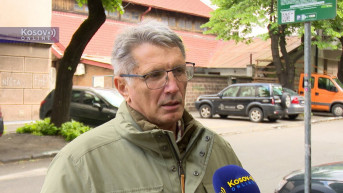
Sociologist Vladimir Vuletic stated that the voting in the UN General Assembly would represent a kind of "wrestling" and show the power dynamics between the West and the so-called sovereigntist bloc of countries, but he said that he was most concerned that the adoption of this document could lead to a "chain reaction" in the region regarding Serbia.
"In a certain way, although it is not being discussed now, it will be a kind of struggle between the West and these sovereigntist-oriented countries like Russia and China. In that sense, although it does not directly concern us, as we are the balancing factor that will show how things stand in the world. I am not looking forward to it, and I would prefer if we were not in this position, but that is the situation now," Vuletic stated for Kosovo Online.
Commenting on the possible outcome of the voting in the UN General Assembly, Vuletic said that the Srebrenica Resolution had regional significance, primarily for Serbs and the position of Republika Srpska, but its importance should be interpreted much more broadly as it would demonstrate the power dynamics on the international stage through the results.
"Consensus cannot be expected, which is inherently a problem for those who initiated it, but they were aware of that. But I think the essence is as follows: if the resolution does not receive support from more than half of the countries voting 'for,' then it will show that the initiators, mainly referring to the West, have a problem that this global order is no longer something they can largely control. However, if they manage to get more than half, around 100 votes, it means they still succeed in various ways, through pressures, economic and political, in controlling a larger part of the world," Vuletic emphasizes.
He assessed that the adoption of the resolution could reopen the question of Serbia's responsibility for events in Bosnia and Herzegovina, as well as accusations of genocide.
"When we talk about the region, what I fear is that the resolution could give wings, ammunition to reopen the question of Serbia's responsibility for genocide. Bosnia and Herzegovina has already done that. It might not be able to do it again, but there could always be a sponsoring or co-sponsoring third country that could bring up such an issue. This will largely depend on the assessment of whether Serbia's hands are sufficiently tied or if it continues to resist. I think that will be a big question. Of course, when it comes to further steps, there is primarily a danger for Republika Srpska," Vuletic said.
He reminded that with the change in the US administration and Joe Biden's presidency, several influential politicians led by Madeleine Albright and Daniel Serwer have outlined clear goals regarding the future of the Western Balkans and Kosovo.
"They have set clear goals for Kosovo to gain full independence from Serbia, and for Republika Srpska and its powers to be reduced to a level that would allow for a unitary organization of Bosnia and Herzegovina," Vuletic said.
He assumes that this topic has been brought up not only due to elections but also due to relations with Russia.
"If we cannot defeat Russia, perhaps we can target someone we label as its ally. Although, in Republika Srpska, this is not questioned," Vuletic concluded.



0 comments