
Vulic: I expect continuity in the Vatican's foreign policy, including non-recognition of Kosovo
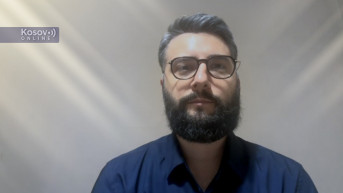
Milos Vulic, a doctoral student at the Faculty of Political Sciences in Belgrade and a specialist at the Pontifical Gregorian University in the Vatican, stated that with the election of the new head of the Roman Catholic Church, Pope Leo XIV, he expects continuity in the Vatican's foreign policy, including its stance of not recognizing Kosovo.
Vulic notes that the Vatican adheres to diplomatic principles that support Serbia’s position, particularly the fact that Kosovo is not recognized by the United Nations.
“That is a very important fact. In that sense, I expect continuity in the Vatican's foreign policy. Not only because the new Pope Leo XIV follows the foreign policy line of his predecessor, Pope Francis, but also because foreign policy will largely be shaped by the Secretary of State, who I believe will remain the same, Cardinal Pietro Parolin, who is very familiar with our stance, not only on our southern province, but also on the threats to our people in Kosovo and Metohija and our religious heritage. In that regard, this election is very good for our country,” Vulic told Kosovo Online.
He adds that, at this moment, it is difficult to predict whether this policy will change, but if the new pope continues the policy of his predecessor, then the Vatican's position is unlikely to shift.
“Pope Francis was truly unique when it came to sensitive issues, both in the Balkans and around the world. We are familiar with his stance on our southern province. My view is that continuity will be maintained and that Pope Leo XIV will not significantly change the Vatican’s position,” Vulic said.
He emphasizes that the outcome of the cardinals’ vote strongly indicated the election of a pope who would continue the Vatican’s existing policy.
“At the last cardinal assembly, which was preparatory for entering the Conclave, we received reports that the cardinals were seeking a pope who would be a builder of bridges, someone who, like his predecessor Pope Francis, would be focused on the Church's and the world's peripheries. So we can say we have received a pope of continuity,” Vulic stated.
Even though the election of Pope Leo XIV came as a surprise to most Catholics, Vulic recalls that it was Pope Francis himself who ordained the new pope as bishop in 2015. He served in Peru, in Latin America, was appointed cardinal in 2023, and then became prefect of the Congregation for Bishops, a high-ranking position in the Roman Curia.
“When all those facts are taken into account, it is not surprising that such a figure was chosen as pope. But for us who followed the process outside the Conclave, it was a surprise because his name did not appear in the international media as frequently as those of Secretary of State Pietro Parolin or Cardinal Tagle, or other favorites,” Vulic clarified.
He also revealed a little-known detail, that the new head of the Roman Catholic Church visited Serbia last year.
“The new pope was in Belgrade last year at a meeting of the European Bishops' Conference and visited Belgrade’s Cardinal Vladislav Nemet. So we already had the privilege of being visited by the now-current pope. In that regard, we can be very satisfied with this election,” Vulic concluded.


0 comments