
Wimmer: The bombing of FR Yugoslavia was a wrong decision, Kosovo a permanent apple of discord in the UN Security Council
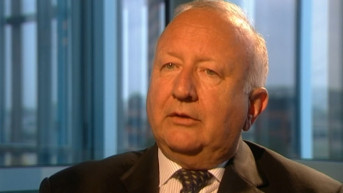
Willy Wimmer, former State Secretary of the German Ministry of Defense and Vice President of the OSCE Parliamentary Assembly believes that the NATO intervention in FR Yugoslavia in 1999 was a wrong decision, as Kosovo has become a permanent apple of discord in the UN Security Council and a simmering conflict.
"The issue of Kosovo is a part of a broader geopolitical picture. Essentially, it is a part of the problem between Washington, Moscow, and Tel Aviv. Therefore, Kosovo is a permanent apple of discord in the UN Security Council. It was torn out of the Yugoslav state association in 1999 solely for geostrategic reasons, bypassing any international agreements or rules," Wimmer emphasizes for Kosovo Online.
Commenting on the 25th anniversary of the NATO intervention in FR Yugoslavia, Wimmer says that it was a wrong decision whose consequences are yet to be fully understood.
He states that behind it all were solely US interests.
"The NATO conference in Bratislava in April 2000 clearly indicated that the US wanted to compensate for the deployment of troops in the Balkans, or everything they neglected during World War II. That is where the key to understanding the aspects of the 1999 action lies," Wimmer emphasizes.
According to him, this was a war that could not have been avoided.
Top of Form
During 1998 and 1999, Wimmer was the Vice President of the OSCE Parliamentary Assembly, which was superior to the OSCE Verification Mission led by William Walker in 1998.
When asked about the evidence the OSCE had when Walker directly accused Serbian security forces of committing war crimes in the village of Racak on January 15, 1999, Wimmer says that he never actually saw that report and that it was evident that the event was merely a "PR measure" to create conditions for NATO intervention.
"Despite my and the requests of the OSCE Chairman, we were never presented with the results of the investigation into Racak. It is evident that it was a PR measure to create a pretext for war," Wimmer states.
Asked whether the negotiations in Rambouillet in February 1999 could in any way have prevented the bombing, Wimmer says that NATO demanded impossible conditions from FR Yugoslavia at that time.
"In Rambouillet, NATO insisted on rights in Yugoslavia that the Wehrmacht had during World War II. President Milosevic did not want to accept this kind of occupation that allowed foreign bases with an occupational character," Wimmer emphasizes.
According to his words, German security services knew the true situation on the ground in 1998 and 1999, but those reports were not accepted because NATO leaders had already decided to engage against FR Yugoslavia.
"The Bundeswehr was informed about detailed reports on the situation in Kosovo. This report was presented to the Parliament but was never accepted. Simply put, the NATO line took precedence in the further development of events. I claim that with Helmut Kohl as the Chancellor of Germany, this war would never have happened, and the same goes for Oskar Lafontaine. Kohl had to leave for this war to start," Wimmer assessed.
He reveals that before the intervention, he had several secret conversations with the then-President of FR Yugoslavia, Slobodan Milosevic and that the possibility of Kosovo gaining the status of South Tyrol was discussed.
"The discussions with Milosevic were targeted, fact-oriented, and professional. It came down to Kosovo gaining the status of South Tyrol. However, this plan never materialized," Wimmer says.
He emphasizes that Serbia has a "natural right" to fight for the sovereignty of its territory.
"Every state has the natural right to advocate for its national interests, there's no need to comment on that," Wimmer says.
He stated that the recent moves by Pristina regarding the abolition of the dinar are just a part of the "bigger picture" and only further complicate the "long-standing problem".
Assessing the recent visit of the German Minister of Defense, Boris Pistorius, to Serbia and the claim that Germany firmly stands behind Kosovo's independence, Wimmer says that this country is trying to create facts to justify its participation in the NATO intervention.
"Germany participated in the NATO action in 1999, and since then, it has been trying in every way to produce facts to justify the appearance of that 'legitimate' operation," Wimmer says.
Asked about his assessment of the current situation of minority communities in Kosovo, Wimmer briefly responded that the situation in Kosovo is generally "always on the edge."
comments