
Zecevic: Only the U.S. and EU can force Kurti to stop expelling Serbs

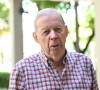
The return of Donald Trump to the presidency of the United States could mark a turning point in the stalled Belgrade–Pristina dialogue, says Slobodan Zecevic, director of the Institute for European Studies in Belgrade, in a statement for Kosovo Online. According to him, only the U.S. has the capacity to compel Kosovo’s authorities to respect their obligations, while the EU has shown itself either incapable or unwilling to exert any meaningful pressure on Albin Kurti.
“I believe Trump always wants to present himself as a problem-solver—that he’s the man who resolves issues, whereas the previous administration merely created and compounded them. In that sense, Trump has said that the Washington Agreement was actually on track to resolve problems. But the fact remains that in recent years, there’s been no progress or solution regarding Kosovo,” Zecevic said.
He emphasized that the European Union has demonstrated total impotence in implementing what was agreed over a decade ago.
“The EU has failed to enforce the agreements it made back in 2013—either because it’s unable or unwilling, and that’s the real question. Perhaps U.S. engagement could help bring about a solution. Because right now, we’re witnessing a very negative trend in the behavior of the Kosovo government toward Serbs, which is clearly escalating tensions in Kosovo,” he noted.
According to Zecevic, only the United States, as Kosovo’s key ally, can exert real pressure on Kurti.
“If anyone is in a position to impose a solution, it’s the U.S., especially when it comes to the Kosovo Albanians. Trump, as someone on whom they greatly depend, could indeed contribute to finding a solution in Kosovo. We’ll see in the coming period whether the Americans will present a concrete initiative, because what we have so far—the Community of Serb-majority Municipalities (CSM), which was supposed to ensure that Serbs could remain in the municipalities where they live—has yielded nothing. The EU is not pressuring Kurti enough to make him question whether his current approach is worthwhile,” he said.
Great powers only shift focus—they never truly abandon crisis zones, and Zecevic believes the U.S. is definitely watching developments in the Balkans, especially in hot spots like Kosovo.
“It’s possible they’ll try to find a solution, because clearly, as I’ve said, things have been at a standstill for years. Kurti is doing nothing to implement what’s been agreed. U.S. intervention would be welcome—provided it’s well-intentioned and constructive, especially with regard to previously made agreements,” Zecevic explained.
He also commented on the current deportations of Serbs working within Serbia’s Ministry of Internal Affairs in Kosovo, describing it as a continuation of the longstanding dismantling of Serbian institutions.
“This is a continuation of the systematic removal of all Serbian institutions from Kosovo, including the presence of the Serbian Ministry of Internal Affairs through these individuals. Kurti clearly wants to make it known that he will dismantle everything that remains of Serbian institutions, and he has no intention of establishing the CSM. As a result, Serbs are being left leaderless, particularly in the northern municipalities. That is his policy, and he’s sticking to it,” Zecevic stated.
According to him, this process can only be stopped through external pressure—or conflict.
“The only ones who can stop him—the ones he actually depends on—are the U.S. and the EU. Kurti is sending a message that Serbia no longer has any presence in Kosovo. That’s his policy. For him, Kosovo is an independent state, and the sooner the Serbs leave, the better. The only way to stop this is through pressure from the U.S. or EU—or, of course, through conflict, which no one wants,” Zecevic warned.
He added that there are signs of dissatisfaction with Kurti’s behavior even within the EU, but so far, that has not been enough to bring about meaningful change.

0 comments