
Knezevic: The initiative to withdraw recognition of Kosovo is not dictated by Belgrade, but to wash the shame from our face
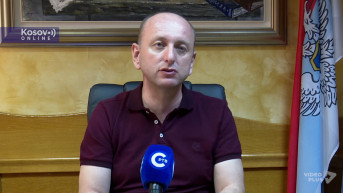
The Democratic People’s Party (DNP) in Montenegro is launching a campaign for the government of Milojko Spajic to withdraw recognition of Kosovo’s independence. DNP leader Milan Knezevic told RTS that voting on the withdrawal of recognition will first take place in Zeta, and then in other municipalities.
Knezevic expects significant support for the initiative in the Montenegrin parliament as well.
“This is not dictated by Belgrade, this is dictated solely by the heart, reason, and honor, by dignity and everything that Montenegro has represented,” Knezevic told RTS.
He also announced a large gathering in Podgorica on May 10, where this issue will be discussed.
Knezevic, who initiated the withdrawal of recognition, said that the claim that 85 percent of Montenegro’s citizens do not support Kosovo’s independence was first presented by former prime minister Dusko Markovic, who stated that the decision on recognition had been made under pressure from the international community.
“We believe that the time has matured, after all the turbulence we have had in the government of Milojko Spajic, to begin addressing these identity and ideological issues that are very important both for the Serbian people and for the Orthodox population in Montenegro. That is why we decided to launch this initiative,” Knezevic said.
He announced that the initiative will begin in Zeta as the first municipality which, through a vote by the council majority on May 12, on Saint Basil of Ostrog Day, will adopt a declaration on withdrawing the decision to recognize Kosovo within the territory of Zeta.
He expects that a series of sessions of local self-governments across Montenegro will then follow, after which, as a parliamentary group, they will submit a draft resolution to the Parliament of Montenegro.
According to him, this resolution would oblige the Government of Montenegro to withdraw the decision recognizing Kosovo’s independence.
“If all those Serbs who are in Milojko Spajic’s government and in both the government and the parliamentary majority state that they will leave the government if Milojko Spajic does not support this initiative and this resolution in the Parliament of Montenegro, we can make that decision by the end of June,” Knezevic said.
He emphasized that he would like this to happen on Vidovdan.
Who will support the initiative
Speaking about the support he expects for the initiative, Knezevic said he has no doubt they will have the backing of colleagues from New Serbian Democracy, the Socialist People’s Party, Democratic Montenegro, and a significant number from the Europe Now Movement, the political structure led by Prime Minister Milojko Spajic.
He particularly emphasized that he expects support from Prime Minister Spajic himself.
“I believe that Prime Minister Spajic will understand the seriousness of the situation and make a decision that could place him on the brighter side of Montenegrin history. That is the removal of the stain and shame from Montenegro’s face for making that decision, one of the darkest, if not the darkest, in October 2008,” Knezevic said.
The DNP leader stressed that they are not doing this for Serbia or for Aleksandar Vucic, but exclusively for Montenegro.
“This is not dictated by Belgrade, this is dictated solely by the heart, reason, and honor, by dignity and everything that Montenegro has represented,” Knezevic said.
Historical ties
Knezevic recalled that “Metohija was an integral part of Montenegro until 1918” and that the Montenegrin army, after the Balkan Wars led by King Nikola I, entered Visoki Decani and the Patriarchate of Pec, and that King Nikola composed some of the most beautiful verses about Kosovo.
“If we are worthy of our ancestors, I believe there will be no complications or difficulties in having this initiative adopted, that is, finally washing the shame from Montenegro’s face,” Knezevic said.
As he noted, the campaign for the initiative has already begun, but on May 10 they intend to gather all party bodies and activists who will carry out the campaign throughout Montenegro.
“I will present to them this declaration that should be proposed at sessions of local assemblies,” Knezevic said.
He explained that the decision in Zeta, in a formal legal sense, does not carry the weight of withdrawing recognition of Kosovo’s independence at the level of the entire state, but symbolically it would send a clear message that the majority of Montenegro’s citizens are against this shameful recognition.
He expects other municipalities to follow Zeta’s example.
“So many Serbs have appeared that we can barely live with them, and at weddings and birthdays they start talking about liberating Prizren. We are not asking them to take up Kalashnikovs or climb onto tanks, but it is important that they act in line with what they truly feel,” Knezevic said.
Relations between Serbia and Montenegro
Speaking about current relations between Serbia and Montenegro, he said they could be much better.
“Unfortunately, whenever Montenegro moves closer to Serbia, Tonino Picula appears, Tomislav Sokol appears, Minister Grlic Radman appears, and Andrej Plenkovic appears with new threats and demands toward Montenegro that we will not enter the European Union unless we meet the conditions they previously set,” Knezevic said.
According to him, Croatia does not favor closer ties between Montenegro and Serbia.
“Croatia does not favor the development of economic, infrastructural, cultural, and spiritual projects and ties between Montenegro and Serbia, and that is why at this moment we have a kind of tutor in the region, and that is Croatia, which constantly comes forward with new demands and threats,” Knezevic said.
Knezevic emphasized that if he is part of a future government, there will be no country closer to Montenegro than Serbia.
“History has shown that when Serbia and Montenegro are together, no one is stronger than us in the region, and I believe that time will come very soon and that, as two now independent states, we will still find grounds to cooperate and be an example in the Balkans,” Knezevic concluded.


0 comments