
Joksimovic: Von der Leyen’s visit to the region confirms the EU’s strategy for a new round of enlargement
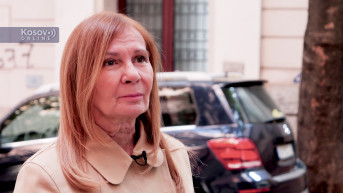
The Director of the Center for Foreign Policy, Aleksandra Joksimovic, told Kosovo Online that the purpose of European Commission President Ursula von der Leyen’s visit to the Western Balkans is to confirm the EU’s strategic decision to achieve a new round of enlargement by the end of the current Commission’s mandate. When it comes to the stagnation of the Brussels dialogue, Joksimovic emphasized that the burden lies on Albin Kurti.
“Ursula von der Leyen, President of the European Commission, is touring the Western Balkans with the goal of reaffirming the EU’s strategic decision to complete a new enlargement round by the end of this mandate, meaning that at least one of the countries will become a full member. At this moment, the favorites are Albania and Montenegro, where she delivered strong messages encouraging them to accelerate their accession path in order to achieve that goal. Serbia used to be among the favorites, but for several reasons, it has now slipped from that position,” Joksimovic stressed.
She added that in Belgrade, von der Leyen spoke extensively about energy stability, specifically about the EU’s desire to promote energy diversification, and also promised support for Serbia in the energy sector ahead of the upcoming heating season and winter.
“She spoke about the key elements for Serbia’s further progress in the integration process — such as the formation of the REM Council, the regulation of voter lists in line with ODIHR recommendations, and, of course, the crucial issue of alignment with the EU’s Common Foreign and Security Policy, particularly regarding sanctions against Russia. These are among the obstructive elements that prevent the opening of Cluster 3 and slow Serbia’s overall progress on its EU path. Von der Leyen mentioned that some steps have been taken to address certain issues, such as the voter lists and the establishment of the REM Council. However, the EU expects implementation before offering its evaluation. She also spoke about the differences between democratic and autocratic societies, emphasizing where the EU stands and where candidate countries should stand. On the other hand, President Vucic highlighted that the EU is Serbia’s strongest economic partner and a major investor, and that Serbia must reassess certain policies if it wants to accelerate its progress,” Joksimovic summarized.
In her view, the overall tone of the visit was measured.
“Von der Leyen’s remarks were also influenced by the letter sent by Members of the European Parliament ahead of her arrival in Serbia, which prompted her to touch on some internal political issues that the EU also considers important. Nevertheless, the fact remains that Serbia is officially and strategically committed to European integration. However, if it wants to take advantage of this momentum, at a time when the EU is ready to make such a step, it will have to do more, and faster, in order to catch up with those who are already moving ahead on this path,” Joksimovic emphasized.
When asked whether the EU shares a similar view regarding the Brussels dialogue and who the obstructive actor in that process is, the Director of the Center for Foreign Policy said that it is evident that the burden lies on Albin Kurti.
“It is clear that for quite some time there has been no high-level dialogue, and the responsibility for this absence lies with Kurti for several reasons. One of them is the failure to establish functioning institutions in Pristina. We saw that the Serb List achieved notable success in Sunday’s local elections, but at the same time, Kurti remains under a form of European and American sanctions. The question now is how much capacity there is to fully resume the EU-mediated dialogue,” Joksimovic concluded.

0 comments