
Adjali on the situation of internally displaced persons from Kosovo: Everyone has the right to return home
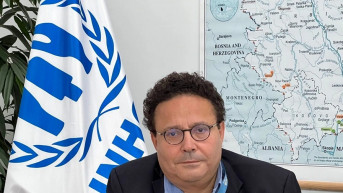
The right to refugee protection is not a privilege but a universal human right that saves lives, said Soufiane Adjali, Head of the UNHCR Representation in Serbia. Speaking about the situation of internally displaced persons from Kosovo, he emphasized that everyone has the right to return to their home, RTS reported.
The UNHCR Representation in Serbia is marking 50 years of its work in the country, as well as the 75th anniversary of the adoption of the Convention Relating to the Status of Refugees and the 65th anniversary of the Convention on the Reduction of Statelessness.
Commenting on global migration trends, Adjali noted that wars and crises in the Middle East, Ukraine, and other parts of the world have contributed to the growing number of displaced persons and refugees.
“Many people are unable to return because return must be safe and sustainable,” Adjali told RTS.
Asked whether the Western Balkans could become a kind of “waiting room” for migrants and asylum seekers, Adjali said that he does not share such concerns.
“There is no reason for dramatization. The Balkans have never been a waiting room for refugees. The peoples of this region have always demonstrated solidarity and provided protection to those who needed it,” Adjali stressed.
Regarding increasingly frequent calls by certain European countries for the expedited return of migrants, he emphasized that human lives must not be viewed solely through a political lens.
“Return must be voluntary and safe. We must not play with people’s lives. Anyone forced to leave their home must have the right to protection and a safe return,” Adjali stated.
Recalling UNHCR’s history in Serbia, Adjali noted that the organization has been present since the 1970s, when it assisted people fleeing countries of the Eastern Bloc.
“At that time, many risked their lives in search of safety. Former Yugoslavia and Serbia were among the countries that provided refuge and protection,” he said.
He also recalled UNHCR’s role during the refugee crises of the 1990s, as well as during the major migration wave of 2015.
Assessing cooperation with Serbia, Adjali said that UNHCR highly values the approach taken by both state institutions and citizens toward refugees.
“I am grateful to the people of Serbia and to the institutions that extended a helping hand to those in need of protection. Refugees bring not only needs, but also knowledge, talents, and the potential to contribute to society,” Adjali said.
He added that there is room for further improvement of the protection system, but noted that Serbia has demonstrated a willingness to engage in dialogue and enhance standards in this area.
Referring to the situation of internally displaced persons from Kosovo and Metohija, Adjali stressed that the right of return does not expire.
“Everyone has the right to return to their home. There is no time limit on the return of displaced persons. Our obligation is to help ensure that such return is safe and dignified,” the Head of the UNHCR Representation in Serbia emphasized.
According to Adjali, UNHCR will continue to provide support and guidance to all those wishing to return to their homes, provided that their security and basic living conditions are guaranteed.


0 comments