
Avramovska Nuskova: One in three women and girls over 15 in North Macedonia is a victim of sexual harassment
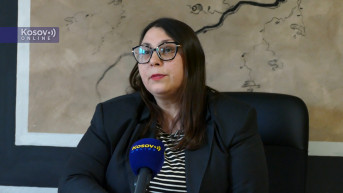
One in three women and girls over the age of 15 in North Macedonia has experienced some form of sexual harassment or violence, while a significantly smaller number of cases are reported, according to data highlighted by Ana Avramovska Nuskova, Project Coordinator at the Executive Office of the National Network against Violence against Women and Domestic Violence in the country. She cites social pressure, a lack of education, and a lack of trust in institutions as the main reasons.
Avramovska Nuskova notes that the patriarchal system and gender roles impose a false notion on women that they are obliged to engage in sexual relations with their partners, which often leads to a failure to recognize sexual violence.
“Women find it extremely difficult to recognize violence or to report it at all when it is committed by an intimate partner—whether a boyfriend, husband, or common-law partner. On the one hand, recognition is a major problem because we live in a society where patriarchal norms and gender stereotypes still exist, where women are assigned certain gender roles and are made to believe that it is their obligation if the perpetrator is their boyfriend or husband. On the other hand, reporting is very difficult due to pressure from the environment, the possibility of a lack of family support, a shared household, and the question of what happens once a woman reports that she has been sexually assaulted or raped. This makes the issue extremely complex, especially when it comes to sexual violence,” Avramovska Nuskova told Kosovo Online.
Speaking about legal prevention of sexual violence, she points out that although most Western Balkan countries have ratified the Istanbul Convention, official data in North Macedonia since 2018 nevertheless show an increase in gender-based violence, including sexual violence.
“In the context of overall gender-based violence, we are seeing an increase in the number of cases. Since the ratification of the Istanbul Convention—which most Western Balkan countries have ratified—it entered into force here in 2018, and every year statistics from the Ministry of Interior and the Ministry of Social Policy show an upward trend. This requires thorough analysis. What is certain is that the topic is increasingly discussed and more widely recognized,” she observed.
Following the ratification of the Istanbul Convention, the law has recognized additional forms of violence, including psychological and economic violence, and introduced new measures penalizing physical and digital stalking. Avramovska Nuskova pointed out that, despite this legal visibility, reports of violence remain at just two to three percent, according to research by the OSCE.
That study, she says, also shows that one in three women and girls over the age of 15 has experienced sexual harassment, adding that the relativization of this problem contributes significantly to the situation.
“There is a culture of violence in which we relativize things and say, ‘You know, if someone harasses you, whistles at you as you walk by, flatters you by saying you are beautiful…’ These behaviors are presented in a very wrong context, and this form of violence is normalized or downplayed. Yet it is very much present, especially in public spaces. There is a very good study by Reactor conducted in public spaces in Skopje and Tetovo, as well as on city buses, showing how widespread this form of violence is and how rarely it is reported,” she said.
She emphasized the need to raise awareness.
“We must work on awareness, starting with the youngest—first in schools, and arguably even in kindergartens—while ensuring sufficient financial resources. This requires strong institutions, highly professional staff who know their work and how to act, and properly functioning services such as centers, SOS helplines, and counseling services,” she said.
In addition, Avramovska Nuskova highlighted that North Macedonia has recently adopted further amendments to the Criminal Code aimed at combating revenge pornography and the sharing of private images and videos of women and girls in social media groups. She recalled that since 2020, five such groups have been uncovered, with victims’ names, addresses, and phone numbers shared.
“Images of girls and women were shared together with personal data such as first and last names, places of residence, and phone numbers, which led to a huge number of victims—particularly of psychological violence and sexual harassment—and resulted in stigmatization, re-victimization, loss of employment, and loss of partners. This caused significant psychological harm to the victims. The exposure of these groups is a step worthy of praise, even though there is room for improvement.
Parliament introduced this criminal offense without broader consultation with the professional community, where a stronger framework could have been developed, but it is nevertheless a significant step forward taken by our legislature in addressing sexual violence,” Avramovska Nuskova assessed.
Asked whether women in North Macedonia trust institutions, she said that trust is extremely low and stressed that a sensitive police approach to victims is crucial.
“Trust is very low, and everyone truly needs to work on this because it is extremely important. The most serious problems usually occur over weekends or, as we saw during the COVID period, during lockdowns when most people were confined to their homes. At that time, a victim of violence has no one to call on a Saturday night except the police. It is very important how that first line responds—how the report is received, how the risk assessment is conducted, whether the uniformed officer is sufficiently sensitized and informed about what needs to be done and how, whether an inspector is called, whether there is cooperation with social welfare centers, and whether a joint, multisectoral approach is taken to develop a common safety plan,” Avramovska Nuskova said.
Another issue she highlighted is the shortage of police officers, domestic violence inspectors, and staff in social welfare centers.
“They usually work in teams—what happens if one member is missing? Or how many domestic violence inspectors are there for a city like Skopje? That is something the ministry should answer. According to unofficial data available to me, there are nine or ten inspectors including the head, which, for the entire city of Skopje, I truly believe is far too few,” Avramovska Nuskova concluded.


0 comments