
Beacon of hope: Gorazdevac as a bastion of Serbian survival
Gorazdevac, a village at the foot of the Prokletije Mountains, was visited by the Kosovo Online team on May 14 during the celebration of the feast day of the Holy Prophet Jeremiah, when the village is visited by guests from nearby areas, central Serbia, the region, as well as by those who were forced by circumstances to move away. Joy, smiles, and songs echo through Gorazdevac throughout that day. On all other days, Gorazdevac quietly endures on the banks of the Bistrica River, enveloped in memories of a great tragedy.
In Gorazdevac — a village in the municipality of Pec — around 3,000 Serbs once lived. In the years following the conflict, that number declined to just over 500.
In the village, a school and a healthcare clinic operate under the Serbian system, and those who remained survive thanks to salaries from Serbia, says Radio Gorazdevac journalist Milic Petrovic.
They also endure, he adds, thanks to the monasteries of Visoki Decani Monastery and Pec Patriarchate, while continuing to cultivate their agricultural land.
“Thanks to Visoki Decani Monastery and the Pec Patriarchate, many young people from this area and from all of Metohija have found employment. Also, thanks to the Government of the Republic of Serbia, many young people receive salaries. The school and clinic operate here, so people survive on those incomes. At the same time, they cultivate their agricultural land. Many also work abroad and invest money in the place where they were born,” Petrovic said.
Petrovic emphasized that young people have a strong desire to return and are restoring their old homes.
“There used to be many more of us, but thank God, even those who left have recently been gladly returning to Gorazdevac. People come on weekends, spend time here, some are renovating houses, and new homes are being built. Although one often hears that people are leaving Kosovo, when it comes to Gorazdevac, I can say that we are here, that we remain in Metohija, and that we endure,” Petrovic stated.
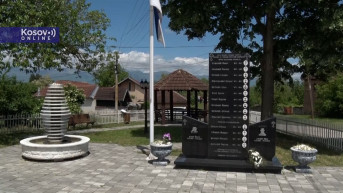
Young people in the village gather in local cafés, in the courtyard of the Church of the Nativity of the Most Holy Theotokos, or by the monument dedicated to the victims of the NATO bombing and the children killed on the Bistrica River.
That monument serves as a reminder of the tragedy of the people of Gorazdevac, one that the swift waters of the Bistrica failed to wash away into oblivion.
On August 13, 2003, children from Gorazdevac who were swimming in the river were fired upon with automatic weapons. In that attack, Ivan Jovovic (19) and Pantelija Dakic, known as Panto (12), were killed, while four other children — Djordje Ugrenovic, Bogdan Bukumiric, Marko Bogicevic, and Dragana Srbljak — were seriously wounded.
That the suffering of the children will never be forgotten was also emphasized by Igor Simic during the commemoration of Jeremiah’s Day in Gorazdevac.
As he stated, the first thing that comes to mind regarding that tragedy is the absence of accountability.
“Moreover, the investigation by international prosecutors was suspended, and that speaks to the fact that the Serbian wound and the Serbian tear have no protector in this region. Yet this village, thanks also to that sacrifice, survived and was resurrected. As long as there is even one Serb, wherever he may live, especially here in Gorazdevac, the sacrifice and suffering of those children will not be forgotten. The families who remained here to live testify that the sacrifice was not in vain. The Pec Patriarchate, Decani, and all the churches in Metohija endure thanks to the courage of these people and by preserving the memory of those who suffered solely because they were Serbs,” Simic said.
“That is our fate, but we must endure,” said Milisav Dakic, the father of the murdered Panto, with immeasurable sorrow in his eyes, yet with dignity.
“It is not easy for us Serbs here. Every trip to the city brings anxiety. Either they scratch our car, hit it, or remove something from it — we have become used to that. But we are persistent and resilient, and I hope we will endure. I personally experienced a great tragedy, but what can I do — my other son is married, he has two sons, our family is growing, the children are growing up. That is life, perhaps that is our destiny. But we will persevere through all of this,” Dakic said.
The new generations in their family have filled the wounded heart of Milisav Dakic and given him the strength to endure and demonstrate courage.
“My son works at the healthcare center, my daughter-in-law works at the school, and they have two sons. The children are wonderful, they are growing, and God willing there will be even more of them. My daughter also has two sons, so my heart is gradually healing. And to tell you honestly, when I look at the bigger picture, I am a satisfied man, because I have the opportunity to tell everyone who we are and what we are. I am not afraid of anyone, believe me. I go to Pec and tell everyone everything to their face, because no one can erase my story,” Dakic added.
The strength and perseverance of the Dakic family are certainly an example for the other residents of Gorazdevac to endure and overcome all hardships in Gorazdevac — a beacon of hope and survival.
Political scientist Ognjen Gogic, whom we encountered in Gorazdevac during the celebration of the feast day of the Holy Prophet Jeremiah, sent a message that survival is possible when unity prevails, and that this village is an example worth following.
“Survival is possible when people stand together, support one another, and help one another, and the residents of Gorazdevac demonstrate this best. The smiles and children’s laughter testify to that. When a warm atmosphere and support are created, survival is possible anywhere, including in Gorazdevac and generally in Serbian communities in Kosovo, but also more broadly throughout the world. Gorazdevac should teach us that. Gorazdevac also maintains good relations with its neighbors from the Albanian community. In the past there were various problems, but today Gorazdevac has good relations with its surroundings, and that has contributed to its survival and to its becoming a beacon for Serbs in this part of Kosovo,” Gogic said.

0 comments