
Collection of papers on the March Pogrom presented; Rakocevic: A warning that there must be no forgetting
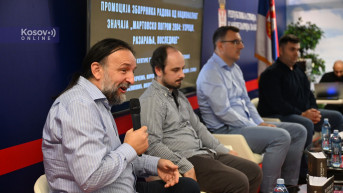
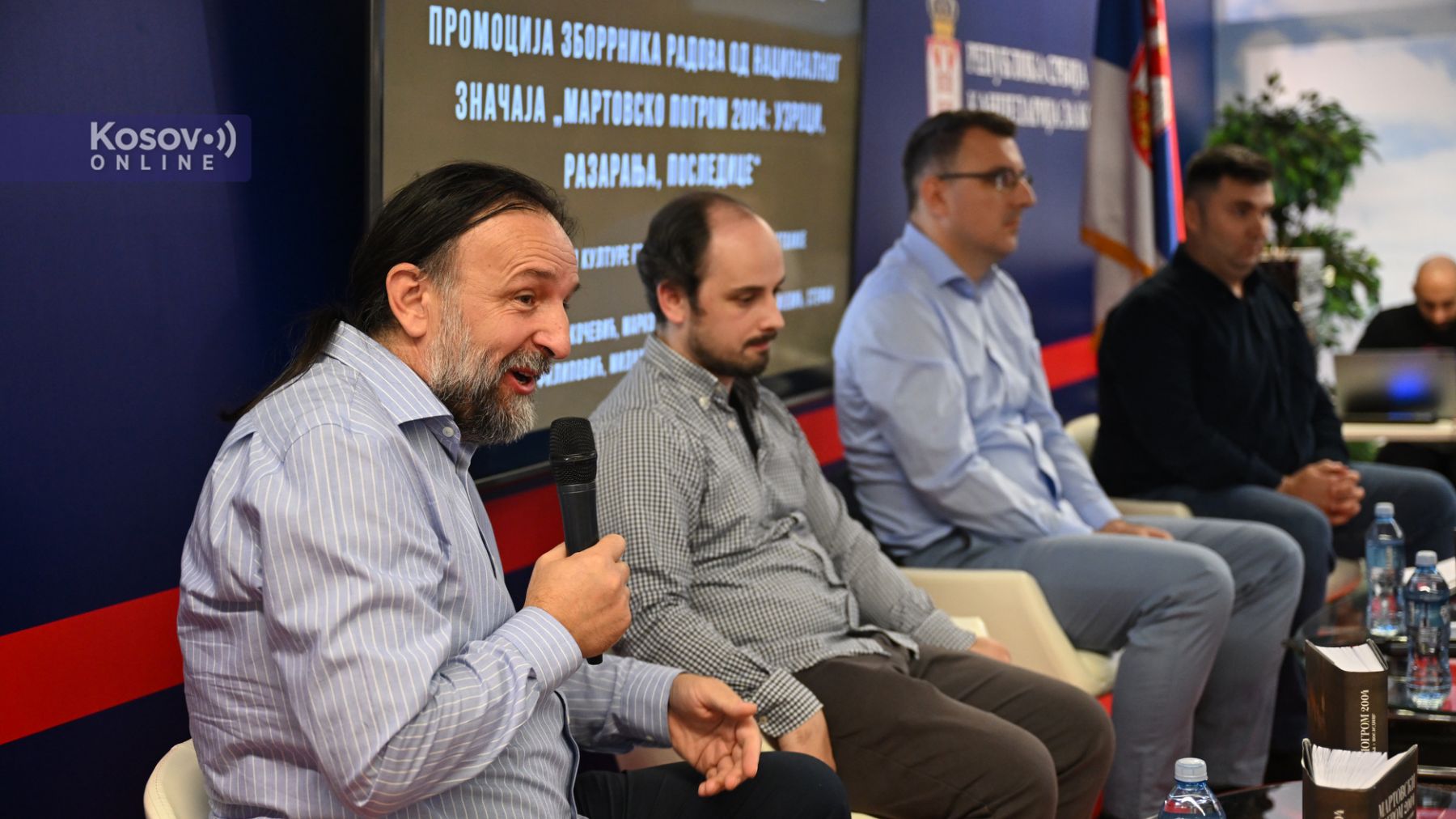
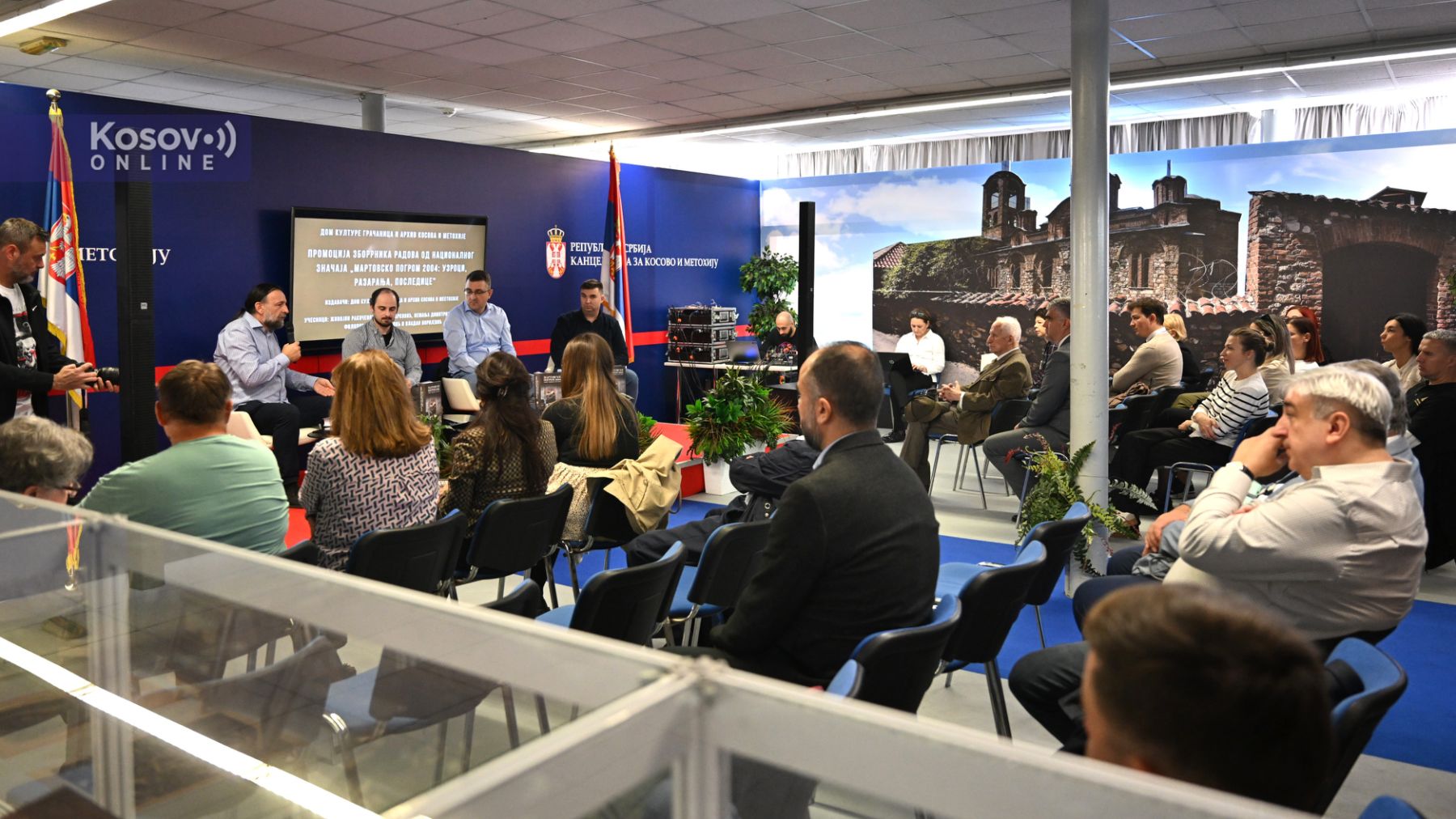
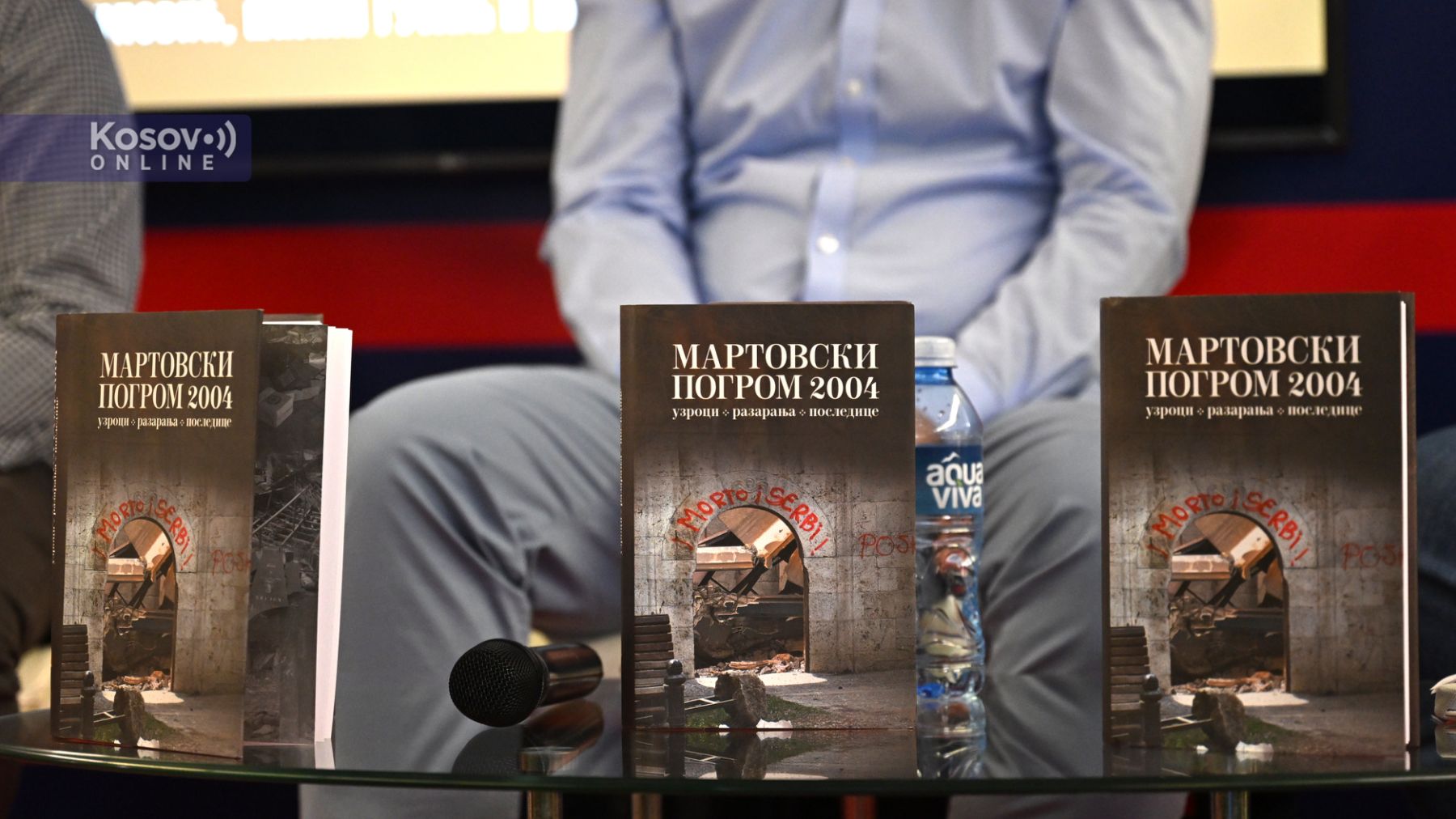
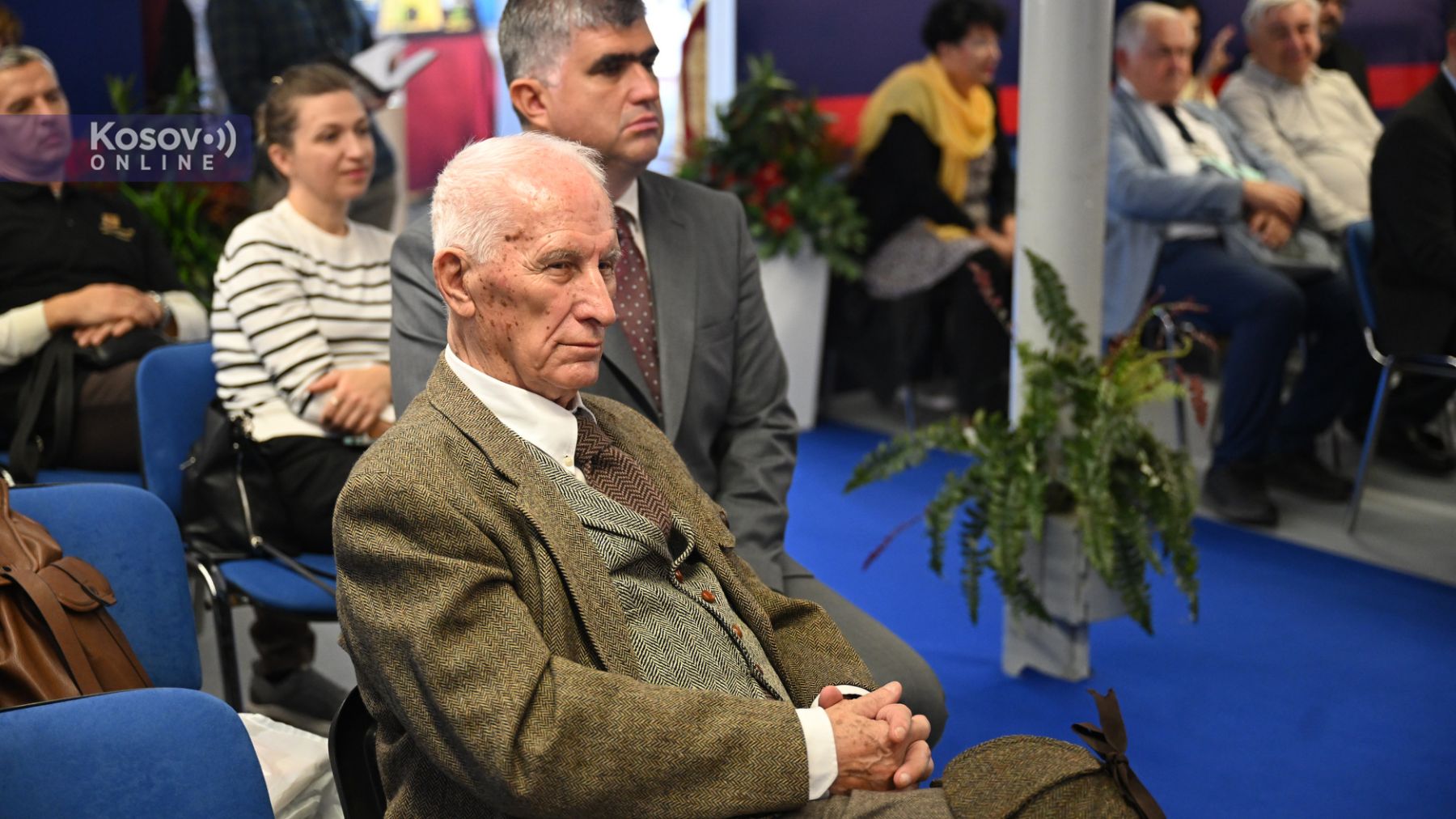
The collection of papers titled “The March Pogrom 2004: Causes, Destruction, Consequences” was presented today at the Belgrade Book Fair, at the stand of the Office for Kosovo and Metohija. One of the editors, Director of the “Gracanica” Cultural Center Zivojin Rakocevic, stated that the publication represents a comprehensive testimony of how an entire civilization was destroyed in three days before the eyes of 50,000 to 60,000 foreigners and peacekeepers.
“The pogrom was one of the greatest crimes committed in peacetime Europe since the Second World War. It struck at everything we had — churches, schools, libraries, frescoes, architecture, health centers, urban areas, entire settlements — all of it disappeared. The most important thing was to gather experts from all these fields — respected scholars whose works have been peer-reviewed — and, twenty years later, based on documents, testimonies, living witnesses, and what we can still see with our own eyes, produce scientific papers that would preserve not only the memory of those events. Above all, this is a call for renewal and a warning that there must be no forgetting,” Rakocevic said in a statement for Kosovo Online following the presentation.
He added that science provides accurate, harsh, and precise answers, and owes nothing to anyone — neither Albanians, nor Serbs, nor the international community.
“There is no justification or bias here. This is the kind of science we need — one that confronts us with ourselves and compels us to see our own reflection in all of this. The March Pogrom is so vast and complex that we will continue to study, understand, and write about it for decades to come,” Rakocevic emphasized.
The collection includes 25 scholarly papers. Contributor Nemanja Dimitrijevic, whose two studies appear in the volume, said it is difficult to write about Kosovo because it is not merely a geographical concept, but a homeland.
Speaking about the March Pogrom, he said those were “days of fear” and that the collection helps preserve their memory.
“The collection also contains several hundred photographs. The pogrom took place on March 17 and 18, but in reality, it continues to this day — only now it is institutional,” Dimitrijevic said at the presentation.
The publication was issued jointly by the Gracanica Cultural Center and the Archive of Kosovo and Metohija, with Professor Vladan Virijevic serving as editor-in-chief.
Historian and reviewer Milan Gulic noted that the volume makes an important contribution to understanding what occurred in March 2004.
“This collection, like any other, cannot cover everything, but it clearly shows what happened and places March 2004 in context — as a stage in the erasure of Serbian traces in Kosovo and Metohija. It is not too early to discuss such topics. Even though twenty years have passed, they must still be spoken of. I am not sure that our collections can influence how the other side perceives these events, but new generations are coming who will not remember them clearly, and we must offer them, in a manner of speaking, our own truth,” Gulic concluded.



0 comments