
Crnobrnja: Without preserving the archaeological heritage, it will be as if the Serbs have never been in Kosovo
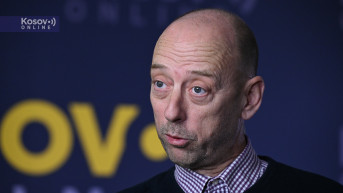
President of the Serbian Archaeological Society, Adam Crnobrnja, warns that the disappearance of Serbian archaeological heritage in Kosovo is not taken seriously, and if Serbia does not create a meaningful strategy, it will soon be as if the Serbs have never lived in those areas. He recalls that if the memory of a nation is completely erased, that nation begins to disappear.
Crnobrnja emphasizes for Kosovo Online that in the media over the last few decades, attention is mostly given to well-known monuments, and he questions what happened to Serbian medieval cities that are no longer discussed.
"It is terrible when someone declares Gracanica as a church built by a Christianized population on the site of a Catholic cathedral from the 5th century, even though at that time, Christianity was unified. This is just the tip of the iceberg. When it comes to archaeological heritage, I immediately think not only of churches and monasteries protected by UNESCO, visible and known to us from textbooks, many of which unfortunately have been destroyed in the last twenty years. I also think of Serbian medieval cities in Kosovo and Metohija that are no longer talked about", Crnobrnja says.
He adds that there must be a strategy in everything, but unfortunately, Serbia does not have one, while others have made a strategy for the Albanians. As an example, he mentions the Novo Brdo Fortress, which was first renamed Novoberda, then referred to as a medieval town built by the Christianized population - Nuovo Monte, and in recent years, they insist on Artani, even though it is Serbian medieval Novo Brdo.
He points out that no one mentions Zvecan, a medieval city, or Visegrad above the Holy Archangels.
"The last time I read that at the site of Visegrad - a medieval town above the Holy Archangels, there is some small station of the German KFOR. Maybe it's true or not, but no one mentions it anymore. And where are the unfortified Milutin's cities recorded in several places, which disappeared about seventy years ago? From written sources, we know that Kosovo and Metohija were densely populated by Serbs, there are remains of villages and cemetery remains. We now mention most often what is terrible and happening now, the destruction of modern Serbian cemeteries, but where are the old Serbian cemeteries", Crnobrnja says.
According to him, headlines in the media stating that Gracanica was built by "some Christianized population" represent only the tip of the iceberg and indicate a much larger problem.
"Serbian archaeological heritage unfortunately no longer exists in Kosovo and Metohija, that may sound crude, but going through archaeological literature about Kosovo and Metohija published in the last 20 and something years, what is noticeable is that they have very well regulated laws, introduced certain licenses, they took it over from the Italians and Germans, research is concentrated primarily on ancient heritage", he notes.
He emphasizes that he is not talking about magnificent churches, but about the remains of settlements, monuments, and churches, and adds that as an archaeologist, he is afraid when he sees how a completely different narrative is created, where everything Serbian in Kosovo is now mentioned in the literature as Christianized Slavic population, Christianized indigenous population.
"What I see is if this is repeated in 10, 20, 40, 50 years, and we do not create any meaningful strategy on how to deal with it, how to prevent it, or how we see it in 50 or 100 years, in the end, it will come to the point that the Serbs have never lived in Kosovo and Metohija", Crnobrnja warns.
Speaking about the theft of archaeological heritage and the dismantling of archaeological sites, Crnobrnja says that it is quite present in central Serbia, Vojvodina and that Serbia has been struggling with it for decades, not just the last 10 or 20 years.
"These are criminal offenses and illegal trafficking in antiquities is among the most profitable criminal activities: drug trafficking, arms trafficking, human trafficking, and antiquities. We have the Criminal Police Administration, the Service for Combating Organized Crime below them, and there is a department that should deal with preventing smuggling and illegal trafficking in antiquities. Three people are employed there. We do not have control even where we have established police and judicial control. Therefore, where we do not have full insight, such as in Kosovo, we cannot know what is happening", Crnobrnja says.
He emphasizes that the trade in antiquities is also linked to financing terrorism and recalls the work done by a Scandinavian, examining the entire territory of the former SFRY to see how the trade in archaeological antiquities is happening through closed forums and social networks.
"What was established is that it is extensive, that Serbia has the most organized groups engaged in it, but it also showed that there is a cooperation between Serbia and Croatia, central Serbia and Kosovo and Metohija, as in every branch of crime - there is collaboration", Crnobrnja says.
As he warns, if the memory of a nation is completely erased, if it is completely excluded from professional and scientific narratives, that nation begins to disappear, the memory simply fades away.
"Monuments are not broken for nothing. I look at this through Feuerbach's thesis - the beginning of every religion lies in the graves of ancestors. The Kosovo vow has sustained us as a nation for hundreds of years, and what I fear the most is that when you lose such a narrative, you lose the cohesive factor. What will happen to us? Moreover, people tend to overlook the disappearance of heritage, but bit by bit, it is disappearing. Physical destruction alone is dangerous. To fabricate, you don't have to tell lies; you just need to overlook a story like the Serbian heritage in Kosovo and Metohija. You have done a great job", Crnobrnja notes.
Speaking about the potential assistance from the international community in preserving Serbian heritage in Kosovo, Crnobrnja points out that, first and foremost, Serbia needs a clear strategy and must organize itself to help itself.
"Thirteen or fourteen years ago, I was the secretary of the Archaeological Society, and then a booklet titled 'Archaeological Guide to Kosovo' appeared. It contained blatant lies. They even tried to rename the Vinca culture, which is globally known. We were appalled. At that time, we wrote to the National Council for Culture, asking for funding to create a similar guide. We would have done the same layout but with accurate information. We had more plans, including publishing the works of our scientists abroad. It's not enough to write about it in a domestic collection; you need to place it elsewhere, have 10 or 15 works on the Serbian Middle Ages in Kosovo, which you present in Germany, France, Britain... You enter scientific circles; they can't undermine your foundation", he notes.
As he adds, in 2012, the National Council for Culture sent a note to the Ministry of Culture and the Serbian Government, requesting the establishment of a body or commission within the body for the implementation of the Brussels Agreement. This commission would consist of experts dealing solely with the status of Serbian cultural heritage in Kosovo.
"Nothing came of it", he emphasizes.
On the other hand, as he says, Serbia has institutions related to Kosovo alone, with the most important being the Provincial Institute for the Protection of Cultural Monuments in Pristina, which has been relocated to Leposavic. However, "you have to make a tremendous effort to find a site with no information whatsoever".
There is also the City Museum in North Mitrovica, which is actively engaged but mostly deals with contemporary topics.
"We don't have archaeologists either at the Institute or the Museum in Kosovo and Metohija", Crnobrnja emphasizes, stating that efforts should start from the smallest link.
As he adds, we have the Office for Kosovo and Metohija, so why not have a sub-office dedicated only to these matters?
"In Prizren, much of the Serbian heritage has simply disappeared. But when such works are carried out, everyone has the right to criticism, whether it's Beslim from Prizren or Mirko from Bogoslovic, someone needs to prepare material for them. This is called a state strategy. Let's see where we can take action. It wouldn't require more than 10 people", Crnobrnja concludes.


comments