
Pavlovic: They are taking Serbian cultural heritage in Kosovo and Metohija to complete independence
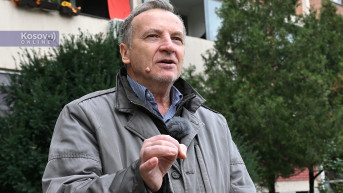
Historian Momcilo Pavlovic stated today that attempts to seize Serbian cultural heritage in Kosovo and Metohija are happening with the aim of consolidating the independence of so-called Kosovo. He referred to these attempts as the "territorialization" of overall heritage and history, indicating a long-term goal of consolidating Kosovo's independence under the patronage of major sponsors of Albanian independence.
"This is a long-term goal of consolidating the overall independence of Kosovo, but under the auspices of these sponsors, major sponsors of Albanian independence. The total cultural heritage and the establishment of Kosovo as a state, a small state, as many others with their own culture and language," said Pavlovic to Tanjug.
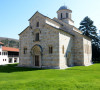
Commenting on the move by the German ambassador in Pristina, who referred to the Visoki Decani Monastery as the "Kosovo Monastery", Pavlovic emphasized that it involved the territorialization of overall heritage and history, intending to enter public discourse over time as the so-called "Kosovo" heritage.
"The total heritage is not created by territory, not by a separatist creation. Heritage is created by rulers, nations, wealthy elites, and wealthy individuals. And it belongs to the ruler, the state, the nation that created that heritage," Pavlovic said.
According to Pavlovic, following the ambassador's logic, if heritage were territorialized, it would imply that the legacy of Ottoman Turkey, not Greek or ancient heritage, is what exists in the territory of present-day Turkey, such as the significant ancient monuments of Troy, Ephesus, and others.
"We should suggest the following fact to the ambassador. The most monstrous camps of the German people, the Nazis, were at one point on the territory of present-day Poland. Would the ambassador say that this is Polish 'uncultured' heritage? Poles would be very angry. They are generally angry when it is mentioned that these camps were on Polish territory. No, these are German camps," Pavlovic clarified.
In his opinion, the territorialization not only of heritage but also of the Albanian issue in the narrower space of Kosovo and Metohija speaks of a direct intention to create an impression in the public sphere that so-called Kosovo is something special, that it not only has its own history but also its own cultural heritage.
"And who in the West knows that the Visoki Decani Monastery was built by, i.e., that Stefan Decanski was the ktitor. That there is a charter, that it is part of Serbian ruling families, part of the overall Byzantine cultural heritage that extends from Constantinople to Vienna," Pavlovic said.
Speaking about the desecration of Serbian monuments in Kosovo and Metohija by Albanians, Pavlovic emphasized that, in contrast, desecration of monuments and graves is not part of Serbian tradition. He added that Serbs have a special relationship with the deceased.
"I think it is a great insult to the living in relation to the dead, to have their tombstones destroyed, desecrated. You have an interesting example in Kosovska Mitrovica. In the northern part of Kosovska Mitrovica, there is an Albanian cemetery, and that cemetery stands untouched, unspoiled for so many years after the conflict. But in the southern part of that Kosovska Mitrovica, the church has been plundered several times, and gravestones have been demolished. As you can see, in the same city, you have two opposite tendencies," Pavlovic said.
He noted that Serbs, who do not accept the imposed Albanian administration, preserve the Albanian cemetery, while a few kilometers away, in the southern part of the city where the Serbian cemetery is, it has been repeatedly demolished and desecrated by Albanians.
"This tells you about two cultures, about memory, about cultures of relation to heritage and to the dead, because as much as we respect the dead, we respect the living," Pavlovic concluded.

comments