
French journalist Rene Girard: Pristina cannot steal the Serbian heritage in Kosovo
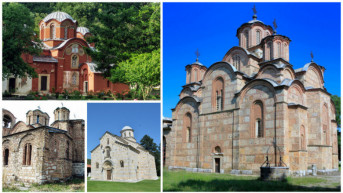
French journalist and political scientist Rene Girard pointed out in an interview for "Novosti" that Pristina could not steal Serbian heritage and indicated that in Kosovo it was necessary to ensure the safety of Serbian monasteries, protect the Serbian community that wanted to stay there, preserve the historical heritage and make peace with neighbors.
"A lot of mistakes were made around Kosovo. It should have been included in the Dayton Agreement. Realistically, it could not be expected to be like the rest of Serbia. It is difficult to imagine that the Albanians from Kosovo would accept that. A special status, a certain autonomy, and a connection should have been established with Serbia. But that has not been done. Today we need to be realistic," Girard said.
When asked what that reality entailed, Girard says that one should not be too nostalgic.
"It is clear that Kosovo is the cradle of the Serbian Church. That is a historical fact. In the Middle Ages, there were only the Serbs around Decani. But, in the meantime, the demographic picture has changed. Now we have to do as much as possible and accept reality. The French and the Germans were at war, but today they live in peace. Both the Serbs and Albanians can do that. Serbia's interest lies in that," he added.
Speaking about the tragedies that happened at the beginning of May in Belgrade, Girard says that it is a great tragedy and that it is the negative influence that globalization brings with it.
"Such mass crimes happen very often in the US. They don't remain a local phenomenon, because all the information is now available all over the planet, an hour after they happen. It creates a desire to imitate. And, unfortunately, it has given some people ideas. The terrible massacre in Belgrade was a direct imitation of what is happening in the US. There is this fascination with American television series where there is a lot of violence. A huge number of series shown on TV are from the US. What happened is an exact copy of what can be seen in those series," he stated.
Commenting on the possession of weapons left over from the war in Serbia, Girard states that it is crazy that these weapons are still freely found in people's possessions.
As he says, these weapons originate from the wars in the former Yugoslavia in the nineties, but a lot of them also arrived from Albania, during the demolition of the pyramid banks there in 1997, first to Kosovo, and later to the entire Balkans.
He adds that the Government of Serbia has taken a very good measure, an amnesty for all those who surrender it voluntarily, and suggests that they might consider buying those weapons because, as he believes, they would collect more.
He states that there was a lot of sadness in France because of that terrible tragedy in Belgrade and that the French could not believe that something like that could happen in Serbia today.
Commenting on some allegations that there is much more violence in the world today, Girard says that perhaps compared to 30 or 40 years ago, there is more violence on the streets today, but that the reality is that violence is actually decreasing.
"My grandfather fought in the First World War, with the Serbs, on the Thessaloniki front against the Bulgarians and the Austro-Hungarians. At his faculty, every other student died! In the Second World War, there was a lot of German and American bombing and violence in wars on all sides. Since then, we also had colonial wars in Algeria, you experienced the disintegration of Yugoslavia, but in general, there was much more violence in Europe earlier," he adds.
When asked how he viewed the conflict in Ukraine, Girard states that everyone thought that the violent breakup happened only in Yugoslavia.
"We were surprised that the Soviet Union disintegrated peacefully. But, the dead are coming today. Basically, the crisis of the separation of the USSR and the bloodshed were just postponed," he says.
He believes that the reality is that neither of the two sides can win that war and adds that if they could, Russia would have already won it.
He states that Putin underestimated the courage, strength, and morale of the Ukrainian troops and at the same time overestimated the quality of his own army.
"He also underestimated the solidarity of European countries towards Ukraine. He cannot win because the Europeans delivered huge amounts of weapons to Kyiv. But Ukraine cannot win either, because of the strategic strength of Russia. The Russians have shown in history that they have lost battles, but not wars," he says.
When asked where the way out was, Girard recalls that in one of his columns at the beginning of the year, he raised the idea that China should be an honest mediator.
"It is not realistic for Putin to make concessions to Zelenskiyy, whom he sees as an enemy and does not take him seriously. But he can make them to his friend Xi Jinping, with the message that he wants to save peace in the world. Only China can solve the Russian-Ukrainian conflict. Let's hope that it will happen as soon as possible. But negotiations will always be an echo of the situation on the ground," he adds.
He also says that he fully understands that Serbia does not accept the secession of parts of Ukraine because Serbia also suffered from the double illegal war of NATO: the attack of the North Atlantic Alliance on Serbia in 1999 was not approved by the UN, nor did Serbia attack another NATO member.
Also, as he says, it can be understood that the Serbs did not join the sanctions against Russia, for several reasons.
"They themselves survived the embargo and know very well that it punishes the people, not the government. They also know that sanctions are often counterproductive. We should also keep in mind the strong traditional friendship between the Serbs and Russians," he adds.
When asked if Serbia had a place in the EU, bearing in mind these peculiarities, Girard says that Serbia has good relations with large Western nations, such as France, but also with the US, which, he says, is very important.
"It is true that Serbia is Orthodox, that it is a Slavic country, and that it has an attachment to Russia. But it is also true that Serbian civilization and way of life are Western. The Serbs feel good in the West. They stand for a free press and democracy. They live in France, Chicago, Germany, and Switzerland, while Russians come to live in Serbia," Girard said.


0 comments