
Gudzic: Ulpiana is not part of Albanian cultural heritage
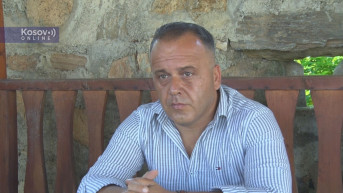
The historian from Gracanica, Aleksandar Gudzic, emphasized in an interview with Kosovo Online that the attempt to extinguish Serbian cultural heritage in Kosovo and erase the memory of Serbian presence in these areas is not a recent development. He pointed out that the political and academic circles among Kosovo Albanians often promote the narrative that "the Serbs occupied Kosovo."
He explained that Serbian cultural heritage in Kosovo can be divided into several categories.
The first category, according to Gudzic, includes churches and monasteries that are masterpieces of art, painting, and architecture, and are under UNESCO protection.
"I am referring to places like Decani, the Patriarchate of Pec, the Church of the Virgin of Ljevisa, and a number of other monasteries. The second category includes churches that are also masterpieces of art, spirituality, and architecture, which were built in the 19th century and earlier, but particularly those from the 19th century. These represent masterpieces of a unique, specific Raska-Prizren style that emerged in the 19th century after the Ottoman authorities allowed the restoration of churches and monasteries following the Gülhane Hatt-i Sharif. The third category consists of church sites and monuments of national significance," Gudzic explained.
However, he warns that the laws protecting these sites are not being enforced in practice.
"UNESCO is responsible for those under its protection, as are Kosovo institutions and the Republic of Serbia. On the ground, these sites are guarded by the Kosovo Police. The status of these churches and monasteries is legally regulated, and they are surrounded by special protected zones. In practice, however, the Kosovo Constitution and legal regulations are often not respected or enforced. No one adheres to these laws in practice, which is why, for example, right next to Gazimestan, the site of the Battle of Kosovo, an Albanian businessman named Orka or Orca has constructed a building, even though any construction is prohibited within 50, 100, or 200 meters of the protected zone," Gudzic stated.
He also recalls that the Visoki Decani Monastery fought for years to reclaim 24 hectares of land, and that until 2015/16, the Kosovo Anti-Corruption Agency—an institution "legally obligated to protect the law and prevent any form of corruption and illegal activities"—was illegally occupying a building belonging to the Church of St. Nicholas in Pristina.
"This just highlights the lack of seriousness and responsibility of Kosovo institutions, which are supposed to protect the rights and property of the Serbian Orthodox Church (SPC) according to the law. The most endangered are those on the UNESCO list, particularly the Visoki Decani Monastery, which has suffered numerous attacks since 1999. Then there is the Church of the Virgin of Ljevisa, which was burned during the 2004 pogrom. Other sites are also at risk, but those on the UNESCO list are the most threatened," Gudzic says.
He emphasizes that "this narrative and the attempt to extinguish Serbian cultural heritage, to erase the memory of Serbian presence in these areas, is not new and did not begin with Hovenier," but has been ongoing for decades. This refers to the recent statement by the U.S. Ambassador in Pristina, who described Ulpiana as a "cultural heritage treasure of Kosovo."
"Experience has shown that it is not enough just to expel the Serbs and destroy their heritage; it is also necessary to establish a new narrative, to imprint in the minds of ordinary people the memory of Albanian continuity in these areas. This narrative has its roots long before Hovenier, long before Kosovo's 'independence.' According to this narrative, the Serbs occupied Kosovo, initially during the time of the Nemanjic dynasty, building their churches and monasteries on the foundations of existing ones. Later, during the Ottoman period, the Albanian people were liberated, only for the Serbs to reoccupy the territory in 1912," the historian explains.
He adds that this narrative will continue to develop and has become dominant not only in the political sphere but also in the intellectual and academic circles among Kosovo Albanians today.
"Does it correspond to historical truth? Absolutely not. But it is not a recent development, and the Albanians are not the only ones attempting to appropriate Serbian cultural heritage in the Balkans. A similar situation is occurring in present-day North Macedonia, where monasteries that are representative of Serbian cultural heritage are being presented as Macedonian cultural heritage, and the names of Serbian founders and saints are being erased. For instance, in the Lesnovo Monastery, there is a fresco of Saint Sava where the inscription reads 'Sava, the first archbishop,' but the word 'Serbian' has been removed. So, the Albanians are not unique in their attempts to appropriate Serbian cultural heritage; similar things are happening in Bosnia, and until recently, in Macedonia as well. This is a textbook example of an attempt to create a national identity based on the cultural heritage of another people," Gudzic states.
Speaking about Ulpiana, he reminds us that it is the remains of an ancient Roman and Byzantine city that has no connection to the Albanians, and that we cannot speak of Ulpiana as Albanian cultural heritage.
"I understand why Kosovo institutions and the broader public insist so much on Ulpiana. When tourists or Western delegations visit, the most representative site that Kosovo Albanians can offer the world is Ulpiana. It is the only place where they can go. If they visit Gracanica, they will be greeted by representatives of the Serbian Orthodox Church; if they visit Novo Brdo, the traces of Serbian history are evident. So, Ulpiana is the only place where they can bring visitors and showcase what Kosovo has, while also emphasizing their supposed Illyrian origins through this narrative," he concludes.

comments