
Gudzic: Vidovdan is a part of Serbian national identity, not directed against Albanians
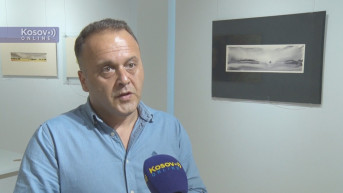
Historian Aleksandar Gudzic from Gracanica assesses that Vidovdan is part of the national identity of Serbs and that it is not a holiday that is offensive or directed against Albanians.
"Vidovdan is a day when national feelings among Serbs are more pronounced. It is usually associated with the Battle of Kosovo in 1389, which determined the fate and identity of the Serbian people. Unfortunately, or fortunately, by chance or intentionally, many events that have shaped the history of this nation have occurred on Vidovdan throughout history," Gudzic told Kosovo Online.
He reminds that on Vidovdan in 1869, the first modern Constitution of the Principality of Serbia was adopted, and on that same date in 1914, Gavrilo Princip shot the Austro-Hungarian heir to the throne, Franz Ferdinand.
"That shot by Gavrilo Princip was the trigger for the start of World War I, one of the greatest tragedies in modern Serbian history, but also in modern human history," Gudzic noted.
He also reminds that on Vidovdan in 1921, the Constitution of the Kingdom of Serbs, Croats, and Slovenes was adopted, and in 1948, the Information Bureau of Communist Parties adopted a resolution severing relations between the Soviet Union and its allied countries with communist Yugoslavia.
"On Vidovdan in 1989, Slobodan Milosevic gave a speech that effectively made him the leader of the Serbs. On Vidovdan in 2001, that same Slobodan Milosevic was taken to The Hague. On Vidovdan in 2006, Montenegro declared independence and separated from Serbia. Thus, Vidovdan is a day when significant events happen to the Serbian people, and Vidovdan is part of the Serbian national identity," Gudzic emphasized.
This historian says that Vidovdan should not offend the feelings of the Albanian people in any way.
"They have absolutely no reason to consider Vidovdan as a holiday offensive to Albanians. Vidovdan is a day when Serbian national feelings are more pronounced because it is associated with the Battle of Kosovo, and it is by no means directed against Albanians. Now, the fact that the political elites of Kosovo Albanians are angered and annoyed that on that day, Serbs from all over the world want to come to Kosovo, the place where the battle that determined the fate and identity of the Serbian people took place, and that national feelings are more pronounced then, is a matter for the Kosovo political elites and institutions," Gudzic believes.
He warns that Albanians have been trying for the last 25 years to build a narrative that Kosovo is exclusively their land, where Serbs never lived.
"The political elites of Kosovo have been building a narrative for the last 25 years that Kosovo is Albanian land, which the Serbs occupied on several occasions, first in the Middle Ages and later in 1912. That narrative, of course, has no basis in scientific truth and is contrary to official science, and perhaps for that reason, Kosovo's political elites are bothered by Vidovdan and want to present it as something offensive to Kosovo Albanians," Gudzic concludes.



0 comments