
Increasing number of women in North Mitrovica report sexual harassment
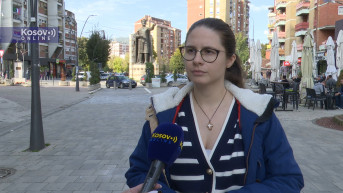
Catcalling, taking photos and recording without consent, touching, hugging, kissing, pinching, and persistently asking for a date despite clear rejection represent just some forms of sexual harassment. In recent months, many women in North Mitrovica have raised complaints about these actions, emphasizing that the level of safety in the city has significantly declined.
Women in North Mitrovica rarely speak openly about these experiences, especially in front of the camera and to the media, due to concerns for their safety. Women who shared their uncomfortable and traumatic experiences with our portal, often involving Albanian men, noted a high level of distrust in the Kosovo Police, which is one reason why they haven't reported these incidents.
One woman mentioned that this security problem emerged with the rise of Kosovo's Prime Minister Albin Kurti and that the inflammatory rhetoric of current politicians has created an environment where certain individuals feel empowered to express their “low desires” and motives, especially targeting women in this way.
"The uncomfortable experience I went through wasn’t an isolated case. Many women, particularly in North Mitrovica, have had similar experiences. I have to say that such negative encounters and sexist comments usually come from younger members of the Albanian community," she said.
She says that in the past few months, she experienced three uncomfortable incidents in her hometown, two of which occurred during the day.
"One incident happened just before midnight, where a group of young men in a car at a roundabout blocked my way, preventing me from crossing the street to enter my building. They said something in Albanian, laughing mockingly. I believe their comments were sexist. They eventually began getting out of the car, but luckily, a man came out of a nearby market, which prompted them to retreat and leave," she shared.
The other two incidents happened outside the newly opened “Meridian” market in North Mitrovica.
"One man, despite my husband being present in the afternoon, hurled crude remarks, laughed mockingly, and used gestures directed at me. I can only imagine what would have happened if I had been alone or if it had been evening. Another incident happened at the roundabout, when a middle-aged man started filming my movements. When I asked why he was recording me, he said he wasn’t filming me but rather some material in front of ‘Meridian’ to send to his manager," she continued.
She said she didn’t report these incidents to the Kosovo Police, as similar complaints haven’t led to any outcomes, adding that she and other women in the city have little confidence in the police.
"You can’t trust an institution where its head is seen socializing with these same people days before, drinking coffee and taking photos with them before a venue opens. If he supports these people, he certainly won’t prosecute them for my sake," she emphasized.
After these events, she changed her habits and routes around the city as she no longer feels safe going out alone or with her children.
"In the evenings, I no longer feel like going for a walk with my children. Even if I do, it is only as far as the newly opened ‘Misini’ shop and back. That place has become a hub for those same people influenced by inflammatory rhetoric, who frequently harass women, even women in their middle ages. It is not only younger women who are targeted but also older women out walking with their grandchildren," she said.
Another woman shared her experiences with Kosovo Online, saying she doesn’t feel safe, often avoiding going out alone and instead choosing to travel by taxi, as the city has become "creepy."
"I live in Bosnjacka Mahala, and about two months ago, while heading to the city center at around 3 p.m., a black car with 02 plates started following me all the way to the Lazar Monument. What was frightening was that it moved at the same speed as my walking pace. At one point, the driver opened the window and said, ‘Come, have coffee, don’t be afraid, get in.’ I noticed he was Albanian from his accent. When I reached the center, he drove off at a faster pace. At that moment, I didn’t fully realize how traumatic this was for me, but it happens so often that we face catcalling and other such incidents. That day, I realized I couldn’t go home alone, nor would I want anyone to have to escort me back," she explained.
She also didn’t report the case to the Kosovo Police, expressing a lack of trust in the institution, noting that she sees officers socializing with individuals "of that profile."
Another Mitrovica woman didn’t report similar incidents to the Kosovo Police but did inform KFOR soldiers whom she encountered afterward.
"Two weeks ago, as I was returning from a parent-teacher meeting around 5 p.m. in the town square, two Albanian men in a car lowered their window and followed me all the way to my apartment, whistling at me. I assumed they were Albanian, as I live in Mitrovica and know the people, and it was clear this was intentional and inappropriate. I was shocked, as I thought this kind of thing only happened after 10 p.m. when women are alone or when there aren’t many people on the street," she said.
She says that she avoids walking around town, especially with her children, and has organized her family activities differently. She rarely goes out alone and usually does so with someone else, based on the experiences of other women in the city.
"'Misini' is always full, mainly of men, and most of these incidents happen there. They are not even incidents, I don’t know how to describe the unpleasant experiences women face. So, I avoid taking my children on the promenade where I used to walk without issues," she emphasized.
Milica Andric Rakic, one of the signatories of a letter submitted to KFOR over the summer addressing this issue, tells Kosovo Online that the problem has emerged in multi-ethnic areas of the city, Bosnjacka Mahala and Mikronaselje, and is increasingly common in the city center.
"The level of public safety on the street is dropping. Many malicious individuals move through the city in a provocative way, often involving some form of provocation toward women. That is why we have started speaking about the issue, as it has the potential to escalate and lead to serious societal problems," Andric Rakic said.
She acknowledges that women often lack confidence in the police, which is why they don’t report such cases. In several instances, she adds, police officers themselves have been the perpetrators of harassment.
"Women think it is pointless to report such acts to the police, who are themselves involved in harassment. It happens that a woman who crosses the Jarinje or Brnjak border, minutes after crossing, gets a friend request on social media from the officer who inspected her documents. There are, of course, much more serious cases. It is evident that police officers need to be educated about their responsibilities and what they can and can’t do with citizens’ private information. More education for officers is needed," she noted.
Andric Rakic believes sexual harassment is primarily a cultural issue, making solutions complicated, especially since there is an ethnic dimension to this case.
"The solution again involves serious police work and a calming of the rhetoric that inspires people with malicious intent to carry out such actions by harassing citizens in North Mitrovica," she said.
Kosovo Online asked the Kosovo Police in North Mitrovica for the number of reported sexual harassment cases and their processing, but a response had not been received by the time of the text publication.



0 comments