
Lidija Milenkovic on suffering from the KLA in Kosovo in 1998: I don't hope for justice, I just want to know the fate of my mother
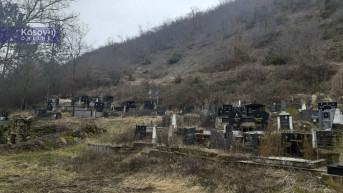
Twenty-five years ago, members of the KLA carried out the first abductions of the Serbs in the villages around Decani, and after a quarter of a century, the fate of the seven Serb victims is still largely unknown. Lidija Milenkovic, the daughter of the victims Milica and Milos Radunovic, cannot visit her father's grave in Peja, but she knows his tragic fate, unlike her mother, who is still missing.
Milenkovic recalled for Kosovo Online the last meeting with her parents that had taken place in 1998, on April 18, on the third day of Easter. She hadn't seen them since.
"It was the third day of Easter, we were with our parents, my brother and I with children and families. There was shooting all day, although in the distance, not right there in the village of Dashinoc. We were asking our parents to go with us, but they thought that they didn't do anything bad to anyone, that they knew those neighbors in the village, that some of them were even godfathers, and we didn't manage to convince them to go with us," she said.
She recalls that on the evening of the 18th, she returned to Orahovac with her family and children, where she lived at the time.
"We left the village and I didn't see my parents again. I heard that they were killed on April 23, but we, their children, have nothing official. Nobody told us anything officially, but it is considered that it happened on April 23 because since then it was no longer possible to go from Decani to the villages, the KLA was already there and Ramush Haradinaj was in charge. We were looking for answers, we heard various stories, but we didn't get anything concrete," she stated.
In September of that year, the bones of Milos Radunovic were found, and Lidija states that they buried two or three bones in Peja, where they have a family grave, which they gave to them after identification.
"There are two or three bones that have been identified, we buried them in Peja because we have a family grave there, and my mother is still missing and I hope to find out where her grave is. I no longer hope that she is alive, but I hope to find out where her grave is and how she died," she says.
She says that they called her from the Hague Tribunal and that she came to Belgrade to talk to them every five or six months.
"They change and then the same questions, the same attitude, the same everything and we'll see. Six months pass and they just change. I went twice when I went the third time I said, 'Don't call me anymore because you only come to fulfill some of your norms and you don't solve anything'," she emphasizes.
Two or three years after she buried her father, as she adds, a commission appeared to investigate whether Milos's identity was correct.
"They took our blood to do DNA and it turned out that it really was my father. We have information about my father that he was shot and we have some bones that were confirmed to be his. We also found the suit where his wallet was, so that he is real, but it was found in September, and who knows what happened. foxes and dogs took away the remains, but we knew from his wardrobe, his ID card, and driver's license were there. And I don't have any information about mom, she was a heart patient and it's possible that she was scared when she saw her father being taken away..., but I don't know, now I'm guessing and I'm thinking something in my head, but she's still being considered missing," Milenkovic says through tears.
When they were exhuming her father's remains, Lidija agreed to go and give blood for DNA, but she set the condition that she would go to the Dashinoc, to see what there was.
As she says, they respected that, they drove her with an escort, but he was disappointed by their attitude towards the children who were herding the cattle by the street.
"I was disappointed when I saw that the children on the side of the road who were herding cattle were playing and waving, they reacted as if they had atomic bombs," she added.
Asked whether she expected justice to be served in view of the trial in The Hague, and the agreement on the missing persons as part of the oral agreement between Belgrade and Pristina reached in Ohrid, Milenkovic says that she does not hope for any justice, but that she hopes that there will be an exhumation and that they will find out where and how her mother died.
"Otherwise, I don't expect justice, everything is visible and known and we are aware of this insolence. I have my doubts, I grew up and got old down there and I know that even if the issue is raised within the dialogue, Albanians will never say what is not in their favor. It's such a people and I don't expect any justice. Haradinaj was the head of the part where my parents lived, so what did we see, he went, walked around, and proved his innocence. I don't expect anything, I just hope and pray to God that I find out where my mother died," she says.
When it comes to other Serbs who died in that KLA campaign, Milenkovic states that she has information that her father and Slobodan Radosevic fought with the Sqiptars, but that they were shot.
However, as she adds, the information that they caught her father and took him to Radosevic, as well as that the two confronted members of the KLA and were shot, are unofficial.
"They were killed near the village, those bones were found there, it is called Radonjic Lake, but the bones were found a little above our property. The Vlahovic, Milka, and Milovan remained in the village at the time, as well as two sisters about whom I know nothing. I was young, and the two of them lived a little further away. Seven or eight of them never left the village, and we are forever searching for all of them."
Stating that she was asked by The Hague Tribunal if there was any evidence for anything, Lidija emphasizes that she answered them that if she had had any evidence, she would not be alive today.
Thanking the editorial office of Kosovo Online that, as she says, someone at least remembered to say two words about those events and apologizing for not being able to finish the conversation with repressed emotions, Lidija Milenkovic says through tears that "there is nothing" in all of this. she does not expect justice, nor can she help her, and her only wish is to find out the fate of her mother and to bury her so that she can go to her grave.
Twenty-five years ago, on April 23, the KLA carried out the first mass kidnapping of the Serbs, and on that day in 1998, Milica Radunovic was kidnapped from the village of Dashinoc near Decani, who is also the first recorded victim of a kidnapping in Kosovo.
Since April 23, 1998, seven Serbs were killed and kidnapped - Milica Radunovic (1938) and her husband Milos (1938), Slobodan Radosevic (1943) from Dashinoc, Vukosava Markovic (1937) and her sister Darinka Kovac (1932), from Gornji Ratis, who were killed and found next to Radonjic Lake.
A forensic examination revealed gunshot wounds and multiple bone fractures on the body of Vukosava Markovic.
The crimes continued in the village of Gornji Ratis, and Milovan Vlahovic (1935) and his wife Milka Vlahovic (1933) were kidnapped, tortured, and killed.
The remains of Milovan Vlahovic were found on September 12, 1998, as well as the remains of Slobodan Radosevic and Milos Radunovic on the way to Dashinoc, and parts of the woman's body and burnt clothes could not be identified.
Forensic experts have confirmed that at least 39 remains of the victims, found on the edge of the Radonjic Lake, and six victims on the Ekonomija agricultural estate.


comments