
The truth is further and further away; without revealing the fate of the missing persons, there is no normal future
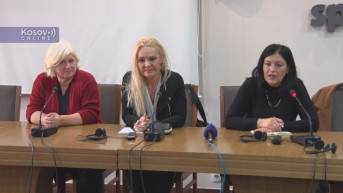
Today, a round table was held in Gracanica on the topic of "Stalemate in resolving the issue of kidnapped and missing persons", where family members once again emphasized the importance of clarifying the truth about the fate of their loved ones.
According to the data of the Resource Center from Pristina, Kosovo is in search of another 1,617 persons of Albanian, Serbian and other nationalities, who had disappeared before and during the war conflicts in Kosovo.
Miroslava Djordjevic from Nerodime near Urosevac reminded that the fate of her father-in-law has been unknown since 1999.
"My father-in-law was kidnapped at home, they took him from the house, we know who took him, his name and surname, but nothing has been done. We know nothing. I want this to be solved, him to be found, and to know if he is dead or alive," Miroslava said.
Sasa Perenic has been searching for his brother Ranko since 1998, who was kidnapped together with Djuro Slavuj. Sasa points out that the truth is further and further away, and he sees the international organizations as culprits.
"We have no information whether they are alive or dead. A lot of time has passed, and we know that nothing may come out of it. There are fewer and fewer members of the Association, and the truth is getting further and further away. The only culprits are the International Organizations that dealt with those problems. My brother disappeared when there wasn’t an official conflict. I blame the Red Cross based in Pristina and the OSCE Mission, who were the only ones on the ground who could find out the truth," Sasa said.
Silvana Marinkovic, the coordinator of the Association of Families of Kidnapped and Missing Persons, said that Serbian families whose members had been kidnapped or disappeared were discriminated against.
"We, the families of kidnapped and missing people who live in these areas, are discriminated against from all sides, because we do not have the right to freedom of movement or speech. We live in obscurity, in a tunnel so to speak. If there is a light at the end of the tunnel and a solution will be found, we don't know, we just have to wait and see," Marinkovic said.
Suzana Matejic, forensic medicine specialist at the Commission for Missing Persons, pointed out that the arduous struggle had left its mark on everyone.
"We are still not satisfied with the results. What I want you to know is that the Republic of Serbia is committed to this problem, through the Commission for Missing Persons, this represents a humanitarian problem. The fact is that we cannot build a new society, the future, we cannot leave it in legacy to our descendants if we have not left the past behind," Matejic said.
Matejic points out that the process of missing persons is in the hands of all of us, "the Albanian community, the International Red Cross, the International Commission on Missing Persons, EULEX".
"All that remained in the plans that we had promised to carry out together, but at this moment we cannot say that in the last six months, we have done something more in the process of the missing and searching for the missing. If we take into account what is happening around us, however, each case means a lot, and each step forward brings hope to continue," she added.
Matejic emphasized that the priority was to examine the mortuary in Pristina, where there are around 450 remains.
"The mortuary in Pristina is something that must be investigated because we don't know whose remains are there. Our colleagues started that work, and we insisted on having information. Out of those 450 remains, we have data that 80 of them belong to Serbs and non-Albanians. We will soon be informed about their work, they will present the data to us, and we will get the key answers as to who is in the mortuary in Pristina," Matejic said.

comments