
Prizren - a city with ten endowments of Nemanjic Dynasty
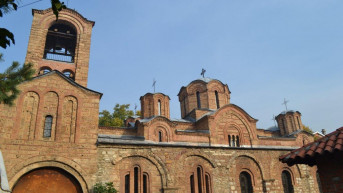
The Serbian medieval heritage in Kosovo and Metohija is an integral part of Europe and the world. The monasteries of Gracanica, Patriarchate of Peja, Visoki Decani, and the Church of the Holy Virgin of Ljevis, are a mirror of the artistic reach of that time in Europe. It testifies to the duration of the Serbs in that part of the Balkans, and today, also to their determination to survive, RTS reports.
In the Eparchy of Raska and Prizren, which was first mentioned in the Charter of the Byzantine Emperor Basil II in 1019, about two hundred cultural monuments and more than a thousand remains of Christian symbols were recorded.
The seat of the Eparchy is still today in Dusan’s imperial Prizren - a city with ten endowments of the Nemanjic Dynasty but also other endowments. The church of the Holy Virgin of Ljevis amazes with its beauty and its architecture and paintings. The endowment of King Milutin from the 14th century, as well as Gracanica, Visoki Decani, and the ancient Church of Peja are part of the history and culture of the world.
"Here, we reached the peaks of our civilization, in one moment. We have a civilization here that is deeply our property - therefore, the property of each of us, because it was left as a legacy for us by those who built it. The value belongs to all of humanity," Zivojin Rakocevic, a journalist and a writer, pointed out.
Everything that was made here, he adds, was made for resurrection and renewal.
"Decani is at the top of the pyramid of an ancient civilization. They rest on hundreds and hundreds of other small churches and monasteries, and at this moment they rest on eighty thousand lives of the Serbs who live south of the Ibar," Rakocevic said.
Monuments of the Serbian past have been in the UNESCO register of endangered heritage sites since 2006. Especially when it is known that at the very beginning of the third millennium, centuries-old Serbian sanctities and places of prayer, deeds, and authentic testimonies about the historical existence and duration of the Serbs in the Kosovo and Metohija area were destroyed.
"We must do everything so that these pearls of the world’s architecture remain primarily accessible to our citizens, who come to Kosovo and Metohija to get to know their beauty. Our state and church, our profession succeeded in saving these cultural monuments from oblivion, by undertaking a series of conservation works and we managed to restore a large number of churches, church complexes, and monasteries," Zoran Garic, the director of the Heritage Institute in Leposavic, said.
The bells of the medieval and other holy sites of the Orthodox Church of Serbia testify to the perseverance of the people who will continue to celebrate life in Kosovo and Metohija, near Prokletije, close to Decani and the Patriarchate, Velika Hoca, and Gracanica.


0 comments