
Stojakovic: Greece and Montenegro the most popular destinations for residents of Northern Kosovo
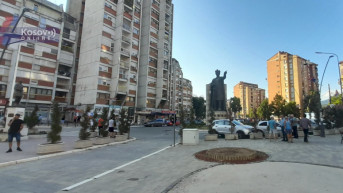
Residents of northern Kosovo most frequently choose Montenegro and Greece for their summer holidays, with Budva, Paralia, and Hanioti among the most popular destinations, while interest in Sithonia and the Greek islands is growing, Nenad Stojakovic, manager of the Holiday Plus travel agency from North Mitrovica, told Kosovo Online.
Stojakovic noted that issues related to freedom of movement continue to pose challenges for citizens.
“Just before the summer season, a number of citizens were left without their vehicles due to the implementation of the license plate law,” Stojakovic said.
He also pointed to unresolved issues concerning the use of Kosovo documents, citing a recent case involving a passenger travelling from Barcelona on a Kosovo passport.
“At the check-in counter, an employee challenged her right to travel with that passport and insisted that she purchase a new ticket, claiming that she would be deported back to Barcelona upon arrival at Belgrade Airport. He was unfamiliar with the Brussels Agreement. We all experienced considerable stress and ended up purchasing another ticket because we had no other solution. There will continue to be such technical issues and problems for a long time,” Stojakovic said.
Speaking about the implementation of the European Union’s Entry/Exit System (EES), Stojakovic said that its application at Greek border crossings had been suspended from June 1, 2026, due to the tourist season, but that passengers travelling to Milan had a different experience.
“Our passengers travelling to Milan spent two and a half hours waiting in a tunnel at Malpensa Airport while the system, operated by four police officers, processed a plane carrying 240 passengers. Naturally, we missed the transfer to the hotel because the transport provider was unwilling to wait three hours and incur additional airport parking charges. We had to pay for a new transfer so that the passengers could reach their hotel. All of this complicates and slows down travel,” he said.
According to him, the system designed within the European Union’s administrative structures is not delivering results in practice.
“A bureaucratic control system conceived in Brussels offices is slow, inadequate, and cumbersome in practice, and in no way reflects the principles and values of the European Union, foremost among them the free movement of people, labour, and capital. Not to mention the mistreatment and violation of the rights of citizens from outside the European Union, including young children and elderly people who find themselves at one of the EU border crossings,” Stojakovic stressed.
Commenting on the role of travel agencies in the age of the internet and digital technologies, Stojakovic said that an increasing number of young people are choosing to organize their trips independently.
“Tourists have been seeking the services of travel agencies for more than 150 years. With the development of information technologies and the internet, a large number of young people now independently create and book their travel and holiday arrangements,” he said.
Nevertheless, he added, travel agencies strive to provide their clients with greater security and more favorable payment terms.
“Travel agencies primarily seek to provide security for their clients and the most favorable payment conditions, often including instalment plans of up to six monthly payments, which significantly facilitates travel for our clients,” Stojakovic said.
He recalled that travel agencies are required to maintain appropriate guarantees as part of the licensing process in order to protect travellers.
“As part of the licensing process, insolvency insurance and a Guarantee Fund policy are mandatory, so that travellers can be compensated in the event that an agency goes out of business,” Stojakovic concluded.



0 comments