
Vuletic: The issue of Kosovo is of key importance for the SOC, the fundamental agreement Is essentially not a Church matter
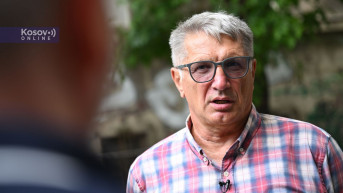
Sociologist Vladimir Vuletic stated that claims of alleged preparations for signing the Fundamental Agreement between the Serbian Orthodox Church (SOC) and the authorities in Pristina represent an attempt to undermine the unity of the Serbian Church and its stance on Kosovo, adding that the Fundamental Agreement is essentially not an ecclesiastical, but a political matter.
“When you see who has been named as the alleged SOC negotiator, it becomes clear that this is a continuation of what I would call a special war not only against the Patriarch, but against the unity of the Church. Every effort is being made, both within the clergy and especially among the faithful, to create the impression that the Church is divided, split, and acting against the interests of Serbs and Serbia. This is just another way of continuing that special war,” Vuletic told Kosovo Online.
He stressed that it should be borne in mind that the SOC pays special attention to everything happening in Kosovo.
“This is, in every sense—both historical and current political—something in which the SOC is particularly interested. It is not difficult, in such a situation, to attempt to destabilize the Church precisely on that issue, which is its most important,” Vuletic explained.
Commenting on the possibility of signing the Fundamental Agreement between the SOC and Pristina and what should be fulfilled beforehand for that to happen, Vuletic believes that this type of agreement “has little to do with the Church.”
“The Church has its own goals, its own policy, which is independent. Many governments have changed, many state frameworks have existed, and the Church has always had its own stance and position both toward Kosovo and Metohija and toward the manner of its organization. Therefore, this is not essentially a church matter,” Vuletic emphasized.
He explained that the Church can only, after “political clarification” or agreement, enter into what he called “some form of discussion and negotiation” on how certain problematic issues will be resolved.
“Essentially, the Church has no jurisdiction, and that is why it is strange that someone would spin the matter in this way and attempt to attribute to the Church the act of politically prejudging something. That, in itself, is nonsense,” Vuletic said.
He stressed that the most important thing is to preserve the status of the SOC in Kosovo.
“The most important thing is to preserve the status of the SOC, and thus to preserve our cultural monuments. Because what we are seeing—and I believe these attempts will be unsuccessful—are efforts to challenge the SOC and establish some kind of ‘alternative’ Orthodox Church. But such attempts have been made in other places where they perhaps had better prospects, yet they failed,” the analyst said.
He added that for the Church, the most important thing is that the clergy and the faithful are safe.
“That they live in accordance with what are universal human rights, including those relating to freedom of religion,” Vuletic stressed.
He also linked the attacks on the SOC to events in Serbia.
“The problem for many who are now thinking about what is happening here is the position of the SOC, which insists on unity. For many here, as we can see, disunity would be in their interest. The SOC is targeted not because it supports one political side or the other, but because it insists on unity,” Vuletic concluded.

0 comments