
Pasic: Prosecution proved the indictment allegations, Thaci should be found guilty
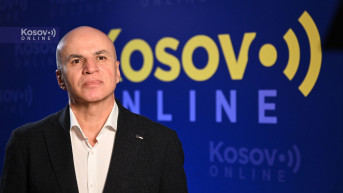
Attorney and former military prosecutor Dragan Pasic told Kosovo Online that the Specialist Prosecutor’s Office has proven the allegations in the indictment and that the professional public expects the accused in the case of Hashim Thaci and others to be found guilty.
“The Kosovo Specialist Prosecutor’s Office has, in my opinion, carried out a clear, explicit and unequivocal factual and legal analysis that significantly strengthens the foundations of the indictment. The joint criminal enterprise, a legal doctrine adopted in the judicial practice of international criminal law, was the primary focus of the prosecution in analyzing all the events that took place during 1998 and 1999 on the territory of Kosovo and Metohija and in northern Albania,” Pasic said.
He further states that more than 5,000 written pieces of evidence were presented, extensive material spanning 28,000 pages, and that more than 230 witnesses were examined.
“I therefore believe that the prosecution has fully proven the allegations of the indictment, and it also resorted to an alternative form of liability known as command responsibility. Hashim Thaci’s defense, as the main argument to refute the indictment, attempted to rely on the testimony of Wesley Clark, Rubin, and others. However, these are witnesses who did not have direct knowledge, and the prosecution correctly notes that they were misled by Hashim Thaci and other accused persons and did not have a true insight into the situation on the ground.”
Pasic considers it undisputed that crimes were committed during the incriminated period in Kosovo and in northern Albania, but even Hashim Thaci’s defense claims that this occurred within the zone of responsibility of local commanders and that Thaci had no control over them.
“That means they do not deny the crimes, but they deny the participation of Hashim Thaci, Kadri Veseli, Rexhep Selimi, and Jakup Krasniqi. The expectations of the professional public are that the court will find them guilty. The Kosovo Specialist Prosecutor’s Office has requested high sentences of 45 years for each accused. This is not the maximum sentence, the maximum sentence is life imprisonment, but it is nevertheless a very severe penalty. The proposed sentence supports the prosecutors’ thesis that this involves a large-scale scope of war crimes, and based on reports, instructions, regulations and written evidence, it has clearly been established that Hashim Thaci and the three co-accused had not only control over the commanders of operational zones, but also command authority. They sought to establish control over the entire territory of Kosovo and Metohija through intimidation, blackmail, persecution and various other methods contrary to the rules of international humanitarian law.”
Our interlocutor states that he was not surprised by the list of defense witnesses during the proceedings, and that in most cases they were former high-ranking American generals and diplomats.
“I am not surprised by such evidentiary proposals by the defense, because Wesley Clark, commander of NATO forces, as well as James Rubin, a senior official of the US administration, and Christopher Hill, in fact attempted to justify the NATO intervention on the territory of the then Federal Republic of Yugoslavia and to strengthen the political alliance they had with the accused Thaci and others. However, the Specialist Prosecutor’s Office correctly notes that these high-ranking officials of the international community could not have had insight into the real situation on the ground, and much of the information provided to them by Thaci and others was fabricated, that is, it was not real,” Pasic continued.
“However, I also noted one fact that Rubin stated as a witness at the trial when he said that in September 1999 he learned about crimes in Kosovo and, when he asked Thaci why those crimes had been committed, Thaci replied that he had no control over those crimes and that it had been retaliation. Therefore, the testimony of these three witnesses is also of benefit to the prosecution and to proving the indictment.”
Regarding how much politics can influence the verdict in the case against Thaci and others in The Hague, our interlocutor says that politics influences legal decisions everywhere in the world.
“I believe that various political interest groups and various political leaderships at the international level will have influence. However, this also concerns the integrity of these judicial institutions because, in my opinion, it is impossible for politics to have primary influence over indisputable facts, and we are dealing with crimes committed in the most brutal manner by the highest leaders of the so-called Kosovo Liberation Army. They had political influence, not only military, and the defense witnesses sought to focus only on that political influence, claiming that they had no influence, as they say, over the so-called KLA, which did not have a firm centralized structure. However, the evidence presented refutes such a defense claim,” Pasic concluded.



0 comments