
Strbac: Kosovo will apply the Croatian model in the appeals process before the Specialist Chambers
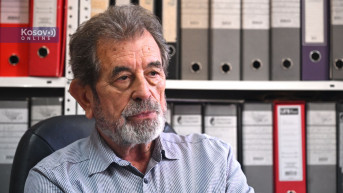
Savo Strbac, president of the Documentation and Information Center “Veritas”, reminded for Kosovo Online that, following the first-instance guilty verdicts against its generals before the Hague Tribunal, Croatia engaged a lobbying group, whose “feathers” are now being used by lawyer Luka Misetic, who is defending former Kosovo President Hashim Thaci before the Kosovo Specialist Chambers in The Hague. He is convinced that Pristina will therefore apply the Croatian model in the appeals process against the former KLA leaders.
“What did the Croatians do after that first-instance verdict? They engaged an American–Canadian–British group of world-renowned lawyers, legal experts and senior officers. They wrote a report and sent it to the court in The Hague. In that report, they attacked one segment of the Trial Chamber's judgment, namely the ‘200-meter rule’,” Strbac recalled.
According to the first-instance verdict against Ante Gotovina, Mladen Markac and Ivan Cermak, if a shell falls within less than 200 meters of a legitimate military target, it is considered unlawful. The lobbying organization argued that if this rule were upheld on appeal, no commander in NATO would risk leading an army.
Following the acquittal of the Croatian generals on appeal, Strbac is convinced that Kosovo will therefore make use of the Croatian model because it has a “good teacher” in lawyer Misetic.
“Misetic is an American citizen of Croatian origin, and he is now taking credit for the work of that lobbying group. The Croatians, however, listened to him. They raised huge amounts of money and lobbied. Only we Serbs still do not understand that lobbying in the West is completely legal,” Strbac explained.
In addition to money, Strbac added that the lobbyists went after witnesses, primarily Serbs, paying huge sums of money, offering amnesty in exchange for withdrawing previous statements, or asking them to testify differently.
Comparing the situation in Kosovo following the first-instance verdict against the KLA leaders with what happened in Croatia, he now notes that “copied statements” can be heard, just as they once could in Croatia.
“What was yesterday's unanimous adoption of the Declaration on the injustice of the verdict? Unanimous, but without the Serbs. They argue among themselves and fight with each other, as they say, but when it comes to the Homeland War, they are all unanimous and always united. All of that has been copied onto Kosovo,” Strbac repeated.
He added that the Croatians created a model for prosecuting enemies and are now exporting that “recipe” to Kosovo, Bosnia and Herzegovina and Ukraine.
“Prosecute enemies from those wars in large numbers. The description of the offense, the act and the facts is not important; what matters is simply that it is classified as a war crime, because such crimes do not become time-barred. The goal is to have territory where Serbs lived, but without Serbs. That is more effective than tanks and guns,” Strbac concluded.



0 comments