
SRF: The verdict against Thaci confirms what Serbs have always said – the KLA committed war crimes
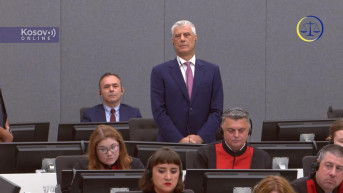
Following the first-instance verdict against the former KLA leaders, Swiss public broadcaster SRF critically examines the historical support and cooperation of the Swiss authorities at the time with the now-convicted war criminals, and states that the verdicts have confirmed the “Serbian narrative” about KLA crimes.
“The verdict against former Kosovo President Hashim Thaci for war crimes represents a somewhat painful issue for Switzerland,” Swiss public broadcaster SRF correspondent Peter Balzli assessed, pointing to the close ties that official Bern once maintained with Thaci and the KLA leadership.
In the main news program, which featured the verdict against Thaci as one of its main topics, Balzli particularly highlighted the role of then-Swiss Foreign Minister Micheline Calmy-Rey and the strong support Switzerland provided for Kosovo's independence.
The SRF report also recalls that Switzerland was at the time a “logistical hub” for the development of the KLA.
Balzli assessed that the verdict now casts the policies of Bern at the time in a different light.
“This verdict shows that official Switzerland, specifically the then foreign minister Micheline Calmy-Rey, cooperated with one or more war criminals,” the SRF correspondent said.
According to him, the Swiss authorities at the time “did not want to see or could not see” the war crimes.
Balzli assessed that such a development represents “painful damage to neutral Switzerland, to Switzerland's image”, adding that the consequences of this “will probably resonate for some time”.
At the same time, Balzli pointed to the completely different role of two Swiss nationals who for years insisted on investigating KLA crimes – former chief prosecutor of the Hague Tribunal Carla Del Ponte and former Council of Europe rapporteur Dick Marty.
He recalled that the verdict relies to a significant extent on findings from Marty's 2010 report, as well as on the earlier work of Carla Del Ponte, assessing that today's verdict represents a kind of “confirmation or rehabilitation” of their work, for which they were subjected to numerous criticisms.
Speaking about the broader significance of the verdict, Balzli described it as a “double message”. On the one hand, he assessed it as a success for international law, because the verdict shows that those responsible for war crimes cannot assume that they will escape accountability even many years after the crimes were committed.
On the other hand, Balzli believes that the verdict is unlikely to contribute to reconciliation between Serbs and Albanians in Kosovo. He pointed out that, according to surveys cited by SRF, 75 percent of Kosovo Albanians do not accept the Specialist Chambers and that, for them, Thaci remains a war hero rather than a war criminal.
“On the other side is the Serbian minority. The verdict confirms what they have always said – Hashim Thaci was a war criminal, the KLA committed war crimes,” Balzli said.
For that reason, in his assessment, the verdict “cannot build a bridge” between the two communities. On the contrary, it reinforces existing narratives about victims and heroes on both sides and, for that reason, as he stated, will probably not contribute to reconciliation between Serbs and Albanians.
At the same time, SRF emphasizes that the verdict establishes the individual guilt of the four former KLA leaders and that the KLA itself was not in the dock.



0 comments