
Kosovo in a race against time: Are political relations any clearer in the week before the deadline for electing a president?
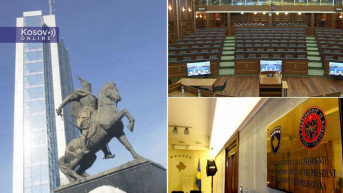
Kosovo’s political race against time is entering its final stage, with another snap parliamentary election emerging as the most likely scenario unless an urgent compromise is reached over the election of a president. Ahead of the constitutional deadline, Kosovo Online’s interlocutors point to deep political instability, uncertainty over whether the necessary majority can be secured and the risk of another election costing millions.
Written by: Milena Miladinovic
According to the Constitutional Court’s ruling, October 6 is the final day for electing the President of Kosovo. If a president is not elected by that date, Kosovo will face yet another electoral cycle—the fourth in the past two years.
Are relations among Kosovo’s political parties any clearer in the final week before the constitutional deadline expires, or does the presidential question remain a “stumbling block”? And is it being linked to support for the PDK-sponsored proposal to amend the Law on the Kosovo Specialist Chambers?
Kosovo Online’s interlocutors see little indication that the parties are seriously addressing the presidential question, but assess that elections at this point would not suit Prime Minister and Self-Determination Movement leader Albin Kurti.
Elections the most likely scenario
Milos Pavkovic, Strategy Director at the Belgrade-based European Policy Centre, believes that new elections are the most likely outcome of Kosovo’s political crisis, as the question of the presidency remains unresolved in the final week before the constitutional deadline expires.
Pavkovic told Kosovo Online that political relations in Kosovo were no clearer today than they had been the day after the June elections.
“After three rounds of parliamentary elections, we still have political instability in Kosovo. The Government was elected simply because Self-Determination won enough seats to form it. However, the question of the president remains open. Officially, we have no candidate, the constitutional deadline is running, and it will expire very soon,” Pavkovic said.
He added that negotiations between the LDK and Self-Determination had taken place in early September.
“There was a candidate who withdrew, so nothing came of it. After three rounds of parliamentary elections, the situation has still not been resolved. There is no political agreement, the crisis continues, and the most likely scenario is that the constitutional deadline will expire and we will go to yet another parliamentary election,” he said.
Asked whether Self-Determination might offer support for amendments to the Law on the Specialist Chambers in exchange for backing for its presidential candidate, Pavkovic said that this was uncertain.
“That is an interesting question. Following the judgment against Hashim Thaci, there is considerable dissatisfaction with the Specialist Chambers’ judgment, both among political representatives and among Kosovo citizens. In that context, there is significant potential for synergy, or support for such a law. This is something Albin Kurti could potentially use as a bargaining chip in exchange for support for a presidential candidate. However, that is in theory. In practice, there is no indication whatsoever that any candidate exists. So, although this could potentially represent a good opportunity, I am not optimistic, nor do I expect that it will actually enable that kind of political bargaining and lead to the election of a president,” Pavkovic said.
He expects the opposition to try to capitalize on the wave of dissatisfaction over the judgment.
“I believe the opposition will try to place responsibility on Kurti and then ride that wave of dissatisfaction to win more votes in a new election. I think the opposition will use the Specialist Chambers’ judgment to try to take away Kurti’s strongest card—nationalism. Citizens are dissatisfied with the Court’s judgment, while the Kosovo Government has been ambiguous on the issue or has failed to meet public expectations. I therefore expect the opposition to criticize the Government and try to take that nationalist card, which had been Kurti’s strongest asset, away from him and claim it for itself, thereby taking over part of Kurti’s electorate and achieving a better result in potential new elections,” Pavkovic explained.
He said Kurti no longer had the option of holding potential elections at the end of December during the holiday period, which could make it more difficult for him to achieve a favorable result.
“The diaspora is another strong card Kurti has, and diaspora votes have traditionally tipped the balance in his favor in previous election cycles. However, because of the constitutional deadlines, Kurti can no longer postpone the elections until, for example, the end of December, when the diaspora traditionally comes home. On the other hand, Kurti has shown himself to be a very stubborn politician who is not inclined toward compromise and has essentially demonstrated that he is prepared to charge headlong into a wall in any situation. It would therefore not surprise me if he opted for snap elections now as well, because he does not want to share power or enter coalition governments under any circumstances, even at the cost of losing power altogether,” Pavkovic concluded.
Not all options have been exhausted
Dusan Radakovic, Executive Director of the NGO Advocacy Center for Democratic Culture (ACDC), assessed that not all possibilities for resolving Kosovo’s political crisis had yet been exhausted, but that new elections would not suit Prime Minister Albin Kurti at this point.
“Not all options have been exhausted. I think elections do not suit Kurti at this point in any respect, because the PDK is strengthening the nationalism it had lost through the KLA and the army. Following the decision, that sentiment began to grow again, as we have now had protests for many days,” Radakovic told Kosovo Online.
He believes that, if snap elections are held, they could take place at the end of December.
“Certainly, because of the decision handed down in The Hague, but also because he has already organized elections three or four times without anything concrete coming from them—a government without a government, without an assembly—if Kurti cannot organize them on December 27, which is what he wants, he will certainly have fewer voters,” Radakovic said.
He expects Kurti now to seek room for parliamentary dialogue and talks with the opposition parties, perhaps even at the expense of his own hold on power.
“I assume the PDK will now seek its own candidate, perhaps someone who is not from the party but an intellectual who will wholeheartedly support the abolition of the Specialist Chambers and seek, in some way, to set aside or minimize that decision so that those leaders can return to their positions. On the other hand, we will see whether the Court stands firm. I sincerely hope it will,” he said.
Radakovic said one possible scenario for avoiding new elections would be to find a compromise presidential candidate, assessing that responsibility for such an agreement rested primarily with Kurti.
“I hope there will be no elections and that a solution will be found. I think Kurti is currently the one holding the hot potato. The question is how he can resolve the situation without elections and accept a candidate he does not entirely want, while the other side only grows stronger if it has its own presidential candidate,” Radakovic concluded.
Set stubbornness aside
Agim Shahini, President of the Kosovo Business Alliance, said that Kosovo’s politicians had shown little concern for the people and should set aside stubbornness and political divisions when it came to electing the president.
“As our politicians have demonstrated so far, they care less about the people and the state than about their personal interests. They should put stubbornness and political divisions aside. We must stand together—all parties, particularly in democratic states—because no party in Kosovo has a sufficient majority to elect the president. The president should come from an opposition party for the sake of better democracy. One party should not hold every office in a country—in this case, Self-Determination,” Shahini told Kosovo Online.
Shahini believes that support for the proposed amendments to the Law on the Kosovo Specialist Chambers should not be made conditional on votes for the election of the President of Kosovo.
“These are two different matters and should not be made conditional on one another. If they are indeed imposing such conditions on each other, it shows how immature our politicians are. We need to elect a strong president who has doors open in the European Union and throughout the world, someone who can remove all the obstacles we have created recently and enable Kosovo to move forward, because Kosovo has fallen behind the other countries in the Balkans,” he said.
Shahini believes Kosovo does not need the expense of another election and said that, if elections nevertheless take place, citizens should think carefully about whom they support.
“I do not think we should go to new elections. They will cost a great deal of money, while all the important and urgent reforms and laws will remain unfinished. Institutions will not be functioning for months after the elections. But from what I can see, there are no serious talks about electing a president. If politicians cannot reach an agreement, then all voters should think carefully about whom they vote for,” Shahini said.
He stressed that Kosovo had already been without fully functioning institutions for two years, affecting its ability to access funding under the Growth Plan. According to Shahini, Kosovo has so far received only seven percent of the EUR 882 million earmarked for it.

0 comments