
Nikolic: Hostage release process urgent, Israeli analysts cautious whether this is the end of the war in Gaza
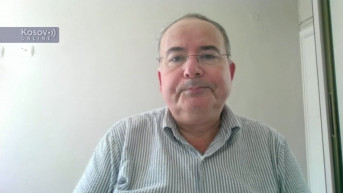
Honorary Consul of Serbia in Israel, Aleksandar Nikolic, told Kosovo Online that negotiations on a hostage exchange between Hamas and Israel will begin tomorrow in Cairo, but that the expert public in Israel remains cautious as to whether Trump’s plan to end the war in the Gaza Strip will yield results.
Nikolic said that Hamas’s acceptance to release all hostages as a prelude to ending the war in Gaza has been met in Israel with “a certain degree of caution and distrust, but also with maximum cooperativeness.”
“It is of essential importance for Israel to be fully aligned with what was essentially agreed in the 20 points. Likewise, it must remain in maximum coordination with the US administration of Donald Trump. I think it goes without saying how urgently and imminently important the beginning of the process of releasing, that is, exchanging the remaining 48 kidnapped hostages is, 20 of whom are believed to be alive, including our citizen, Alon Ohel,” Nikolic said.
He explained that Israeli security analysts do not see Hamas’s decision as full consent, but rather as “a kind of attempt to reopen negotiations.”
Nikolic added that Israeli Prime Minister Benjamin Netanyahu’s negotiating team will already tomorrow meet Hamas representatives, and that there is strong public pressure for the immediate start of the hostage exchange process.
“This time the negotiations will be held in Cairo, not in Doha. From the Israeli perspective, this could be of utmost importance, especially given the urgent need to release the remaining kidnapped hostages, primarily considering their health condition and all they have endured psychologically. In that sense, there are enormous expectations here and public pressure for this to happen immediately,” Nikolic emphasized.
He explained that the families of the hostages remain in constant contact with Israeli government teams responsible for the negotiations.
As for the family of Serbian citizen Alon Ohel, the honorary consul of Serbia in Israel said they are “more than cautious,” which is why they do not wish to appear in public at this time.
“We are talking about families of knightly spirit, something hard to describe, the strength and inner resilience they have shown over the past two years in facing the most difficult possible humanitarian situation. They are, of course, in constant contact with the Israeli government teams in charge of the negotiations,” Nikolic said.
Israeli analysts, including leading institutes dealing with security issues, express caution primarily about Hamas’s next steps.
“When we talk about local security analysts, such as the Institute for National Security at Tel Aviv University, but also many others, they believe that Hamas will face the greatest difficulty in accepting to hand over even light personal weapons for self-defense,” Nikolic noted.
As another issue, he highlighted whether Hamas will agree to Israeli presence in the buffer zone that will separate Israel’s sovereign territory from the Gaza Strip along the so-called Green Line, but also along the “Philadelphi Corridor,” which separates Gaza from Egypt’s Sinai Peninsula.
One of the key questions raised by Israeli analysts is how Hamas will respond to the demand that it not remain a participant, in any way or format, in the future governing structure of Palestinian administration over Gaza.
“So, there is great caution and distrust here regarding Hamas’s behavior and decisions. On the other hand, there is full cooperativeness in following the program, so that this two-year-long agony, during which civilians on all sides have suffered, can finally come to an end,” Nikolic stressed.


0 comments