
Repression in Kosovo and application for EU membership
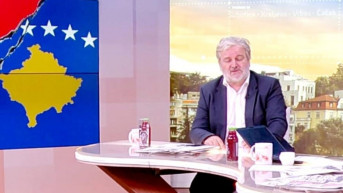
Since September 2020, when the Washington Agreements were signed, the situation in Kosovo has continued to deteriorate until today. With daily police exercises, it more looks like Northern Ireland from the 80s of the last century, only that the main bearer of unrest is not rebel groups, but, as it seems, the official Kosovo government.
This raises an interesting question about the motives that drive the current government to enter into new forms of conflict from week to week, while relying almost entirely on the actions of the police and special units, especially in relation to the Serbs. Since the power in Kosovo is undoubtedly in the hands of the ethnic majority, then all these incidents do not serve any internal goals, but are directed towards external factors that play a role in Kosovo.
Such action has completely new characteristics in light of the announced application of Kosovo for membership in the European Union, which should follow during the next week. In this, the European Union's behavior will certainly be the most impressive because it will show with its reaction how it values and evaluates everything that has been happening in recent months regarding Kosovo, especially since the new dialogue platform was launched and which requires the willingness of the main actors to cooperate, talk and possible compromises.
The European Union presents its own, this time modified German-French plan, and its consideration and possible acceptance requires a completely different atmosphere in Belgrade and Pristina. For a real approach to this topic, a minimum of cooperative atmosphere and trust of all three subjects in the conversations is required.
The EU-Western Balkans summit that was held last week in Tirana, despite the tensions, brought positive results and opened the door to the restoration of trust. But only for a short time.
At the moment, it does not appear that Belgrade is doing anything aimed at changing the status quo in Kosovo, while Pristina's policy is quite different. The constant and almost feverish pressures show Pristina's intentions to impose Kosovo as a topic in the circumstances at any cost, even at the cost of drastically jeopardizing the dialogue in Brussels, although it is clear that Ukraine holds the primacy and that for the USA and Europe this is the issue that determines the relations between on a far more global level than Kosovo does.
Pristina's idea, it seems, is that in the great anti-Russian wave of the West, in the name of relations with Russia, Serbia's attitudes towards Kosovo should be ignored and rejected to the same extent. However, not only them, but also all legal obligations arising from Resolution 1244, which is the only international-legal basis for the existence of current Kosovo, regardless of which country recognized Kosovo and perhaps opened an embassy in Pristina.
In the end, it was said countless times from Pristina that the end of the dialogue with the mutual recognition of Serbia and Kosovo is expected by March next year, which has been repeatedly denied by international representatives, since heating up such expectations only creates the basis for some new future confrontation.
This time, all of this was marked by the massive use of the Kosovo police and special units, violence against the Serbian population, and finally, the closing of the Brnjak and Jarinje border crossings. The Kosovo police, one might say, disorientated and unnecessarily invaded the election commissions in Serbian municipalities, in which they were assisted by the EULEX forces, although it must have been clear to everyone that there would be no elections in the north, because those decision makers are the USA and the EU.
It could not be said that the other moves were marked by sobriety and a reasonable assessment of the circumstances, nor by mature emotional reactions. The flaws of this policy were noticed by the opposition to the current Kosovo government, which used all means to describe how dangerous it considers this policy.
In this, the treatment of the Kosovo authorities towards the Petrovic family in Velika Hoca and their wine production stands out. Instead of encouraging and helping the economic capacities of the Serbs in Velika Hoca, which was left with only about a hundred inhabitants and a few dozen Serbs, the Kosovo authorities, in an apparently legal procedure, with a demonstrative action by the police, special units and customs, took away all the production that this family had. Although the Kosovo authorities had a whole arsenal of options in front of them, they decided on a repressive one, which fits in with the general manner of treating Serbs in Kosovo in recent weeks.
A particularly dangerous procedure, not for the first time, was the closure of the administrative crossings Brnjak and Jarinje, not only because these are the only legal roads connecting Serbia with Kosovo, but because these measures can be accompanied by dangerous tendencies and intentions within Kosovo itself, which can ignite the flames of a more serious and wider, even regional conflict. From now on, these crossings should not only be under the control of the Kosovo authorities and the Kosovo police, but the UNMIK authorities would have to play a significantly greater role in this, as it was foreseen, and the decision to close them should by no means be solely in the hands of the Kosovo police.
This amount of repressive actions in recent months raises the question of whether we are witnessing a unique case of the UN-administered territory turning into a police-military dictatorship of local self-government bodies, in front of the eyes of the USA and the EU? For this reason, it would certainly be beneficial for the UN Security Council to reconsider the issue of democratic capacities and the ability of local authorities to manage this territory based on the principles of "good governance", assess the current situation and adopt the necessary recommendations.
This must be taken care of by the special representative of the Secretary General, who has civilian executive powers entrusted to him by Security Council Resolution 1244. The new representative of the UN Security Council, Caroline Ziadeh, already noticed numerous problems in Kosovo when she spoke at the UN Security Council on Kosovo in October this year. From then until today, the importance of her grades has not been disavowed to the greatest extent. She observed that "diplomatic interventions" lead to a temporary calm, in the form of extended deadlines and promises that the talks will continue. However, the willingness of the parties to risk a dangerous confrontation on the ground has, at best, delayed the process, and at 'worst case it can lead to much more serious, especially unwanted consequences'. Caroline Ziadeh observed that in Kosovo there is a "blurred line between political provocation and covert bellicosity" and therefore reminded that KFOR has a role to recognize such ambiguities and ensure and preserve security in Kosovo.
The American envoy Gabriel Escobar, who is coming to Pristina tomorrow, has the first chance to clarify some ambiguities. However, we will see the first signs of whether he succeeded in that, if there are no incidents, provocations and aggressive actions in Kosovo next week.
Written by: Dragan Bisenic, a journalist



comments