
Why are some people bothered by Josip Broz in Skopje, but they are asking for Tsar Boris III?
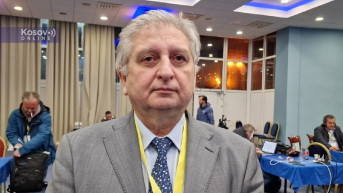
Writing for Kosovo Online: Zeljko Sain, Politika's special correspondent from Skopje
The party programs of the ruling structure and the opposition in Skopje agree that the Republic of North Macedonia has a place in the European Union. However, the opposition believes that it is necessary to oppose the European conditionality, which implies another change of the Constitution, in which it openly opposes the government, which is led by the Social Democratic Party of Macedonia with its coalition partner, the Democratic Union, the largest party of Albanians.
However, in order to continue the accession path to Europe, North Macedonia must change the Constitution by November. Otherwise, it will not be allowed to continue European integration, because Bulgaria will raise the ramp again.
Stevo Pendarovski, the President of North Macedonia, as he recently told TV Sitel, was not optimistic that the constitutional changes would be made by November. In contrast to him, Prime Minister Dimitar Kovacevski and the Government are making the most efforts to change the Constitution. The Ministry of Justice formed a working group for the drafting of an act on the amendment of the Constitution, which consists of professors of constitutional law, legal experts, and party representatives.
However, the largest opposition party - VMRO-DPMNE - does not have a representative among them, on which it depends whether the new constitution will be approved, because, as is known, a two-thirds majority in the Assembly of North Macedonia, which has 120 deputies, is required to change this highest state act. The government has a secure 61 votes, it is possible for them to reach 68 votes of support, but for this step, the votes of 80 deputies are necessary.
Although this is very difficult to achieve since VMRO-DPMNE is very strongly politically opposed to changing the country's Constitution, the prime minister and the ruling structure base their optimism on the belief that each Member of Parliament is responsible for the future of his country - North Macedonia, whose place is exclusively in the auspices of the EU.
Let's recall the development of the saga of this country's entry into the EU. Namely, with the signing of the Prespa Agreement, the dispute with Greece was resolved. The Republic of Macedonia, after 29 years of controversy, changed the Constitution and the name of the state to the Republic of North Macedonia. Everything took place under the auspices of the UN, which was represented by the American diplomat and lawyer Matthew Nimetz. NATO and all EU members gave enormous support to Greece, as well as a promise to the Republic of Macedonia that by changing the Constitution and the name of the country, it will be accepted into the North Atlantic Alliance and the EU.
Believing in those promises, then Prime Minister, Zoran Zaev, found a solution and achieved a two-thirds majority in the parliament. Institutional changes were approved and the demands signed by the Prespa Agreement were met in a legitimate and legal way. Even then, VMRO-DPMNE was a great opponent of changing the Constitution and the name of the state. At that time, it was considered that the eight deputies of VMRO-DPMNE were conditioned by the files, and thus a two-thirds majority was achieved. But that remains only speculation.
After the Prespa Agreement, signed on June 17, 2017, North Macedonia became the 30th member of NATO, albeit only in February 2019, after all 29 national parliaments of NATO members ratified this decision.
And as soon as the admission to this largest military-political organization in the world was completed, the next step in achieving the country's strategic goal was expected, and the final admission to the European fold, another EU member vetoed the accession negotiations of North Macedonia in the EU - Bulgaria.
Bulgaria has somewhat attacked the Macedonian origin by disputing the Macedonian identity and language, which is why it is raising barriers to the country's further negotiations with the EU. France then first prevents the continuation of negotiations with the Western Balkans, under the pretext that internal changes in the EU are primarily necessary, and then encourages North Macedonia to meet Bulgaria and meet its demands.
In the meantime, the highest state leadership of Bulgaria is making a fascist march through the Macedonian state supporting the opening of Bulgarian cultural clubs named after proven Hitler collaborators.
Thus, "Vancho Mihaylov" club was built in Bitola, and "Tsar Boris III" in Ohrid. Let us remind you that the Bulgarian Emperor Boris III allowed the Bulgarian Parliament to pass the law on "pure nation" in 1941, based on the German law on pure race, on the basis of which Slavs (Serbs), Jews, and Roma people were shot and deported to the holocausts, committing the same genocide as Hitler's Germany. Europe remained silent on this behavior of its member.
As a result of Bulgarian pressure, a French proposal arrived to change the Constitution of the Republic of North Macedonia once again. That proposal, as expected, divided the citizens of North Macedonia, who are fed up with making false promises. The official position of the authorities is that the Constitution should be changed in order to achieve a higher goal, while the opposition, led by VMRO-DPMNE, does not even want to discuss this topic, but persistently demands extraordinary parliamentary elections. It is possible that the opposition would accept a change in the Constitution based on the Constitution of the Republic of Croatia, in which everyone except the Macedonians would be included as a national minority. However, this would not be acceptable to the other peoples who are recorded in the preamble as the historical subject of the creation of the state by the People’s Liberation War, under the leadership of Josip Broz Tito.
Let us also emphasize the provocation by the Minister of Foreign Affairs of Bulgaria when the club "Tsar Boris III" was opened. He said that he did not see a problem in the fact that the club in the territory of Macedonia would bear the name of Tsar Boris III, but it bothered him that the gymnasium in Skopje bore the name Josip Broz Tito.
Both the US, NATO, and the EU remained silent on Bulgaria's behavior, but during their visit to Skopje, Western leaders persistently encouraged North Macedonia to accept Bulgaria's condition in order to continue European integration - a well-known matrix.
It is already known that the Western Balkans will not be a part of Europe before 2030, and maybe even until 2034. In the meantime, Serbia, North Macedonia, and Albania founded the "Open Balkan" initiative, with which they are stepping towards the EU with joint efforts, strengthening economic foundations and perspectives, and the greatest freedom of movement of people, goods, and capital is being prepared.
At the time of the Ukrainian crisis and tension in Kosovo and Metohija, this regional initiative with its leaders keeps the peace, and acts transparently, without European hypocrisy.
It is not even certain that North Macedonia will have a free path to the EU with another change of the Constitution since the promise that the EU gave it when the Prespa Agreement was signed was not fulfilled. Let's also add that it turned out that the Minsk agreements, instead of preserving peace between Russia and Ukraine, i.e. Russia and the North Atlantic Alliance actually caused the war and played a role in preparing Ukraine for the events we are witnessing.
0 comments