
The Brussels agreement is still a dead letter
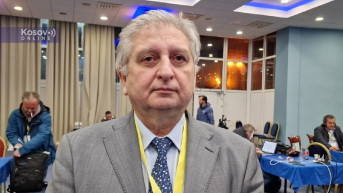
Writing for Kosovo Online: Zeljko Sain, publicist
One month ago, on March 18, 2023, in Ohrid, under the auspices of the EU and the US in the role of observers, the Annex to the Brussels Agreement for the normalization of relations between Belgrade and Pristina was drawn up. With this annex, the priorities for the implementation of the Brussels Agreement were determined and the deadlines, as well as sanctions in case of non-compliance by any party, were determined. Let us remind you that a decade has passed since the signing of the Brussels Agreement, and almost no step has been taken towards the normalization of relations between Belgrade and Pristina.
However, let's keep in mind that the solution to the Balkan issues is greatly hindered by the international political and military struggle between the great powers, primarily the US, the EU, and Russia. The "Open Balkan" regional initiative, supported by the US, although it succeeded in reconciling the spheres of interest of Serbia and Albania, met with sharp resistance from Kosovo, and the EU slowly began to turn the page and reduce its resentment towards the "Open Balkan".
Namely, as Kosovo is an independent state according to North Macedonia, then Prime Minister Zoran Zaev received the Minister of Foreign Affairs of Kosovo, Donika Gervalla Schwarz, on an official visit, who expressed her strong displeasure with the formation of the "Open Balkan" regional initiative with inappropriate diplomatic behavior, threatening Zaev that, if he did not leave this initiative, "he will have to deal with them". Zaev warned her to conform her behavior to the norms of an official visit and did not allow insulting her friends, as he emphasized, Vucic and Rama, after which she had to leave the cabinet. After that, the U supported Serbia, Albania, and North Macedonia on their way to the EU, and President Vucic and Prime Ministers Rama and Kovacevski appeared together in Brussels as part of the "Open Balkan" initiative, stressing that they had no alternative to join the EU.
Also, Rama specifically criticized Pristina for not accepting the "Open Balkan", pointing out that this was a mistake because this initiative brought citizens together with their freedom of movement and work and led faster to the European integration processes. Thus, Europe received a diplomatic slap from the "Open Balkan", indirectly from the US, for pushing Kosovo into political intrigues, and Mrs. Schwarz inexperiencedly fell into a political defeat. After that - admittedly, not completely openly - the EU began to support the "Open Balkan", and Montenegro and Bosnia and Herzegovina are increasingly openly expressing their desire to join this successful regional initiative, in which they enjoy the support of the US.
As Europe is losing its authority in relation to the US on all fronts, it wants Kosovo to be recognized by Serbia as soon as possible, as well as to achieve a political advantage based on the Ukrainian situation in relation to the Russian Federation and the US. Russia, on the other hand, would like the Kosovo issue to remain in an unsolvable status, at least until the conflict with Ukraine ends. The US, which only sees Belgrade as the leader of the Western Balkans, behaves relaxed - they see Kosovo on the verge of independence, they ask Serbia to decide against Russia with sanctions, and in Geneva, they are conducting secret negotiations with Russia over Ukraine - without Europe.
Therefore, the status of Kosovo and Metohija significantly determines the relationship between the US and Europe. For France and Germany - Slovakia, Spain, Cyprus, Romania, and Greece are the disputed moment for a political victory over the US, because they do not recognize the independence of Kosovo, and Russia is the one that will win a solution to achieve its ultimate goals in Ukraine with that outcome in the negotiations, which is why an open cosmetic issue favors her.
Although Serbia has said that it recognizes the territorial integrity of Ukraine and does not justify Russia's special operation with military means, this is not enough for the West. The highlight for Brussels and Washington would be if Serbia recognized Kosovo, and imposed sanctions on Russia. and became a member of NATO.
Therefore, the European Community took a role in expanding the Brussels agreement on the normalization of relations between Belgrade and Pristina. In Ohrid, an oral agreement was reached between Belgrade and Pristina based on the Franco-German proposal on the normalization of their relationship. According to the UN Charter and the Vienna Convention, oral acceptance of the agreement by the president of the state is binding for the state. The same applies to the prime minister, chancellor, and president of the executive power, that is, the minister of foreign affairs of a country.
After a ten-hour negotiation between Aleksandar Vucic and Albin Kurti, the Annex to the Brussels Agreement was agreed upon and both sides appeared before the press confirming that they had adopted the content of the Annex. On that occasion, Serbian President Aleksandar Vucic emphasized that a verbal agreement had been reached on further steps to preserve peace, underlining that he did not recognize Kosovo's independence and would not allow Kosovo's admission to the UN.
Vucic came forward in a completely statesmanlike manner, respecting the convention and the Framework of the UN Charter. Let us remind you that not a single document insists on the recognition of Kosovo by Serbia. The countries that have recognized an independent Kosovo at no time since the preparation of the implementation of the Brussels Agreement have come forward with a request that Serbia declare an independent Kosovo. That political push for mutual recognition comes from Kurti. Mutual recognition was the topic of the "Open Balkan" panel this summer in Ohrid, where North Macedonia, Montenegro, Slovenia, and Croatia met, after which, the following day, Serbian Prime Minister Ana Brnabiv arrived in Ohrid, who pointed to Resolution 1244, and to the fact that Kosovo and Metohija were the inalienable territorial integrity of the Republic of Serbia.
After that panel, the continuation of the Brussels agreement was prepared for a long time. The proposal of France and Germany was disclosed first in Brussels and then finalized in Ohrid, a month ago, where the executive tasks are specified. The Annex was given a binding form by the oral agreement, and steps are expected from both sides in the implementation of the Brussels Agreement. This includes the establishment of a Joint Commission that will oversee the implementation of this agreement. The first step in the normalization of relations between Belgrade and Pristina is the formation of the Community of Serb-majority Municipalities. Then, within 150 days, the EU should organize a donor conference for Kosovo and Serbia, but the funds will not be allocated until all parts of the agreement are fulfilled.
EU High Representative for Foreign Policy Josep Borrell emphasized on March 18 in Ohrid that both sides were obliged to implement the Brussels Agreement; otherwise, both parties would be exempted from EU financial aid and the accession negotiations would be terminated for the party that did not respect the reached agreement. However, judging by the implementation so far, it is unlikely that any deadline will be met. Neither, at least until today, has the Commission been formed, nor will the donor conference be organized in five months at this rate.
If Serbia has agreed to everything, except for relinquishing its territory, let's go by the facts mentioned above and we will get an answer as to why there is still no CSM and why the Brussels Agreement is still a dead letter. A month has passed since the oral agreement in Ohrid and even ten years since the signing of the Brussels Agreement on the normalization of Belgrade and Pristina. Therefore, we are waiting for the harmonization of the new world order, in which Europe and the US agree on their political role and economic space. Within those frameworks, the territorial status of Ukraine and Kosovo and Metohija will be decided.
0 comments