
Debunking the KLA myth: The trial of Hashim Thaci and other commanders begins

The trial of former KLA leaders Hashim Thaci, Kadri Veseli, Jakup Krasniqi, and Rexhep Selimi will begin tomorrow at the Special Court in The Hague - a process that, according to analysts, will be significant both for international justice and for the entire region.
Four KLA leaders were brought before the Special Court on charges of war crimes and crimes against humanity in 1998 and 1999. While the families of those whose murders and disappearances are blamed on Thaci, Veseli, Krasniqi, and Selimi expect justice to be served, as well as a large part of the world public, in Kosovo these "Hague four" are recognized for the "liberation of Kosovo", and their names are celebrated as heroic.
The myth of the KLA among Albanians in Kosovo is so strong that a "March for Justice" has been scheduled in Pristina for today, the day before the start of the trial, as a sign of solidarity with the leaders of the KLA in the Hague.
The question remains whether the trial could shake that myth, with guilty verdicts, which, according to analysts, can be expected at the end of the process, which by all accounts will be long.
Lawyer Milan Antonijevic tells Kosovo Online that the start of the trial is an important step, that they have been working on it for years, and that the prosecution, apparently, on its part, thoroughly "built" the indictment.
"I have no reason to doubt that the Hague will conduct proceedings that will open up many questions. I think that everything that happened before the Hague Tribunal really cast a shadow on international justice, and this proceeding, which is now starting before the Special Court in the Hague, can lead to an open discussion about crimes committed by the KLA, to find strong enough evidence so that in the end we have a conviction," Antonijevic is convinced.
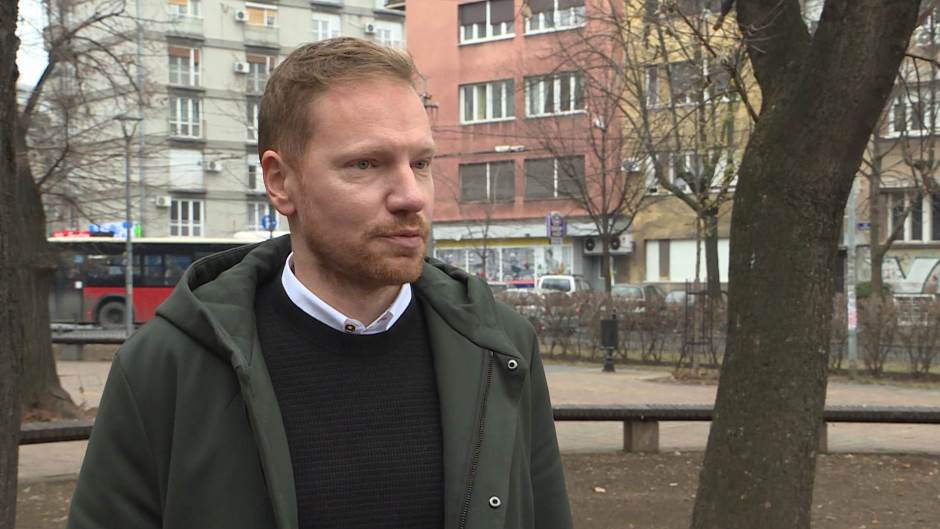
Antonijevic points out that there should be no national significance in the trials for war crimes, but only the personal and individual guilt of each of those who are before the court.
"There was a crime, we have victims, Serbian victims who were not talked about much, as well as Albanian victims, those who did not want to cooperate with the KLA. All this is the reason why this procedure is very important for international justice, but also for the entire region," Antonijevic said.
The trial, he adds, must be thorough, therefore, it must last for many years, considering that after the first instance, the appeal procedure follows. But he points out that it is much more important for the case to be thorough and well done, than the speed of the procedure itself.
"We have been waiting here for justice for more than 20 years, so speed is the least important here," Antonijevic said.
When asked what the reaction would be after the verdict, Antonijevic notes that the truth about everything that happened in the former Yugoslavia, especially between Kosovo and Serbia, is very important for the establishment of renewed trust and better relations that have been waiting for so many decades.
"The people, both in Serbia and Kosovo, deserve the full truth, as well as respect for the victims, who will not be undervalued. Not to bid on numbers, but to really trust the organizations that made detailed lists of victims, and individual fates, because this is a consequence of the conflict during the 90s. Every victim deserves rights and justice," Antonijevic said.
In this sense, he adds that the part of the Ohrid Agreement that refers to finding and determining the fate of the victims who died in Kosovo should be welcomed. This, he says, is very important for Serbia, because it is known how many missing persons there are, and how important it is for all the families who are still searching for their loved ones.
When asked if there would be enough evidence to accuse KLA leaders of crimes in the "Yellow House", Antonijevic says that it is too early to talk about it, but that there are indications that the court could deal with it.
"We will monitor everything carefully. We have read Dick Marty's report, indeed there are enough indications for this tribunal to deal with it seriously. It is one of the important issues for both Serbia and Kosovo and for the relations between Belgrade and Pristina," Antonijevic said.
The president of Matica Albanaca, Demo Berisha, is convinced that the Prosecution would not have entered into this procedure if it did not have enough material evidence that had been collected for many years.
"At one time, I commented that Tachi, Vesli, Krasniqi, and Selimi, as the first line of elders, leaders of the KLA, would receive extremely large sentences because there was enough material evidence. We could see it in less responsible people, like Mustafa, and even now when the trial of Shala has started. It can be seen that the background of the prosecution is extremely high-quality. I believe that the verdict pronounced on Mustafa a few months ago will also serve. I believe that they have enough material evidence for what happened right before the start of the war, at the end of 1998/1999. and what they were charged with in 2000, because that is where their greatest responsibility is, and towards the Albanians who were then functioning in the Serbian system," Berisha said for Kosovo Online.
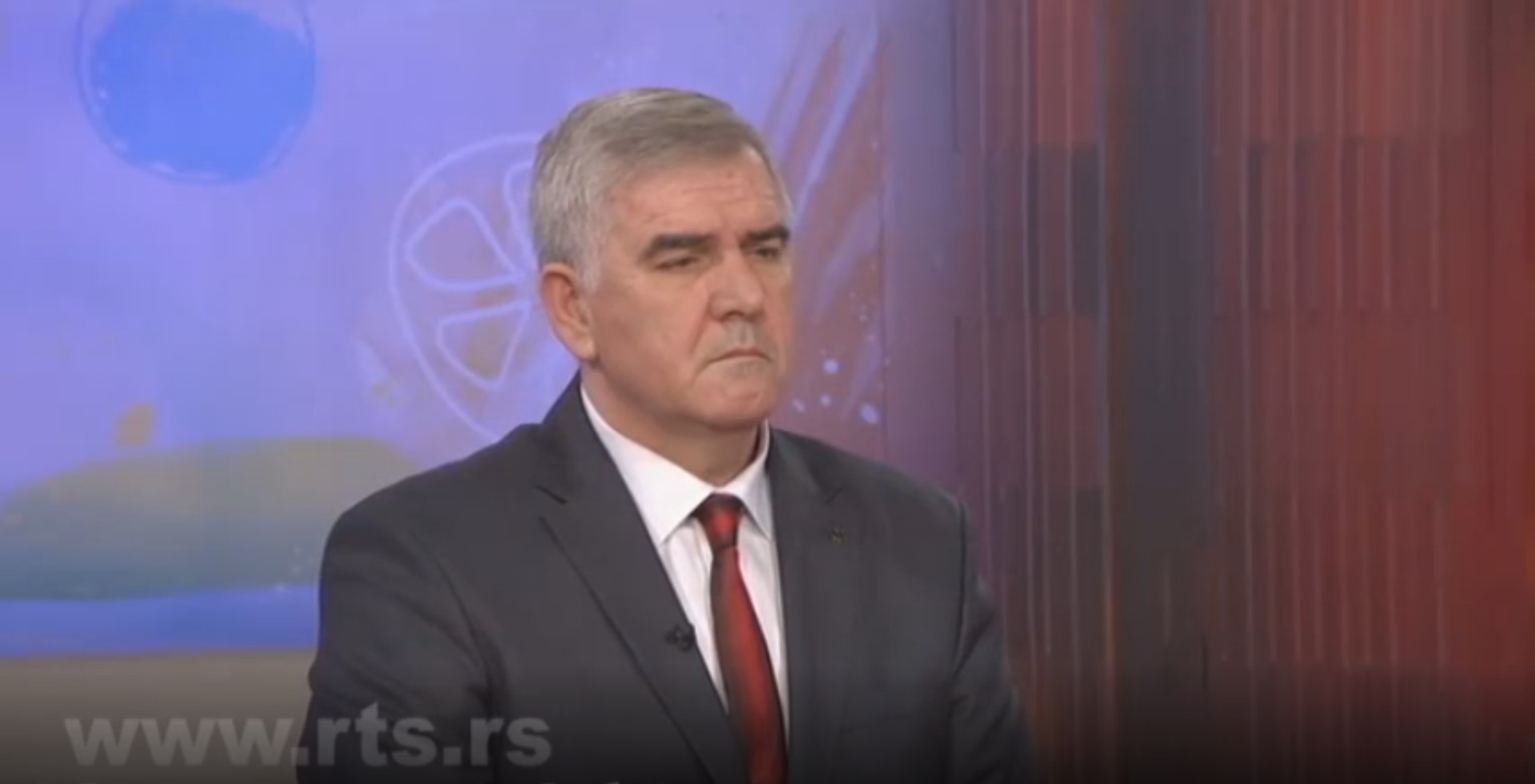
He adds that the punishment will depend on the "spoken word", that is, on the statements of the witnesses.
"We managed to preserve the witnesses and those people who survived will play a key role in the verdict. Let's believe that in the end there will be a guilty verdict and it will be one of the more serious ones. With that, they will get into what they tried to avoid, which is the responsibility for the Yellow House," Berisha said.
He expects the trial to last at least between three and five years until the first verdict, with additional time for it to become final, perhaps seven years in total.
"The verdict will have an impact because it has now been shown that everything that was happening in Kosovo had two goals - one is what is presented as liberation from the Serbs, and the other is everything that has to do with their personal enrichment and the well-being that they created while they were in power," Berisha said.
When asked how the verdict would be received by the public in Kosovo, he says that there will certainly be turbulence, with different comments.
"Regardless of the punishment they will receive, justice will not be fully served, because I have in mind 1,617 more people who are still missing. There are also 10 identified locations that are believed to be still unexplored and are believed to contain both Serbian and Albanian corpses. There will be a division, but the majority will be on the side of justice, while a part will consider that they are unjustly there, as is the situation now," Berisha noted.
In contrast, the professor of Constitutional Law in Kosovo, Afrim Hoti, believes that the trial of Thaci and other former KLA commanders is an attempt to equalize the two sides during the war in Kosovo.
"As far as I know, everything was organized after Dick Marty's report in the Council of Europe, regardless of the fact that there is no record of it. It was a report sponsored by the Russian side, and that report was already formed by the Special Chambers," Hoti told Kosovo Online.
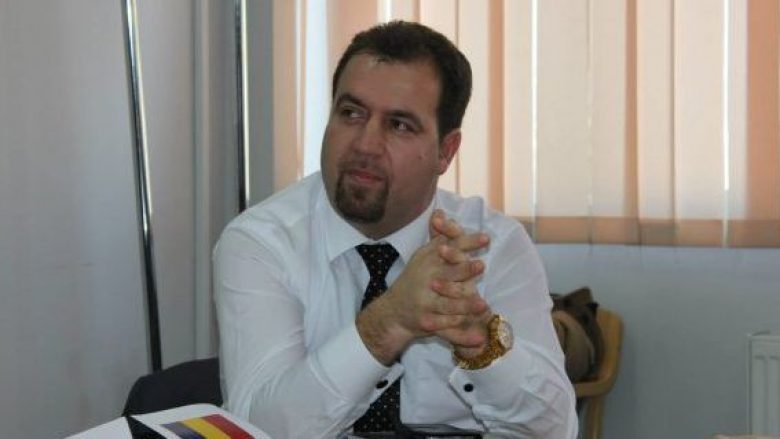
He points out that any verdict passed by the Special Court will not have any effect on former members of the KLA.
"It was a military organization that, together with Western countries - the EU and the US, fought against the Milosevic regime for human rights and democratization," Hoti says.
The "KLA Four" is accused of crimes committed in 42 illegal detention centers in Kosovo and Albania against at least 407 detainees, of whom at least 98 were killed, from March 1998 to September 1999.
In 10 counts, Thaci, Veseli, Selimi, and Krasniqi are accused of persecution on political and ethnic grounds, imprisonment, illegal arrest, and detention, other inhumane acts, cruel treatment, torture (two counts), and murder (two counts).
Those criminal acts are qualified, on six counts, as crimes against humanity, and on four counts, as war crimes.
Their trial will begin on Monday at 9 a.m. with opening statements, and the presentation of evidence will begin a week later. The opening statement of the Special Prosecutor's Office will last up to five hours.
The defense of former president Hashim Thaci will have three hours for his opening statement, Kadri Veseli 45 minutes, Rexhep Selimi an hour and Jakup Krasniqi an hour and a half.
On April 29, 2022, the specialized prosecutor's office submitted an amended indictment in which it is stated that the four defendants had also committed war crimes in Gjilan, Budakovo, and Semetiste.
On November 9, 2020, Jakup Krasniqi and Hashim Thaci pleaded not guilty to the charges against them, and Veseli stated the same in his appearance on November 10, as did Rexhep Selimi on November 11.



comments