
A look through the bars of The Hague: What kind of Kosovo did Hashim Thaci leave, and what is it like today?
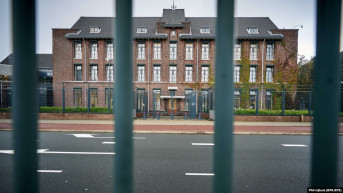
Almost two and a half years have passed since the former president of Kosovo, Hashim Thaci, replaced his Pristina address with the one in The Hague detention center, where he is waiting for the war crimes trial against him and three other former political leaders and KLA commanders, Kadri Veseli, Rexhep Selimi, and Jakup Krasniqi to begin on April 3. They were succeeded by new politicians led by the current Prime Minister, Albin Kurti, who came to power in Pristina with great promises of economic prosperity and with the wholehearted support of the international community, but also on the wings of criticism of Thaci's policies, especially at the expense of his flexible approach in negotiations with Belgrade, not refraining from accusing him of betrayal and "selling Kosovo". What kind of Kosovo did Thaci leave two and a half years ago, and what is it like today?
Kurti's big promises for a better tomorrow are denied almost daily by economic indicators. According to the recently published data from the Kosovo Statistics Agency, inflation is constantly increasing and in January it was 12.1 percent, while a third of the workforce is unemployed. In 2021, 43,000 people left Kosovo. Political tensions are at their peak, relations between the Serbs and Albanians are strained, and the accusations directed at Thaci are now returning to Kurti like a boomerang - the opposition attacks the Prime Minister of Kosovo after the agreement in Ohrid saying that he violated his pre-election promises that he would not form the Community of Serb-majority Municipalities and that he would only lead talks on mutual recognition with Serbia.
Analyst of the Center for Social Stability, historian Srdjan Graovac tells Kosovo Online that the situation in Kosovo during Thaci's time and now that Kurti is in power should be viewed through the prism of the international community's attitude towards Kosovo and its elites. Our interlocutor reminds us that Thaci is someone who came from the milieu of the KLA, that he was originally from Drenica, from an area that was always recognized for its resistance to the authorities in Belgrade, and that as a champion of the KLA, after the NATO aggression, he became one of the key political figures in Kosovo and Metohija.
"Tachi can be considered responsible, along with the international community that had de facto power in Kosovo, for the creation of political and economic and all other opportunities in Kosovo, which are still on the scene today. There is no doubt that during Thaci's time, Kosovo was a region where crime and corruption flourished, it was the black hole of Europe in which the rights of the Serbs, as well as other non-Albanian residents, were trampled. It was during Thaci's time, and unfortunately, it is still a territory where the economy does not function or is reduced to, above all, the trade in illegal means, drugs, weapons, and white slavery," Graovac says.
Therefore, adds Graovac, the international community has assessed, primarily European countries, that it is necessary to change the generation of politicians in Kosovo.
"That people like Thaci and Kadri Veseli, those who came from that war milieu, did their task. And that task was to help the goals of the West with weapons in their hands when it comes to the realization of the project of independent Kosovo, and that their mission was completed; that they need to be suppressed and replaced by some new people. The West did help and recognized Kosovo's independence, but they failed to create a functional state from it," Graovac said.
Therefore, continues Graovac, in the opinion of the international community, it was necessary to remove the entire old political nomenclature in Pristina, which gradually happened, including through the courts, by inviting Thaci, Veseli, and others to The Hague, in order to pave the way for others politicians who had the task of making Kosovo economically, judicially, politically stable and successful.
Our interlocutor points out that Kurti failed to achieve the main mission, which was primarily counted on by the international community after the departure of Thaci, which is to create a functional state.
"Kurti proved to be incapable of creating a functional state and did not respond to the task that the West assigned to him, but that does not mean that the West has given up on him. As things stand now, Kurti's policy has completely collapsed, in all fields. When speaking of insecurity in society, especially for the Serbs, it has increased dramatically. Attacks on the Serbs are daily, primarily because Kurti is the creator of such an atmosphere, his justification for all his failures, both economic and political, and when it comes to the fight against corruption and crime, are always Serbia, the Serbs, and the Serbian factor. When asked why there was no electricity in Kosovo, he says that it is because the energy system was destroyed in 1999. When asked about unemployment, and low wages, he would again say because of the Serbs; because they destroyed all the factories in Kosovo in the 90s, they ruined the possibility of a better life. When you persistently repeat this to your citizens and create an atmosphere in which hatred towards the Serbs grows, the increase in attacks is a logical sequence. In the fight against crime and corruption also nothing has been done, it was used only as a cover for dealing with the Serbs," Graovac says.
And with regard to the strategic policy of relations with Belgrade, which, according to Graovac, amounted to a promise that he would not talk to the President of Serbia, Aleksandar Vucic, unless it was a question of mutual recognition, Kurti, in his opinion, failed.
"First he agreed to talk with Vucic, and now somewhere he announced the formation of the CSM, which he claimed he would never do. If in the end he really forms the CSM, I think it will have far-reaching consequences for his political career because it is the only thing that has left of his promise to his voters. He hasn't formed the CSM yet, but as things stand now, he's heading in that direction. Today, Thaci seems to us like someone who might have been more cooperative towards some kind of agreement, however, I think that Thaci and Kurti are just two sides of the same coin in this matter and that their goal is the same, only the tactics are different. Thaci was following the West by a hair's breadth and did not want a confrontation with them. He understood one more thing, that the Serbs and Albanians live in this area next to each other and that some kind of agreement is necessary and useful. Similar to Albanian Prime Minister Edi Rama, he thinks that the continuation of the conflict will affect economic conditions; people will leave for a better life; the whole region will be affected," Graovac says.
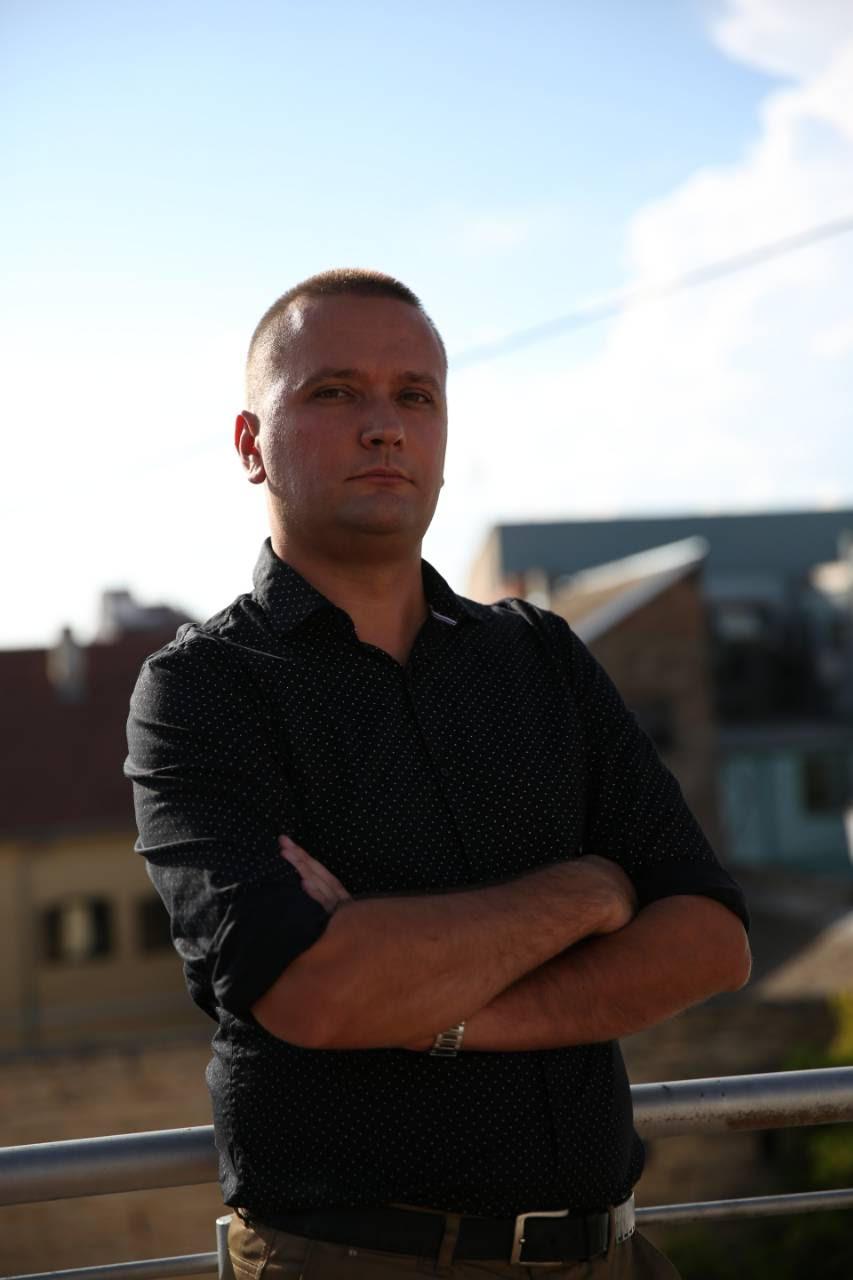
Mazllum Baraliu, a professor of constitutional law from Pristina and a good expert on the political situation in Kosovo, says for Kosovo Online that Thaci left Kurti a lot of internal and external problems because a strategic policy of consolidation and development, above all economic, social and coexistence of the Serbs and Albanians, was not conducted.
"The current government inherited those problems; it has a lot of difficulties. This government now also has specific problems, because it is in power for the first time and they had neither tradition nor enough expertise and personnel. There are also crises that arose, from the covid pandemic, and so on. Of course, there is also the pressure of the international community when it comes to dialogue with Serbia, especially in the last two years since this government has been in power. All these problems have influenced the problems and difficulties inherited from the former governments to reflect on this government that has difficulties in this sense. So Kosovo has not achieved a new level of economic or social development, and the problems have not been solved. There are also a lot of problems related to the brain drain - the departure of young educated people abroad. Social problems are at the tip of the iceberg. Thaci's and other governments did not leave any positive progress or legacy to this government so that it could move on. This government also has its weaknesses, as a left-oriented, it tried and promised the people that it would do more than that, unfortunately, we have not seen some steps yet that are a big shift from the state they inherited," Baraliu said.
When asked how he viewed the fact that, when it came to policy towards dialogue with Serbia, Kurti was of a clear position that there was no formation of the CSM and that he sought mutual recognition, and that after Ohrid we had a somewhat different situation, Professor Baraliu says that "every politician certainly calculates that it is not the same as ethics and that it is often defined as the politics of the possible, in order to win over voters".
"Of course, things change and people change. Now, whether it is good or bad, public opinion needs to evaluate that, but certainly, there is progress in this. However, the international community, geopolitics, geostrategy, and international constellations have influenced that not only Kurti and his Government's policies are changing their attitudes but also the opposition parties, let alone the ruling parties, here, in Serbia, in the Balkans, in the world, are changing their attitudes, that's not something new. If it's positive, why not, there's nothing wrong with that. I think in that sense, when it comes to some of the priorities that this government had or promised before the election, but changed its positions, it's good for the citizens, and also for stability in the Balkans," Baraliu says.
In his opinion, dialogue should certainly be one of the priorities of any government.
"Because we have to live together, we have lived together for centuries with all the people in the Balkans, both the Serbs with Albanians and the Albanians with Serbs. The international community and constellations, as I said, influenced those attitudes and priorities to change, and I think there is nothing bad with that. Of course, in terms of internal problems and solving those problems, these are pressing problems of a social nature, and poverty, economic development, and investment, there are a lot of problems. However, this government promises to try to solve it step by step. Unfortunately, we don't see any big and serious developments, but we will just wait for it," Baraliu adds.
Baraliu points out that Thaci certainly had a different policy and that "at the end of his tenure as president of Kosovo, he even launched the idea of redrawing the borders with Vucic and some other important actors and personalities in the Balkans", but that it was not "received".
neither in the Balkans nor in the international community.
"Of course, Thaci was perhaps more flexible in some matters, both towards Belgrade and in cooperation with the international community. However, in the beginning, Kurti behaved differently, very rigidly and spasmodically, however, now we see that he is also giving in, probably when he sees that the pressure is increasing and that, unfortunately, we are not strong enough, neither Serbia nor other Balkan countries, to resist the pressures and influences of the power centers, which affect our policies and even our future," Baraliu concludes.

0 comments