
James Rubin's arrival is a sign of increasing US attention to the Western Balkans region
America literally opened a “watchful eye" in the Western Balkans. Two envoys of the State Department are currently in our region - Gabriel Escobar and James Rubin, and the interlocutors of Kosovo Online connect this increased activity of Washington with the war in Ukraine and with the desire of the US to position itself as best as possible in this area at a time when all sides are trying to define its dominant zones of influence.
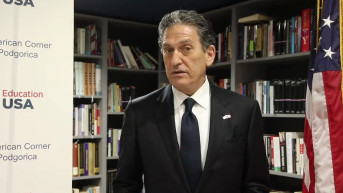
James Rubin, who is remembered by the local public as the assistant and spokesman of former US Secretary of State Madeleine Albright, came to visit the region performing a new duty, as a Special Envoy and coordinator of the US State Department's Center for Global Engagement.
He was officially hosted by Podgorica and Skopje, the next stop is Tirana, while at a dinner in Pristina at the beginning of the week, he took part outside the official agenda and without official meetings. Parallel to this Rubin's mini-tour, another envoy, Gabriel Escobar, is visiting Albania.
Rubin's official field of action is the fight against disinformation, and upon his arrival in the region he stated that "the entire Western Balkans is subject to Russian and Chinese disinformation", that "a large part comes from Serbia" and that it is "a big problem that needs to be solved".
And yet, Belgrade was not on his agenda. He explained that - that he knew that, given his past, "he is probably not the best diplomat to meet with Serbian government officials."
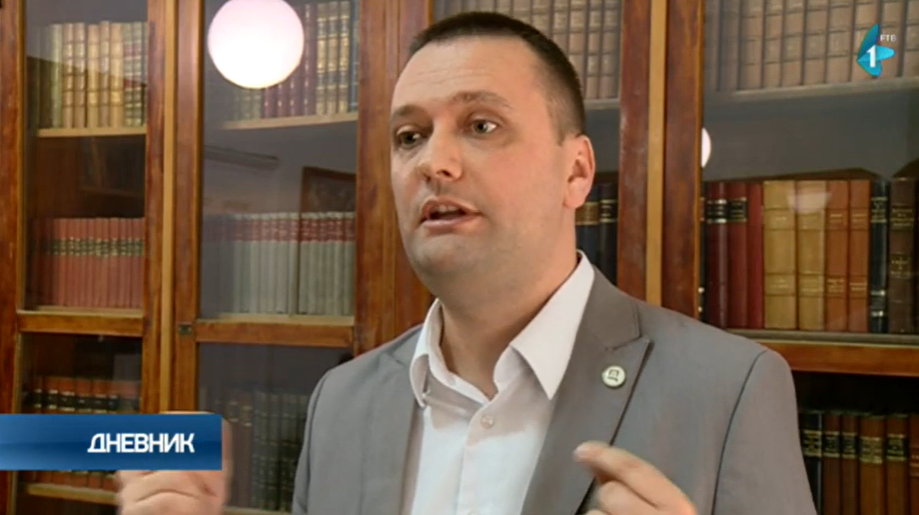
According to Igor Novakovic, the research director of the ISAC fund, this was probably a moment of Rubin's sincerity, but the fact that he will not visit Belgrade, as he adds, does not mean that Serbia is deprived of American attention.
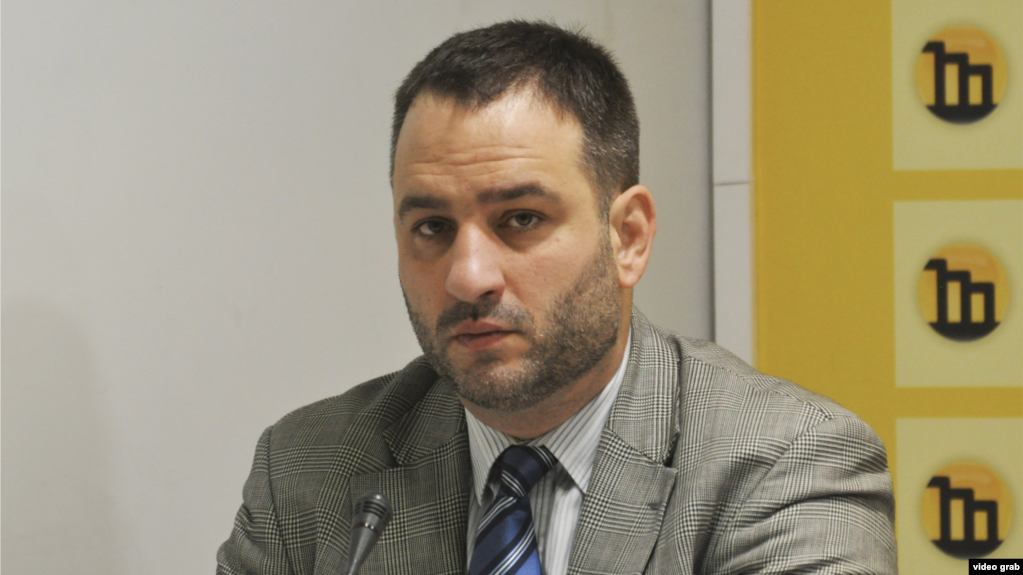
Regarding the fact that Rubin is not coming to Belgrade, Srdjan Graovac from the Center for Social Stability tells Kosovo Online that it must be taken into account that he has an "unclean conscience and knows very well why he would not be welcome".
"That's why he bypassed Belgrade, but if you know what kind of pedigree he comes with and that he is part of the lobby circles that are not on Belgrade's side, then his arrival is superfluous because he essentially comes to support those who are considered opponents of Belgrade and whom Belgrade is to blame for everything," Graovac says.
Although, without meetings with Serbian officials and representatives of the Kosovo authorities, where we are used to seeing another State Department envoy - Gabriel Escobar, Rubin touched on the topic of dialogue and Pristina in his statements. He said from the neighborhood that he thought "it will be good news for the people of Kosovo if their country is part of Europe in the institutional sense, part of NATO, part of Western institutions, even if the perfect outcome, which is recognition (by Serbia), is not achieved".
The "stereo" of American messages related to events in the Western Balkans is not a surprise for analysts.
"Rubin did not say anything that was not the official position of the US - it would be best if Belgrade recognized the self-proclaimed independence of Kosovo, and if it already won't and can't, then some kind of compromise should be made that would be the closest to that recognition, without it being an official recognition," Graovac says.
He points out that Russia's biggest influence on the Balkans is through the Kosovo issue and that the US would like to eliminate it and completely cancel Russia's influence in these areas, and that is why solving the Kosovo issue is so important to them now and that is why they insist on it.
Stating that this is a time of great turmoil due to the war in Ukraine, Graovac says that we are living in times where one order is being destroyed and a new one is being built and now all sides are trying to define their dominant zone of influence. He adds that the US and the EU do not want any other influence in the region as dominant compared to theirs.
"They don't want either Chinese or Russian influence and that's why they are so engaged in this region. Also, the US does not want European influence to be above their own, as the Europeans would like to have a key influence. We have an intertwining of these different interests and I have the impression that at the moment, the struggle between the US and the EU to position themselves in this region as best as possible continues. Although they act as allies, what both of them are aware of is that it is better for them to have initial stronger positions. That is the background of all those visits, which are increasingly happening recently," Graovac says.
Igor Novakovic says that it is quite logical that at this moment America's increased attention is focused on our region, and not only on the countries that are members of NATO but also on others.
"We have a war in Ukraine, and here remains the hotspot of Europe, where a limited escalation can potentially take place, for which there are local conditions, and the US is looking to close the weak points in every possible way, from their perspective. In this context, the relationship with Serbia, which is the largest country in the Western Balkans, is particularly important, because there are several challenging elements - above all, the dialogue between Belgrade and Pristina and the internal situation in Bosnia and Herzegovina, and Serbia has an influence on both of these situations," Novakovic says.
Graovac, who perceives Rubin as an Albanian lobbyist, believes that Rubin's visit to the Western Balkans is connected with Milo Djukanovic and some Bosniak circles. He adds that the fact that Djukanovic is leaving and that Izetbegovic is being removed from the scene and that there is no doubt that this does not suit many people, especially those who are used to these people being part of their logistics club, and that "James Rubin is certainly one of those".

0 comments