
Kurti's activists in the fight against Serbian products; they are bothered by "Coca Cola" and "Thomy" mayonnaise
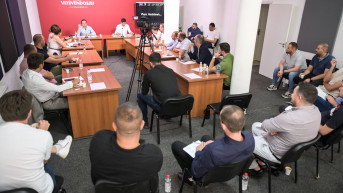
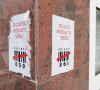
The campaign to boycott products from Serbia in Kosovo continues. After the bizarre videos in which there are bullets instead of products in the packaging, the website "Bojkoto 860" was launched, on which, in addition to items from Serbian companies, foreign brands also appear, and the campaign was launched by activists of the ruling party Self-Determination Movement.
That the government in Kosovo is behind the call for a boycott of Serbian goods is shown by the fact that this action was initiated by Self-Determination activists Rea Krasniqi and Muhamed Smani. On March 15, on Consumer Day, they launched the information platform "Bojkoto 860".
As Smani announced on Facebook on the same day, the platform aimed to "raise awareness of the boycott of Serbian goods".
"This page, among other things, has a list of products of Serbian origin, in order to facilitate consumer checks against manipulations that take place on the market, as well as a list of companies. Stop financing Serbia, which threatens the security of the country with the sole purpose of promoting disunity and collapsing the Republic of Kosovo. Boycott Serbian products! Boycott 860 barcodes," Smani said on Facebook.
Self-determination activist Behar Jashari welcomed the initiative of his colleagues on the same social network, stating that the movement had launched an initiative to boycott products from Serbia 20 years ago.
He emphasized that the technology had been used in the service of "an important political goal".
"Activists Rea Krasniqi and Muhamed Smani joined the campaign for the boycott of Serbian products, which was launched by the Self-Determination Movement about two decades ago, and is continued today by citizens throughout Kosovo, including youth activists of Self-Determination. The information platform "Bojkoto860" was created by Rea and Muhamed voluntarily. They decided to use technology in the service of such an important political goal, and they did it exceptionally well. Well done Rea and Muhamed," Jashari said, and his post was shared by Rea Krasniqi.
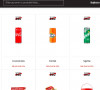
Although the Self-Determination activists mention only products from Serbia in their posts, on the mentioned website there are also products from foreign companies, such as the American brand "Coca-Cola" and the Swiss "Thomy", whose factory has been in Serbia since 2014, as well as "Imlek" products that are owned by the investment fund "Mid Europa Partners" from London, which is an open attack on foreign companies.
Kosovo recently agreed to the continuation of the Berlin Process, which envisages the free flow of goods and services in the Western Balkans, but Serbian products in Kosovo openly bother the authorities in Pristina. Calls for a boycott of products from Serbia have become more frequent in recent months. Recently, a video was published on social networks where the packaging of items from Serbia contains bullets instead of sweets and salami, alluding to the fact that the purchase of these products "finances and strengthens the Serbian Armed Forces".
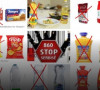
On Facebook, on the pages about the boycott, you can see bizarre photos where bread in a grinding machine turns into ammunition, while oil that costs two euros means two new bullets for the Serbian Army, it is recommended that parents do not use baby food produced in Serbia, and it is also recommended not to use medicines labeled "The Republic of Serbia".
The group "Besa bese" also published a video in which the girl tells her parents not to buy goods from Serbia and not to forget "because of whom the parents of their acquaintances died". That video was criticized by the public because, as they stated, a minor girl had been abused.
Senior researcher at the NGO Aktiv, Igor Markovic, told Kosovo Online that this campaign had no effect, apart from fueling nationalist sentiment.
"Unfortunately, too much attention is given to the campaign, without which, I deeply believe, it would not have any effect. The numbers speak for the fact that the campaign does not achieve serious results. From quarter to quarter, increased imports of goods from Serbia to Kosovo are recorded. This campaign can have a serious consequence to the heating up of nationalist sentiments. It is enough to recall the video clip in which a boycott of goods produced in Serbia is called for, and in which a little girl is abused for the sake of promoting nationalist views. The lawsuit that non-governmental organizations from the Serbian community sent to the courts in Kosovo regarding this video clip, which was dismissed as unfounded, shows that in the public space in Kosovo, unfortunately, there is enough room for maneuvering for this kind of propaganda material. However, for now, it is important that this kind of campaign does not come officially from the institutions, which does not mean that such a practice cannot be changed. Several officials at the central level expressed their position in the past few months, calling on citizens to boycott products from Serbia," Markovic said.
He believes that by calling for a boycott of the products of foreign producers, the campaign will harm consumers in Kosovo.
"Such an approach will only harm consumers in Kosovo, not the producer of goods whose brand is international," Markovic says.
According to him, calls to boycott products from Serbia have been more frequent since Albin Kurti came to power.
"There is no direct connection for now, but it is obvious that such currents and voices have strengthened in Kosovo since Kurti came to power, during his first mandate. The expression of extreme right-wing views in the public is becoming quite tolerated by the ruling structures, in the process of which many participate openly," Markovic said.
As he added, the authors of the videos were aware that it would not affect consumers, but "if the goal is to raise tensions, then we are talking about a group of irresponsible individuals".
"It is unclear what the ultimate goal of this type of "campaign" is. It is naive to believe that products from Serbia will be bought less in Kosovo because of such campaigns, and I believe that the authors are aware of that fact. However, if the goal is to raise tensions with such a campaign in the relations between Albanians and the Serbs in Kosovo in the conditions of complicated relations between Pristina and Belgrade, then it is certainly a matter of malicious and irresponsible behavior of a group of individuals," Markovic concluded.
With the inclusion of Self-Determination activists, the story of the boycott of products from Serbia takes on another dimension, because what is called a free market in the world for Self-Determination is an "important political issue".
Milica Rakic Andric from the NGO "New Social Initiative" pointed out that it would not be a surprise if Self-Determination was behind the campaign to boycott Serbian products, because, she states, that party has very openly led similar campaigns before.
"Often and in a violent way, because at one time they attacked trucks with Serbian goods. Over the past years, it has been shown that those campaigns have only a temporary impact on consumers, not a permanent one because sooner or later consumer habits become normalized. It was the same after more radical, institutional measures, such as the 100 percent tax on the import of goods from Serbia," Rakic Andric told Kosovo Online.
According to her, the more significant effect of that campaign is in the context of the political moment when the compromise in the dialogue should be validated as a means of achieving peace and predictability in the relations between Belgrade and Pristina.
"It is difficult for a public, antagonized against Serbia, either because of real, personal traumas from the war, or because of campaigns like this, to explain the necessity of a compromise with Serbia, and when you have a hardened public, then you can only hide behind that public and its potential negative reactions and postpone the formation of the CSM and other similar obligations. Also, yesterday the Chamber of Commerce of North Macedonia announced a meeting of the Chamber of Commerce of Serbia and the Chamber of Commerce of Kosovo to discuss the removal of obstacles to import and export. The boycott campaign may be a preventive attempt to limit the increase in imports from Serbia which will inevitably follow if the harmonization of phytosanitary certificates is really continued now, after almost five years of stagnation, and the import of all goods from Serbia is finally enabled," Rakic Andric says.
Nenad Djurdjevic, the adviser to the president of the Chamber of Commerce of Serbia, tells Kosovo Online that, unfortunately, boycott campaigns of Serbian products in Kosovo are not new, that this has happened in previous years as well, and that it mostly follows internal political dynamics, either in Kosovo or in Serbia.
"We have to be honest, there is no openness for products from Kosovo in Serbia either, there are various barriers, especially when it comes to declaring products. Neither side was the most open to creating an atmosphere for cooperation and buying products from Serbia and Kosovo. At the same time, products from Serbia and international brands and local ones, as well as raw materials and raw materials, are present in Kosovo. And our and Kosovo's statistics show that, so last year we had a record exchange between Serbia and Kosovo of almost half a billion euros, despite those campaigns and the political atmosphere. We hope that by signing two agreements, in Brussels, and the agreement from Ohrid, which talks about the recognition of documents from Kosovo, we will have a situation in which products from Kosovo will be able to be sold unhindered in Serbia. Chamber of Commerce of Serbia really stands up for that and we have tried several times to mediate in order to find a name for the origin of the product that 'do not bother anyone,'" Djurdjevic says.
Djurdjevic says that the Serbian Chamber of Commerce is very clear in its positions and that it represents businessmen from Kosovo in Serbia, in product placement.
"I would not like to comment on my colleagues from Kosovo why they do not do this, but we believe and advocate for a single market in the Western Balkans and represent the interests of all companies. Our policy and position is to mention both sides. If there is goodwill here, then the door opens in Kosovo, and vice versa," Djurdjevic notes.
He indicates that the activities surrounding the boycott of Serbian goods in Kosovo may be directed against the Government of Kosovo and Prime Minister Albin Kurti because of the agreement in Ohrid.
"In previous years, when Kurti was in the opposition, he was a great advocate and the leader of those campaigns to boycott products from Serbia. And from his party they called for demonstrations, maybe some structures in Kurti's party are now behind this latest campaign. That's why it is important to start implementing the agreement from Brussels and Ohrid because this will remove the arguments for calling for a boycott of anyone's goods," Djurdjevic concludes.
To remind, the former Prime Minister of Kosovo, Ramush Haradinaj, during the time he was in power, introduced a tax of 100 percent on products from Serbia, when the trade exchange was almost completely stopped. Taxes were abolished by Avdullah Hoti, who became prime minister after Haradinaj.
Given that the taxes did not bear fruit, with the change of government in Kosovo, tactics were also changed.
The current Prime Minister of Kosovo and the leader of the Self-Determination Movement, Albin Kurti, whose policy is based on reciprocity, does not pursue radical measures regarding goods from Serbia, so during his reign taxes were introduced only for construction materials, but his activists openly advocate the position that Serbian goods should be boycotted.
In spite of increasingly frequent and loud campaigns, in the past two years, most goods were imported from Serbia in Kosovo.
The Kosovo Agency for Statistics announced that in January of this year alone, goods worth 17 million and 870 thousand euros had arrived in Kosovo from Serbia or 1.5 million euros more than in the same period last year.
According to the Agency's data, in the 11 months of 2022, Kosovo bought goods worth 341,637,000 euros from Serbia, and the citizens of Kosovo in a survey conducted by RFE pointed out that "domestic products" were often more expensive than imported ones and that they bought them only when the price was lower than others.
Regarding the latest campaign to boycott products from Serbia, we addressed the Kosovo Chamber of Commerce, the American Chamber of Commerce in Kosovo, as well as the rapporteur of the European Parliament for Kosovo, Viola von Cramon, but by the time the text was published, and the answers had not arrived.
The American Chamber of Commerce in Serbia only briefly stated that they had no comment on this topic.
0 comments