
What is Belgrade preparing in response to the continuation of Pristina's violation of the agreement on license plates?
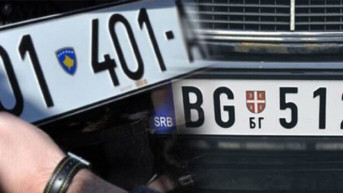
When Serbian President, Aleksandar Vucic, and Kosovo Prime Minister, Albin Kurti, sit down at the negotiating table in Brussels on May 2, together with High EU Representative Josep Borrell and Dialogue Envoy, Miroslav Lajcak, they will discuss the implementation of the reached agreements, which implies, first of all, Pristina’s obligation to form the Community of Serb-majority Municipalities, but also the issue of the missing persons. In addition, according to the interlocutors of Kosovo Online, many other agreements still have open issues and can be on the Brussels agenda, one of which is the issue of license plates.
Our interlocutors also add that the issue of license plates, which at the end of last year "raised the temperature" in the north of Kosovo, is still a hot concern solely because of Kurti's unilateral moves.
President Vucic recently, at a meeting with the Serbs from Kosovo in Raska, said that Belgrade had sent a proposal to Brussels for a solution to the issue, and that, he noted, had been a "maximum fair proposal" in order to find a compromise solution.
If an agreement is not reached, and the institutions in Pristina continue to violate the agreement on license plates and do not allow freedom of movement for the Serbs whose vehicles use legal and legitimate license plates of Serbia, the Serbian side will retaliate with "significant and adequate political measures to protect the constitutional order,” Vucic said then.
Without revealing what kind of measures we are talking about, Vucic only stated that "Pristina will not be happy when they see how it will work" because Belgrade would take measures in an arbitrary manner against those who had RKS license plates in accordance with what the state authorities of Serbia they decided.
According to the analyst's opinion, it would be best for the Serbs from Kosovo if the application of such measures did not even occur, because it would mean that Pristina stopped violating the agreement and allowed them complete freedom of movement, but if they, nevertheless, had to be applied, that solution could mean that Serbia would recognize only KS plates.
The former president of the Executive Council of Kosovo and Metohija, Zoran Andjelkovic, assesses that neither the Serbian nor the Albanian side in Kosovo is comfortable with the additional tightening of relations due to the violation of the agreement on license plates.
"I don't think that anyone is satisfied with tightening and we should work on calming down, but it is obvious that the Pristina side wants tightening," Andjelkovic said.
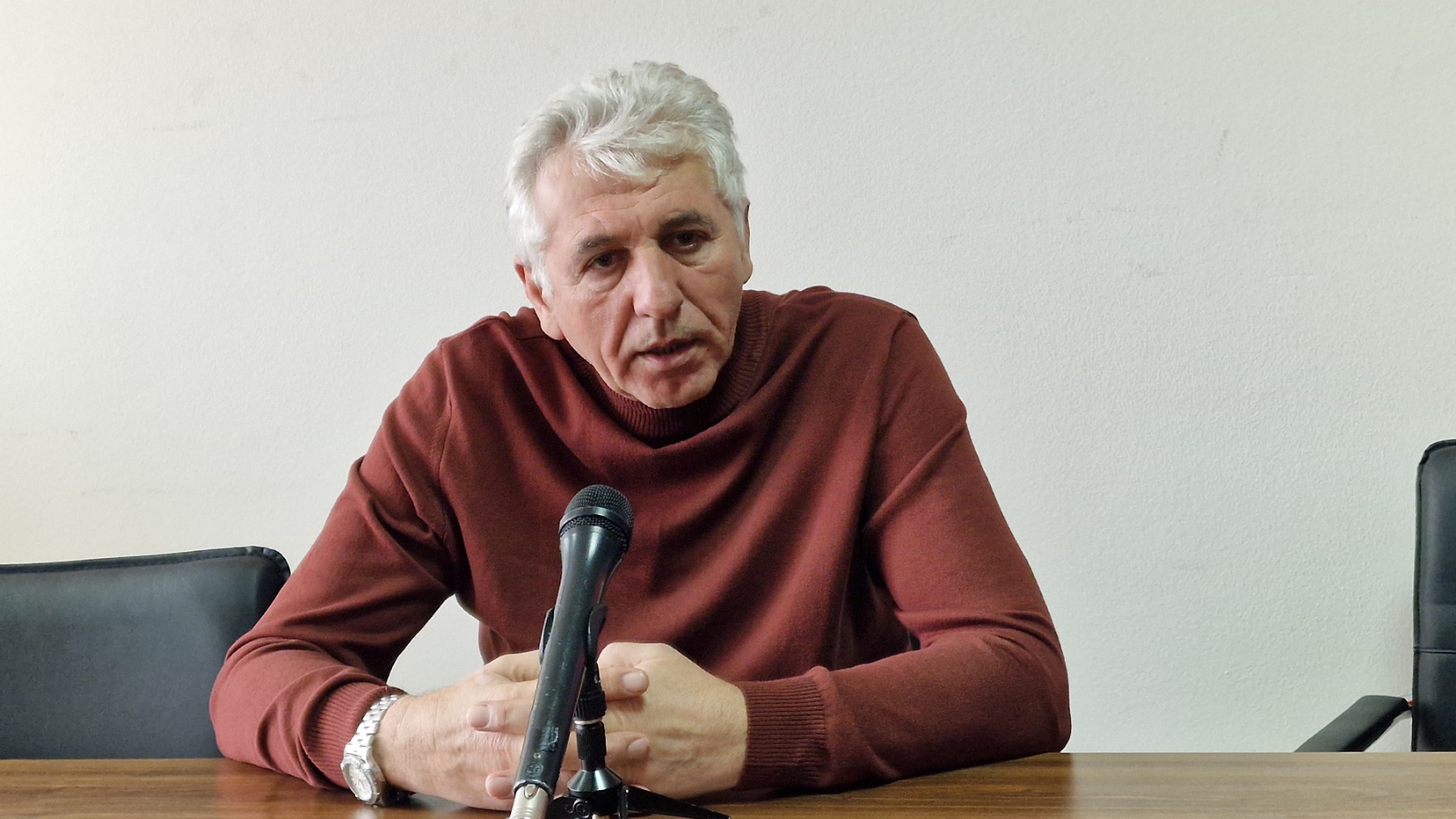
Andjelkovic said that he had not been sure and that he would not be able to comment on what exactly President Vucic had meant when he announced "more than a compromise solution for license plates" and the measures if Pristina rejected that solution, but that there was a possibility of some reciprocal measures that, for example, "then they can't go to Merdare with RKS plates".
When asked whether the possible introduction of new measures regarding license plates by Belgrade or Pristina could cause reactions, and incidents and lead to escalation on the ground, Andjelkovic points out that incidents, conflicts, and provocations from the Albanian side are daily present in the lives of the Serbs and that some newspapers would certainly only further complicate the situation.
"We have incidents, conflicts, or provocations every day, so this is nothing new, but of course, it complicates the functioning of citizens in the area of the southern Serbian province as a whole, and these measures taken by Pristina or any reciprocal measures taken by Belgrade," Andjelkovic said.
He believes that the situation is tense, primarily because Pristina does not want to behave rationally and in accordance with the agreements, and that it is necessary to take some measures if such behavior continues.
"Any measure that does not lead to calming the situation complicates the situation, but obviously some measures will have to be taken if Pristina continues to violate the agreement and if it is against compromise solutions," Andjelkovic warns.
All current and unresolved issues, from the CSM, license plates, through the presence of armed Special Police units in the north of Kosovo, to illegitimate elections, Andjelkovic states, should be on the table on May 2 in Brussels when Vucic and Kurti will meet, because, as said, work had to be done to calm the situation and find solutions to the problems.
Political analyst, Ognjen Gogic, tells Kosovo Online that it is complex to comment on the measures that Belgrade would possibly take if Pristina refuses to accept a compromise solution on the issue of license plates in Kosovo, since the President of Serbia, Aleksandar Vucic, has not disclosed what it is about, but states that it a compromise solution could refer to the return to use of KS plates, which were neutral and were used until 2021.
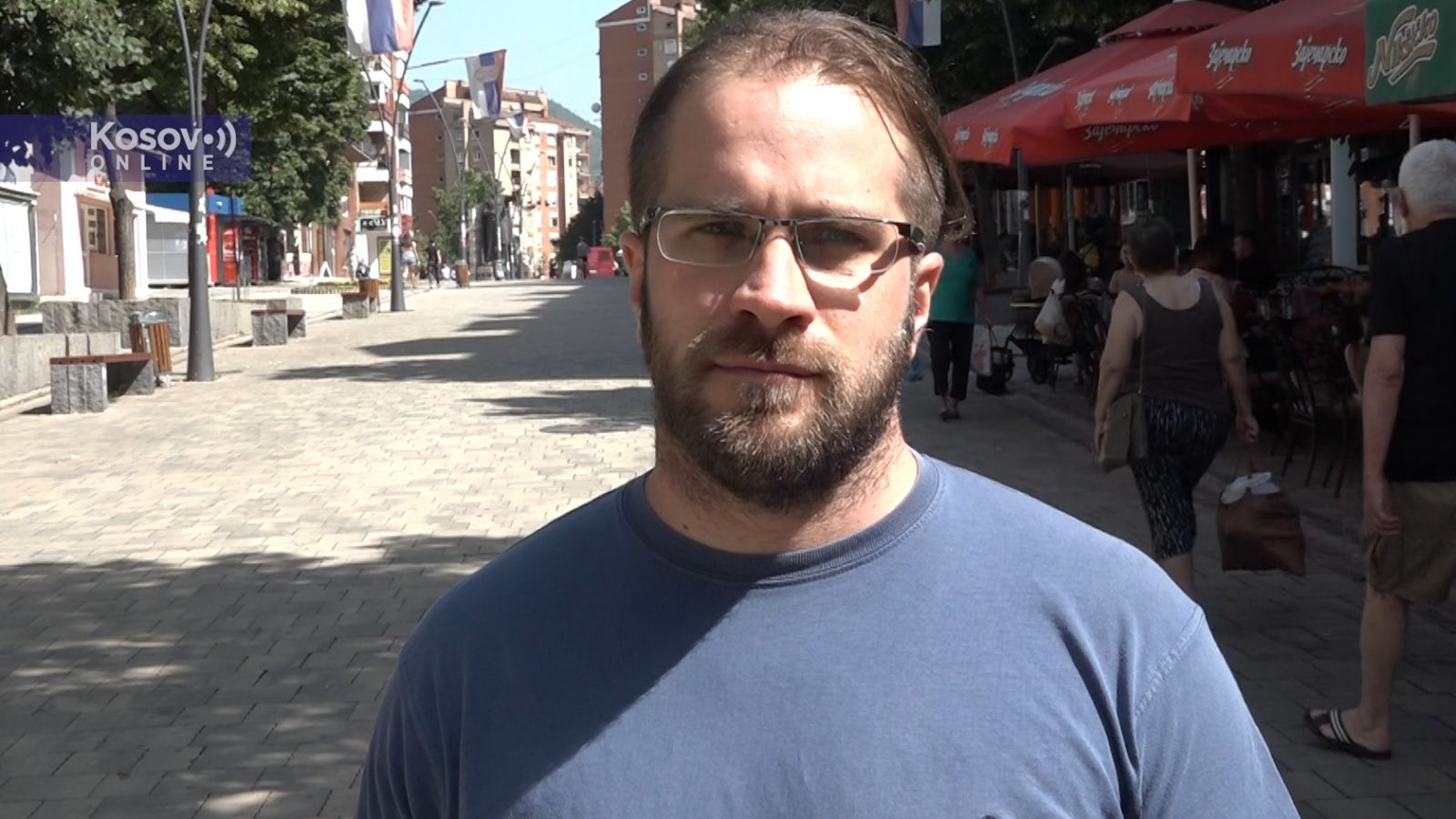
"The story about license plates is quite confusing because now we had the last document from Brussels, which was accepted at the end of February, and it also deals with the issue of license plates. According to that document, there should be full acceptance and recognition of all license plates, regardless of what markings they carry," Gogic stated.
According to that agreement, adds Gogic, it was assumed that the issue of license plates would no longer be on the agenda - all license plates would simply be accepted and there would be no restrictions.
"I don't know what else could be proposed, except possibly to return to KS license plates, because they were acceptable to the Serbian side," Gogic stated.
The proposal to return KS plates to use was offered by Belgrade as an option for a solution last year when the crisis arose, the analyst recalls.
He underlines that President Vucic announced some countermeasures during the conversation with the representatives of the Serbs from Kosovo and said that Belgrade would take new measures against RKS license plates if Pristina caused problems for the owners of vehicles with KM plates.
"I assume that this means some kind of restrictive measures and making it more difficult for the owners of these vehicles to enter central Serbia. However, that would be counterproductive because the Serbs, south of the Ibar, have RKS license plates. There are also the Serbs in the north with RKS plates. So with those measures, then they were also affected, so maybe that's not the smartest thing," Gogic says.
In essence, what should be a permanent solution, he emphasizes, is to respect the agreements - first, the one reached in November, according to which Pristina should have allowed the use of KM plates, and then the agreement in Brussels that followed, and which allowed free movement of vehicles with any license plates.
Gogic reiterates that Serbia's restrictive measures would not only target the Albanians, but would also affect the Serbs south of the Ibar, and it is possible that it would cause a spiral of actions and reactions between Belgrade and Pristina.
"For example, when Belgrade introduces some restrictions for RKS license plates, and then, for example, Pristina approves and reciprocates with the same measure to the Republic of Serbia, and then we are actually in a negative spiral where one side makes a move, and the other side responds, and then it continues like that," Gogic says.
He also assesses that the introduction of different and alternating measures by Belgrade and Pristina increases the possibility that the Pristina side will, at one moment, respond with new arrests and detentions "for God's sake", that is, by imprisoning the Serbs without any explanation.
"They certainly would never say that the arrest was because of the license plates, but it could come as some kind of response from their side. We already have a significant presence of those Special Forces in the north that, as we see, are not disciplined and easily reach for weapons, it was, let’s recall, several of those shootings, and it is not known whether these were individual cases or whether it was ordered and orchestrated," Gogic says.
He warns that Pristina can also increase the number of "Special Forces" at checkpoints and crossings, which would increase the risk of new shootings and attacks.
He also believes that solutions should be launched in Brussels on May 2 for key issues that disrupt and make everyday life difficult for the people of Kosovo.
"It is not excluded that some incidents will break out on the eve of the elections and on the election day itself, this has happened before and it is predictable, however, if the election day passes peacefully, then new authorities will be constituted in the north of Kosovo, which will be illegitimate. That is perhaps one of the major topics that should be discussed in Brussels," Gogic said.
0 comments