
What consequences would the forced imposition of the decisions of the Albanian mayors on the Serbs in the north bring?
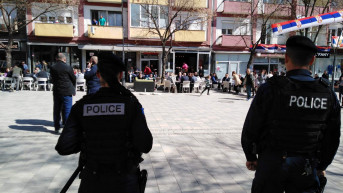
The decisions of the Albanian mayors who "won" the elections in four municipalities in the north of Kosovo with less than three and a half percent of voters, and the possible use of force to implement those decisions, will inevitably cause the danger of great tensions and conflicts, Kosovo Online interlocutors warn, who believe that it is impossible for the newly elected officials to start work without the consent of the majority of the Serbs.
According to the preliminary results, without the participation of the Serbs in the elections held, the candidate of Self-Determination Erden Atic won in North Mitrovica, in Leposavic Lulzim Hetima also from the party of Albin Kurti, in Zubin Potok Izmir Zeqiri from PDK, and in Zvecan Ilir Peci from the same party.
Analyst Ognjen Gogic estimates that the arrival of Albanians at the head of Serbian municipalities in the north of Kosovo is not certain, and if, as he says, by some miracle they manage to get to their new positions, the decisions they would make would be considered illegitimate by the Serbs and would resist their implementation. while the mayors would have to rely on the support of law enforcement and the police, which is already an imminent conflict.
Gogic explains that according to the Law on Local Self-Government, the mayor must take an oath before the Municipal Assembly within a month of the election, which, he adds, is almost impossible to do.
"In two of these four municipalities - in Leposavic and Zvecan, we do not have municipal assemblies, because there were not enough councilors from the ranks of Albanians and Bosniaks to fill the places that the Serbs left when they resigned. In Zubin Potok and North Mitrovica, they were filled, and there are councilors who have a mandate, however, those assemblies have not met recently and there are no conditions for that. In Zubin Potok they don't even have premises, it is under the control of the Serbs, in North Mitrovica they can potentially meet, but it is quite risky," Gogic says.
He concludes that the elected mayors will not have a place to take the oath, and if assemblies are convened in North Mitrovica and Zubin Potok, it will not be successful, as he says, because they will not be allowed to gather. Gogic believes that there is a probability that the mayors will fail to take the oath before the municipal assemblies, and then by force of law their mandate will end and new elections will be held.
"This is a Pyrrhic victory, even if they were to overcome the first obstacle, the mayors still have to rely on the assemblies in the policies they lead and the decisions they make, and they send proposals for decisions to the authorities that should adopt them, and they will not be able to do that for the same reasons I mentioned - there won't be an assembly in full capacity or they won't even be allowed to meet," our interlocutor points out.
He adds that the mayor is the executive authority in the municipalities and in his work he has to rely on departments, employees, and officials, and the new mayors do not have that, because people quit their jobs. If, says Gogic, by some miracle the Albanian population would establish administration and leadership in the municipalities, then all the decisions they would make and all the activities they would undertake within their jurisdiction would be considered illegitimate by the Serbs and would not be recognized, which would lead to reliance on law enforcement agencies.
"The Serbs would resist and would not accept those decisions as legitimate, and conflicts would arise where the mayors would have to rely on the support of law enforcement, the police, and central authorities, so this is already a conflict in the forecast. The North is unconquered so far. For more than 20 years after the war and 15 years after the unilateral declaration of independence, no government in Pristina has managed to establish control over the north. The north has always put up a terrible resistance to this, so I think that even if they tried to impose their will, they would encounter the indomitable resistance of the local population and that the Serbian society would prove to be stronger in that conflict," Gogic emphasizes, who does not rule out the scenario of the formation of a forced administration.
For example, as he explains, if Special Police officers were to go to shops, streets, cafes, and schools and demand that certain decisions be respected, such a scenario would lead to jeopardizing people's safety.
"Security would be compromised if the new mayors relied on their decisions to be implemented with the help of Special Forces, which would lead to clashes between the police and the local population. It would be short-lived, it takes a huge amount of force to make people comply, I think that Pristina does not have that capacity," Gogic concludes.
He considers it "strange" that the issue of elections was not raised during the dialogue in Brussels and Ohrid.
"I think that Pristina will understand that this is a hopeless situation for it and that the only solution is to agree on the return of the Serbs to the institutions within the framework of the upcoming dialogue in Brussels, but on the condition that the conditions of the Serbs are respected - the release of the Serbs from detention and the beginning of the formation of the Community of Serb-majority Municipalities. Then they should call for new elections in which the Serbs would participate, and based on that, new local institutions should be formed, and then the CSM," Gogic says.
Predrag Rajic, an analyst from the Center for Social Stability and special adviser to the Minister of Defense of Serbia, Milos Vucevic, believes that the position of the Serbs will certainly be further complicated by the election of new mayors in the north of Kosovo since every decision of "these imposed authorities" will be a source of potential conflicts.
"I assume that the Albanians will try to impose the decisions of their illegitimate authorities by force. As a result, the entire situation in Kosovo and Metohija will be additionally tense, more tense than before. It is completely devastating that the representatives of the international community pointed out that they accepted the results of the elections in which less than four percent of registered voters had taken part, in four municipalities in the north of Kosovo and Metohija," Rajic told Kosovo Online.
This means, he assesses, that the Serbian community must simply stick to Belgrade only and exclusively, that it must stick very closely to each other, and that it must not allow itself to fall prey to any kind of provocation.
He also emphasizes that the Serbs in Kosovo must be aware that they are facing an extremist regime of Albin Kurti, which is obviously supported to the greatest extent in its activities by the international community. According to Resolution 1244, Serbian citizens could only be protected by KFOR; he says but adds that the problem is that the Serbian side has become convinced over the past 24 years that this mission has a changing attitude towards the protection of the Serbs.
"KFOR sometimes protected the Serbs, sometimes it didn't, and the Serbs cannot fully rely on KFOR's protection," he assesses.
If the Albanians try to use their instruments to exert additional pressure on the Serbs and thus force them to leave Kosovo, warns Rajic, there is a danger of a wider-scale conflict.
"Everyone must be aware, both in the international community and in Pristina, that the state of Serbia will most certainly not silently observe the attempt of a new pogrom against the Serbs from Kosovo and Metohija, because Aleksandar Vucic is not, Slobodan Milosevic, or Boris Tadic, or Vojislav Kostunica. He will not allow either a new OpetarionStorm, or a new Operation Flash, or the Pogrom from 2004, which was perpetrated against the Serbs in Kosovo and Metohija," Rajic assessed.
He assumes that the new leadership in the north will be a kind of pressure on the Serbs from Kosovo and expressed the expectation that the Albanians, under the pressure of the international community, will start forming the CSM.
"Then, in fact, this imposed power in four municipalities will be used as a token and one element in that game of pressure on the Serbs in Kosovo and Metohija in order to make their position more difficult and their unity in the north to be broken," Rajic concluded.
An analyst from Gracanica, Aleksandar Gudzic, tells Kosovo Online that experience has taught Pristina and the Albanian side that boycotting elections pays off somehow.
"Everything that happened yesterday in North Mitrovica happened more than ten years ago in Gracanica and Strpce, when the Serbs boycotted the elections, and a negligible group of people took part in it, voted, and elected representatives of the government. The international community accepted the legitimacy of such people and that later led to problems. We all remember about fifteen years ago when the Serbs boycotted the elections in Strpce, Albanian parties came out and took power in the municipality with a Serb majority. Pristina's logic is probably that something similar should happen again and that they have their own people in the north, Albanians, at the head of Serbian municipalities. To what extent that is possible, at this moment, is a question. I think it is impossible now. The Serbs will not allow such a scenario that happened in Strpce or Gracanica," Gudzic says.
As he adds, if all interested parties do not come to their senses, and he points out that he means the international community, Pristina, and Belgrade, this will lead to deepening and escalation of conflicts and unpleasant scenes that at some point can get out of control.



comments