
What will happen after the elections: Albanians with 13 votes of the Serbs at the head of northern municipalities - a mockery of democracy

After the Serbs in Kosovo, revolted by the pressures of Pristina, non-compliance with the agreement, and violation of rights, left the Kosovo institutions - the police and the judiciary, and submitted their resignations in the local self-governments and the parliament, instead of a political agreement and removing the causes for that situation, the Kosovo authorities decided that without the Serbs hold local elections in four municipalities in the north. What are the consequences of Albanian taking over power in municipalities, with an absolute Serb majority?
In the elections in the north of Kosovo, the candidates of Albin Kurti’s Self-Determination, and Lumir Abdixhiku’s Democratic Party of Kosovo took part, although Albanians in those municipalities make up far less than five percent of the population.
This means that the municipalities in which the Serbs form a convincing majority will be led by Albanians in the future, and considering all the actions of Pristina so far, from the arrest to the wounding of the Serb Milan Jovanovic near the Bistrica Bridge near Zvecan ten days ago, the representatives of the Serbs are rightly concerned about their the future.
Nevertheless, despite this, the US Special Envoy for the Western Balkans, Gabriel Escobar, openly said that America would recognize these elections, regardless of the boycott of the Serbian parties, which practically means that in the eyes of Washington, and therefore of Brussels, the institutions in Serbian municipalities, which will not be led by the Serbs, will be legitimate.
Can institutions in Kosovo without the Serbs and the formation of the Community of Serb-majority Municipalities be legitimate?
The Vice-President of the Assembly of Serbia, Snezana Paunovic, answers - absolutely not.
"The arrogance and insolence of Albin Kurti hit the upper limit. It is Kurti's ugly, hellish plan to put pressure, first of all, on the north of Kosovo and Metohija and expel all the Serbs," Paunovic points out.
It is unnatural that where the Serbs are, the Kurti’s majority exercise power in the institutions and it is unnatural to expect the Serbs to obey those quasi-elections, she adds.
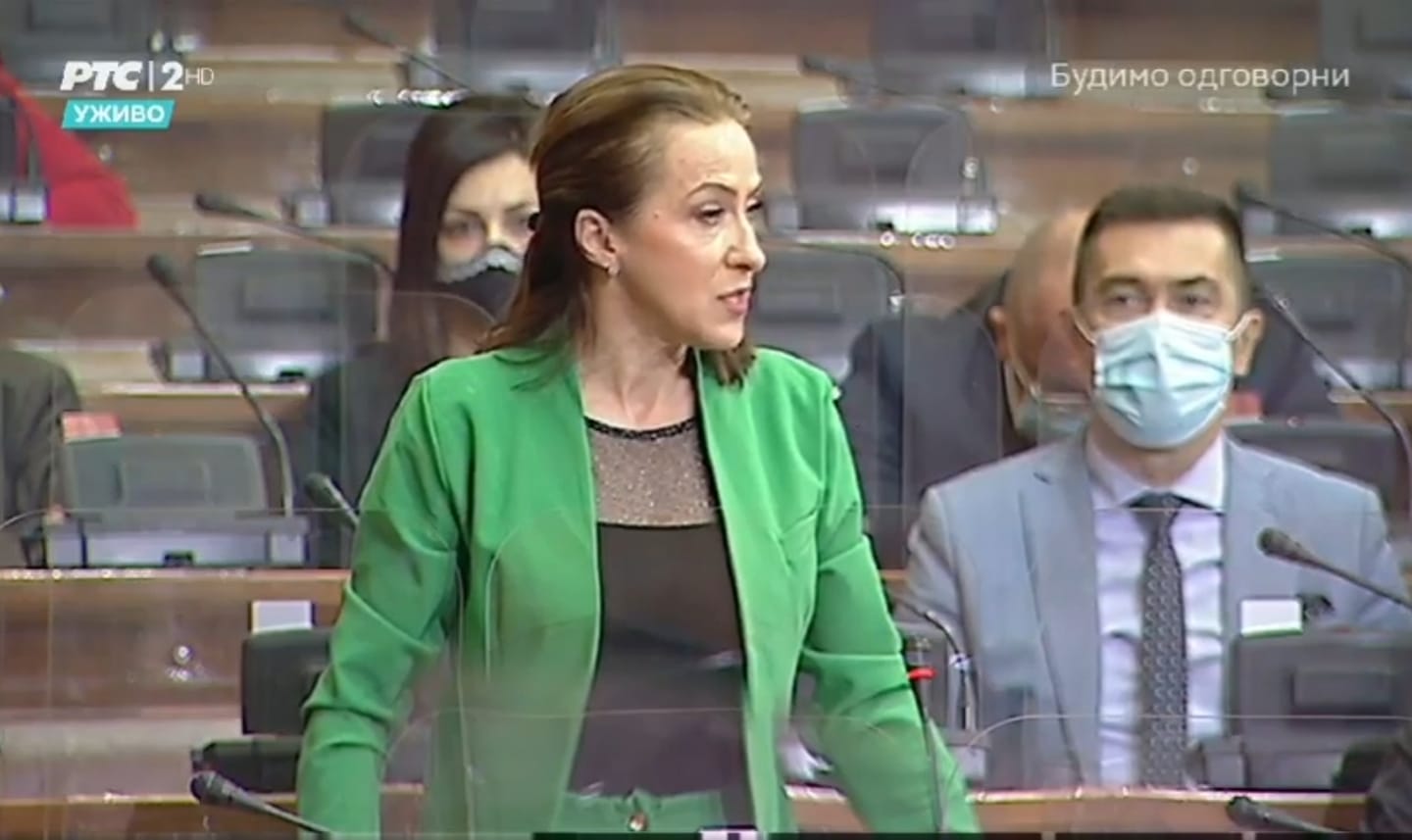
"I can't even perceive what it could look like," Paunovic points out.
That is why she thinks that the European Union, although aware that its expectations are too high, should point out how illegitimate it is, what Kurti is trying to impose on the north of Kosovo.
"For me, it is unnatural that people who are not members of the Serbian minority impose themselves in the enclaves, in the institutions, let alone in the north of Kosovo, where objectively percentage-wise, Kurti really has nothing to claim with his Kosovo institutions, with his Serbs, if there are any, or with its inserted Albanians. This is a completely illegitimate move by Pristina. Institutions in which there are no representatives of the majority of people are completely illegitimate. They then lose their meaning. It is no longer a question of legitimacy, it is a question of meaning," Paunovic explained.
When asked what could be expected after the election, and whether the situation could clear up, she answers that, unfortunately, there is no doubt about that and that she is afraid of "the day after".
"It scares me that everybody is silent about all Kurti's moves and I wonder what the Serbs from Kosovo and Metohija will be exposed to the day after the so-called elections in the north. I still believe that, above all, members of KFOR will be on full alert, because I don't know what it could look like if, for example, the Kosovo police bring some of their own good Serbs or even worse Albanians, I am afraid that day after, because it seems that this is exactly his intention, to escalate the conflict, to lead to who knows what, because his financial idea, which he is trying very hard to implement, ethnically pure Kosovo. And that is what bothers him the most about the north of Kosovo," the deputy speaker of the parliament, a native of Peja explains.
Paunovic is also convinced that Kurti would not take "a single step" when it came to the Community of Serb-majority Municipalities, regardless of the fact that 10 years had passed since the signing of the Brussels Agreement when Pristina had assumed that obligation.
"I am sure that even in his subconscious he does not have the formation of the CSM. My only dilemma, and I would like to hear the answer - is this rejection, his stunt that he implements, just his idea or does he also have the serious support of his mentors," Paunovic wonders.
She is confused, she says; whether Kurti really has that much power to persistently refuse, under increasingly obvious or at least more transparent statements, the pressure of the international public to form the CSM.
"It seems unrealistic to me if that is the case and if this is his arbitrariness. I am inclined to believe that he will not hold the position of Prime Minister for a long time, because in Kosovo it is obtained in writing from Washington, rather than from Brussels. If he is doing this despite orders from the US, I think the price will be too high for Kurti, but not only for him. I'm not worried about him, but about the Serbs and a number of Albanians who suffer from his arbitrariness and arrogance," Paunovic said.
The president of the Center for the Study of Globalization, Dejan Miletic, points out for Kosovo Online that democracy, which originally means the rule of the people, can hardly be realized when 98 percent of the population did not express their opinion in the elections.
That is why he points out that what is currently happening in the north of Kosovo is an absolute negation of democracy.
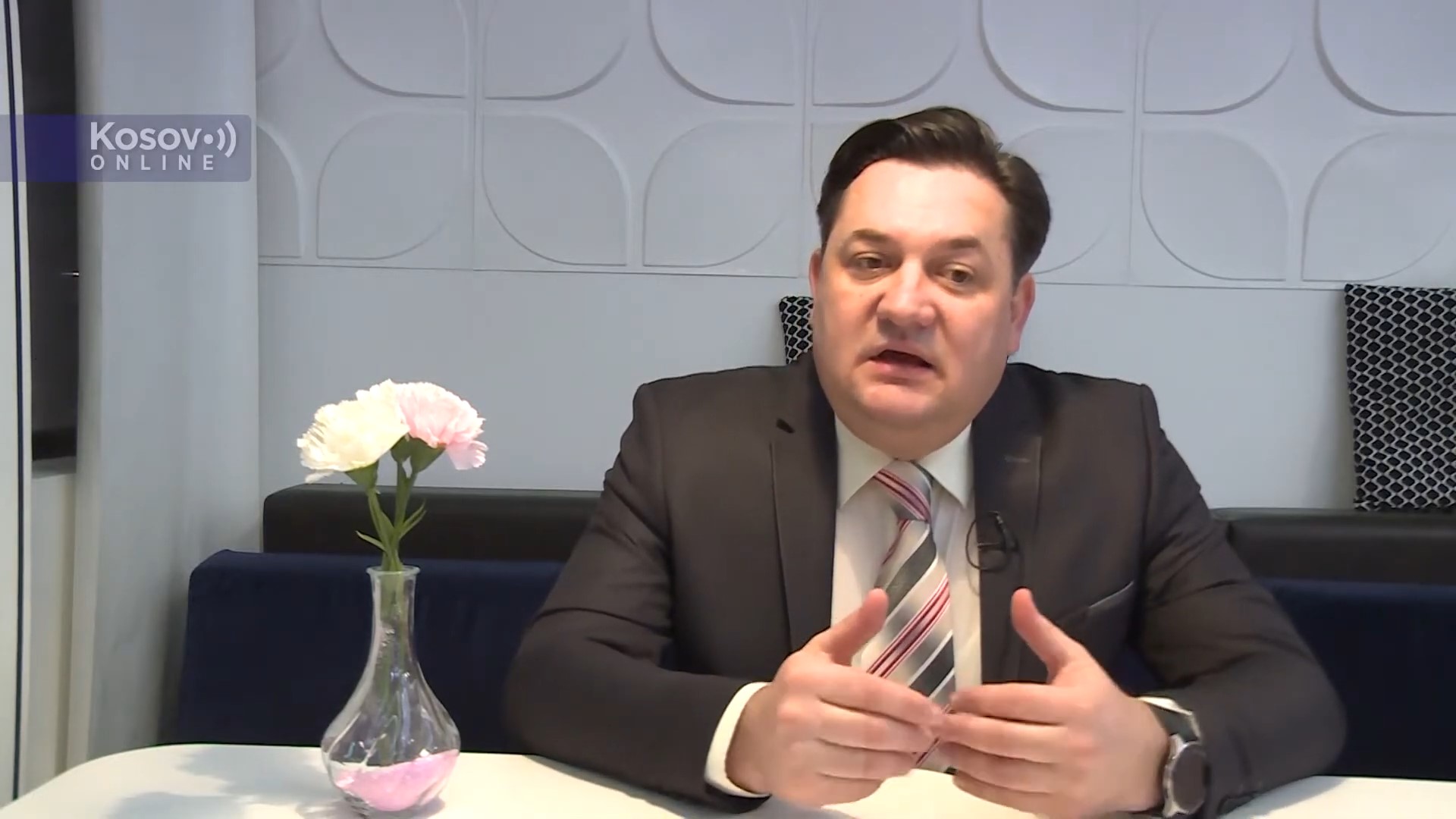
"No institution will be able to reflect the interests of the people living in that area, without the Serbs. Therefore, only false, quasi-institutions can be formed, as an improvisation of the democratic system, which, practically, represent a kind of brute of the international community, which still bears responsibility for the security and future of that area, whether they want to admit it or not. The elections would not be able to be held without their support, nor would they be able to represent any kind of insistence on that area," Miletic points out.
Commenting on Gabriel Escobar's statement, he says that it only distances two nations and provides support for Kurti's regime and violence against the Serbs, which is carried out in a physical, security, legal, and now institutional sense.
Because all this, he adds, is nothing but violence against the Serbs, only this time expressed through "false democratic elections".
"Escobar and the US are discredited by this to a great extent because they are taking one side and that's in addition to the fact that 10 years after the Brussels Agreement, the Community of Serb-majority Municipalities has not been implemented and that in the north there are rifles, i.e. ROSU units, and that brutal police relationship with the Serbs in the north is carried out smoothly and without the intervention of the international community and the condemnation of the US. If that's all the US has to say, then it's a kind of support for the apartheid that Kurti created for the Serbs in Kosovo and Metohija, especially in the north," Miletic said.
He notes that the elections can only further complicate the situation, and even be, perhaps, the initial capsule for further escalation, the dissatisfaction of the Serbs on the one hand, and the brutal behavior of the Albanians on the other, which brought this area to the brink of conflict.
"There is no talk of democracy here, this is the imposition of the will, in this case of the regime of Albin Kurti, and this will absolutely condition the political environment and not only it will not contribute to the stabilization and legitimization of institutions, but will tighten relations to the extreme. With this attitude of the international community, everything becomes much more complex, dangerous, and unfavorable for any intention of stabilization in this area," Miletic concluded.
Allen Meta, a political analyst from Pristina, points out for Kosovo Online that institutions can work without the Serbs, but they will always be incompletely functional, which is not the goal.
"First of all, we must take into account that Kosovo, even based on the Constitution, is a multi-ethnic society, and as such functionality depends on the cooperation of all social groups. This means that Kosovo cannot function without the Serbian community, as the largest existing minority in Kosovo. It is very important to understand that living and working together does not end with violence or blockades and imposition," Meta says.
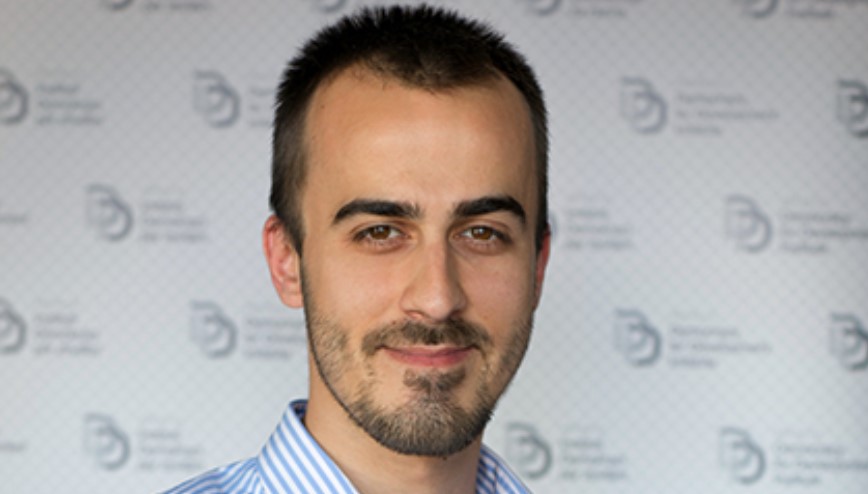
He believes that, in addition to the dialogue at the government level between Kosovo and Serbia, there should also be a conversation at the local level between the communities about the growth of trust, cooperation, and coexistence, in order to create conditions for security and ease of institutional functioning in general.
"Given that the institutional representations are regulated by law, and we have an agreement that has been ratified in the Assembly of Kosovo, then it is logical that the deadlock cannot go on indefinitely, either from the Albanian or from the Serbian representatives. On the one hand, as the international factor says, the CSM should be formed in order to facilitate the functioning within the Serbian community itself, but also as a consequence, to end the blockade by the Serbs," Meta concluded.


0 comments