
Why are Albanians in Kosovo afraid of the CSM? Propaganda, politics, ignorance
Research by the Institute for Political Studies from Pristina showed that as many as 98 percent of citizens believed that Kosovo would be in danger if the Community of Serb-majority Municipalities had been formed, and in recent days Albanians in Kosovo and abroad had been organizing protests against the CSM. In a conversation with analysts from Pristina and Belgrade, we sought an answer to the question of why Albanians in Kosovo were so afraid of the formation of the CSM.
Almost 10 years have passed since the first agreement on the Community of Serb-majority Municipalities was signed in Brussels. However, it has not been formed yet. The authorities in Kosovo, which have changed over the past decade, cited the decision of the Constitutional Court as the reason for not fulfilling the international agreement and Albin Kurti has a list of six conditions.
After the published European proposal for the normalization of relations, protests against the CSM were organized in Kosovo in recent days. Students are protesting, and meetings are being organized by members of the Self-Determination Movement and the Albanian diaspora throughout Europe.
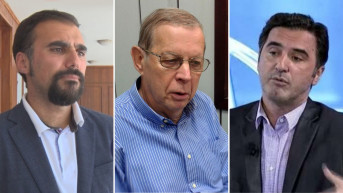
Analyst and sociologist Artan Muhaxhiri pointed out for Kosovo Online that continuous media propaganda without a real basis and without a willingness to analyze objective facts had created great confusion in the public sphere regarding the CSM.
"This is the main reason why the people of Kosovo are in a conceptual fog regarding the recent developments regarding the Community, especially regarding the very quick and pragmatic change of its interpretation by Prime Minister Kurti. The whole subject of the Community, from its beginning, has been presented in a biased light way and with extreme polarizations. While the political leaders of the position at the time tended to minimize its symbolism and influence, on the other hand, the opposition stigmatized and demonized it, treating it as a door for destroying the institutional integrity of Kosovo," Muhaxhiri added.
As he stated, the narrative had moved from one extreme to the other, without adequate explanations from Kurti and the opposition leaders, who, as he stated, constantly had chosen only those stages of the process that suited them.
"For the Albanians in Kosovo, the absolutely most important point should be the final legitimization of the Community's statute and functioning by the Constitutional Court of Kosovo. It is the biggest possible system fuse that will always be there to prevent all potential negative scenarios," Muhaxhiri emphasized.
Former diplomat Zoran Milivojevic says that the published research in Kosovo is precisely the result of the current policy led by the Self-Determination Movement.
According to him, the results of the research indicate the importance of the CSM and the intention of the Kosovo authorities to make it impossible for the Serbs in Kosovo to function normally in all spheres.
"The research, first of all, speaks in favor of the policy for an ethnically pure Kosovo, unfortunately, it confirms that such a policy has effects, as well as that the Serbs are rightly afraid for their fate and survival in Kosovo and Metohija, and that there is justification in Serbia's commitment to form the CSM and to approach it as a preliminary issue in the talks on normalization," Milivojevic told Kosovo Online.
He emphasized that such a research result indicated the importance of the CSM for the Serbs living in Kosovo.
"Serbia is absolutely right to ask for the CSM, such research shows how important it is in the function of the survival of the Serbs and the possibility to live normally and politically and act in any other way," Milivojevic added.
As he added, among the Albanians and the authorities in Kosovo, there was not only a fear of the CSM but also a determination not to allow the Serbs to function normally.
"On the one hand, we have an attempt to impose a single-minded, ethnically pure policy and to form an ethnically pure region; it should be remembered that the basis of the Self-Determination Movement is “Greater Albania”, that is, the unification of all Albanian regions, which also implies ethnic cleansing. On the other hand, in addition to fear, there is also the determination not to allow the Serbs to join the CSM, so it's not just about fear, but also the determination to implement the policy of ethnically pure territory and the elimination of the Serbs from Kosovo and Metohija," Milivojevic concluded.
Pristina journalist Leart Hoxha believes that Albanians in Kosovo are not sufficiently informed and that their attitude is based on the statements of politicians.
"Citizens generally do not read documents and analyses, the Constitution and laws, but rather believe the statements of political leaders who, for the sake of daily politics, can say anything and everything in public, and yet little is known about it. The attitude of citizens is mainly based on the attitude of politicians, whether something is good or bad, which is alarming," Hoxha said.
Hoxha added that political parties in Kosovo did not base their platforms on facts and on what had been signed or legislated.
"It's a systematic problem; people don't listen; they take for granted what the politicians serve them," Hoxha said.
As he emphasized, it was more important that the formation of the CSM was an obligation than whether Albanians in Kosovo were afraid of it.
"They have nothing to fear if the international partners guarantee that the CSM will be within the Kosovo constitution and system. But, I repeat, people tend to trust politicians and read the headlines in the media. It's easier than reading the decision of the Constitutional Court and concluding for themselves. This is an indication that politicians are prone to manipulation, rather than presenting facts to citizens," Hoxha concluded.


comments