
General Grynkewich: KFOR optimization has begun; NATO will not allow a security vacuum to emerge
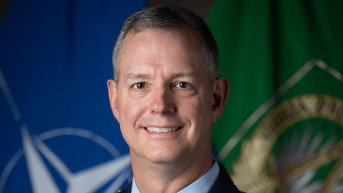
In an exclusive interview with Kosovo Online, US Air Force General and Supreme Allied Commander Europe Alexus G. Grynkewich said that he assessed the security situation in Kosovo as generally stable and that the optimization of KFOR forces would be carried out gradually, in accordance with conditions on the ground.
Written by: Veljko Nestorovic
Grynkewich said that KFOR troop levels should return to approximately 3,500 personnel over the next year, but stressed that the process could be reversed if security developments required it, emphasizing that NATO would not allow a security vacuum to emerge.
How do you assess the current security situation in Kosovo?
I currently assess the situation as generally stable. It is precisely because of this stability that KFOR’s presence can be adjusted in accordance with circumstances, while continuing to effectively maintain a safe and secure environment for all people and communities living in Kosovo, as well as freedom of movement. We do this at all times and impartially, in accordance with our longstanding United Nations mandate, based on UN Security Council Resolution 1244 of 1999, and in close coordination with the Kosovo Police and the European Union Rule of Law Mission in Kosovo (EULEX), in accordance with their respective roles within the security response mechanism. That is why, in June, using my existing authorities and following a detailed, intelligence-based analysis and assessment of the security situation, I directed the optimization of KFOR forces.
NATO has stated that the optimization of KFOR forces began as a result of the improved security situation in Kosovo. Is there a minimum number of KFOR personnel below which the mission’s troop strength in Kosovo will not be reduced? Also, when assessing the security situation, are the security concerns of the Serbian community in Kosovo, particularly in the north, taken into account?
That is correct. The optimization of KFOR forces has begun and, as I have already noted, is a result of the improved security situation in Kosovo, which requires constant monitoring. Rest assured that I am regularly briefed on the situation. The optimization process will proceed gradually at various locations throughout Kosovo, with KFOR troop levels adjusted over the next year to the level they were at before 2023—approximately 3,500 troops, including US forces. This ensures that our military mission remains fit for purpose and focused on the areas where security is needed most while a political solution is pursued. As for the period beyond that, I will not speculate. It should also be noted that this conditions-based optimization could be reversed should relevant security developments require it. It is also important to emphasize that NATO continues to support the EU-facilitated Belgrade-Pristina Dialogue and calls on both sides to engage in resolving outstanding issues and reaching solutions that respect the rights of all communities, including those in the north. This is essential for long-term security in Kosovo and stability in the region. Rest assured that NATO remains strongly committed to the Western Balkans, a region of strategic importance to the Alliance whose security is directly linked to the security of the Euro-Atlantic area. NATO will not allow a security vacuum to emerge.
How important is direct communication between KFOR and the Serbian Armed Forces in preventing security incidents?
I believe that continuous communication and transparency in our relations with all sides are essential. The KFOR Commander, the Commander of NATO’s Allied Joint Force Command Naples and I are continuously engaged in this regard, as are our respective staffs. That is precisely why I visited Serbia in June and why I am now visiting Kosovo. I have also visited Albania, North Macedonia and Montenegro.
When the Kosovo Police, its special units or the authorities in Pristina take actions that carry a risk of escalating tensions within the Serbian community, KFOR emphasizes that it acts as the third security responder, after the Kosovo Police and EULEX. Does NATO have defined “red lines” in this regard?
That is correct. The Kosovo Police bears primary responsibility for law enforcement and the investigation of suspected criminal activity, while EULEX performs its role within the established security response mechanism. KFOR, which does not have a law-enforcement mandate, maintains close coordination with both, in accordance with their respective roles within the security response mechanism. Information-sharing and coordination through established channels take place regularly, contributing to better situational awareness and ensuring that appropriate measures can be taken when necessary.
As I mentioned earlier, continuous communication and transparency in our relations with all sides are essential. NATO does not operate on the basis of “red lines.” Our absolute priority is the implementation of our longstanding United Nations mandate, based on UN Security Council Resolution 1244 of 1999. We carry out that mandate by contributing to a safe and secure environment for all people living in Kosovo, as well as freedom of movement. We do so at all times, impartially and in close coordination with the Kosovo Police and the European Union Rule of Law Mission in Kosovo (EULEX), in accordance with their respective roles within the security response mechanism.

0 comments