
Between political pressure and rights protection: Why is the Ombudsperson important for the Serbian community in Kosovo?
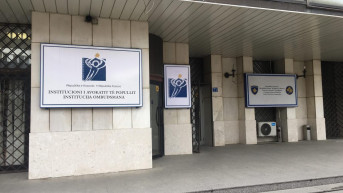
The competition for a new Kosovo Ombudsperson has raised the question of who will succeed Naim Qelaj, while analysts and civil society representatives stress that the institution, despite lacking executive powers, remains a key safeguard and the only address for protecting the rights of the Serbian community in Kosovo. According to them, the new Ombudsperson must be non-partisan, courageous and professionally qualified, and prepared to continue the mission of protecting the rights of minority communities without sweeping pressing issues under the rug.
Written by: Milena Miladinovic
Kosovo Ombudsperson Naim Qelaj’s five-year term expired at the beginning of October 2025, but as Kosovo did not have fully mandated institutions at the time, he remained in office in an acting capacity.
The Kosovo Assembly announced a competition for a new Ombudsperson on October 16, with applications open until November 4.
The Ombudsperson is elected by the Kosovo Assembly by a two-thirds majority of MPs, meaning that at least 80 of the Assembly’s 120 members must vote in favor of the candidate.
The primary role of the Ombudsperson Institution is to monitor, defend and protect the rights and freedoms of individuals against unlawful or improper acts or omissions by public authorities. According to Kosovo Online’s interlocutors, outgoing Ombudsperson Naim Qelaj showed a willingness to help the Serbian community in Kosovo despite political pressure.
For non-governmental organizations that have highlighted the problems facing the Serbian community in recent years, the Ombudsperson Institution has often been the only platform they could turn to, although tangible results have frequently been lacking.
Regarding the Ombudsperson’s powers, Kosovo Online’s interlocutors point out that the institution has no executive authority, but that it is important for citizens to have an institution to which they can report the conduct of judicial or administrative bodies and potential violations of their rights.
A proactive approach
Commissioner for the Protection of Equality Milan Antonijevic said that the Kosovo Ombudsperson bears considerable responsibility and expressed hope that the new Ombudsperson, once elected, would continue Qelaj’s mission.
“Ethnic and interethnic conflicts have been evident in recent years, and Kosovo society has still not found answers to all these issues, something the Serbian community feels most acutely. In some cases, we contacted our colleague in Kosovo, including on issues primarily concerning farms and property, as well as violations of the rights of Serbs, freedom of movement and other matters. He responded appropriately and showed a willingness to help the Serbian community,” Antonijevic told Kosovo Online.
He added that it should be acknowledged that the Ombudsperson had not been ineffective.
“That is also why we cooperate in certain regional forums. We are both members of the European Network of Equality Bodies, and within our regional body he has the opportunity to communicate and make use of available resources, because it is important to protect the Serbian people in Kosovo. If the Ombudsperson, as an independent institution, can assist us in doing so, I believe that opportunity should always be used,” Antonijevic said.
Antonijevic noted that the Ombudsperson faces certain political pressures within Kosovo society because the institution assists the Serbian community, whose members frequently turn to it for help.
He recalled that one of the Deputy Ombudspersons is a Serb, which, according to him, demonstrates that Serbs in Kosovo have at least some form of protection for their rights.
Regarding the election of a new Ombudsperson, Antonijevic said he expected the new officeholder to be as proactive as outgoing Ombudsperson Naim Qelaj had been.
“One of the deputies should also come from the Serbian community and should have full support, while the institution itself must be strong in terms of staffing. As for pressure, every independent institution faces it. The Ombudsperson is always under pressure—on the one hand from the public, which expects an independent institution to respond in every case, and on the other from the authorities, which do not like being criticized by such institutions, as we have seen on many occasions. But I expect a proactive approach, the ability to respond and a willingness not to sweep any issue under the rug, particularly those concerning the security, rights, social protection and every other form of protection of the Serbian people in Kosovo, as well as the issue of the sustainable return of Serbs to Kosovo,” Antonijevic said.
According to him, this must be an issue that Kosovo society addresses, and anyone who has had any experience or engaged in dialogue with the Serbian community can contribute to that process.
Open to the problems facing Serbs
Executive Director of the New Social Initiative Milica Andric Rakic said that during the years of tensions between the Serbian community and the Kosovo Government, the Ombudsperson Institution had been the only platform open to hearing the problems faced by Serbs. She added that the Ombudsperson has extensive powers, but the extent to which they are used depends on the person holding the office.
“The Ombudsperson’s powers are in line with European standards. There are some important mechanisms, such as the possibility of referring laws—that is, laws that have already been adopted—to the Constitutional Court. That is one of the more important powers, and in previous years the Ombudsperson intervened in this way to represent the interests of certain groups in society. I believe one such case concerned pensions and certain trade union benefits. That is one of the institution’s more important roles. The Ombudsperson’s findings on complaints also carry a certain weight in court. So, if you complain to the Ombudsperson about a violation of your rights and receive a favorable assessment confirming that your rights were indeed violated in your specific case, you have a better chance of succeeding against the institutions if you subsequently decide to take the matter to court,” Andric Rakic told Kosovo Online.
She stressed that the Ombudsperson Institution was also important for the Serbian community, noting that throughout the years of tensions in Kosovo it had remained the only platform open to Serbs.
“As far as the Serbian community is concerned, I have to say that this is the only Kosovo institution that, throughout all these years of serious tensions with the Kosovo Government, has at all times remained a platform open to the Serbian community. The results may not always have been significant, but they were certainly willing to listen to the problems, accept complaints when they were formally submitted and try to do what they could to establish some level of communication between the community—in this case, civil society—and other competent institutions regarding the problems we raised,” she said.
From the perspective of the Serbian community in Kosovo, Andric Rakic added, it is the institution with which they have the best cooperation.
Regarding the Ombudsperson’s powers, Andric Rakic said they were sufficient, but that how they were used would depend on the individual who assumed the position.
“There are a number of issues that can be raised. It depends on the personality of the Ombudsperson, on their willingness to address politically difficult issues, but also on where they are in their term. At the beginning of a term, perhaps some courageous steps can be expected; toward the end, perhaps not as many, because by then the person may already be thinking about the rest of their career,” she said.
The election of the Ombudsperson depends on political support in parliament, Andric Rakic added, stressing that the officeholder must be someone capable of inspiring confidence among almost all political parties that they will perform their duties properly and defend citizens’ rights.
“There is only a small group of candidates capable of securing that kind of support. Although such support should not subsequently affect the institution’s work, such things are possible, meaning that subtle shifts are possible. For now, however, we have no serious complaints about the functioning of the institution,” she stressed.
A person with knowledge and experience
Analyst Mazlum Baraliu believes that the powers of the Kosovo Ombudsperson are limited because the institution has no executive authority, but stresses that it nevertheless provides an address to which citizens can report institutional conduct that violates their rights. He also believes that the new Kosovo Ombudsperson should not be a political militant, but rather a person with knowledge and experience.
“The Ombudsperson has very restrictive, limited powers. Unfortunately, this institution is not sufficiently respected—not only in Kosovo but throughout the Balkans. The Ombudsperson only has the right to write a report, and that is all; there is no executive power. Whether the institution is respected depends on the awareness, seriousness and responsibility that other institutions demonstrate toward society as a whole,” Baraliu told Kosovo Online.
Regarding outgoing Ombudsperson Naim Qelaj, Baraliu said that he had performed his mandate in accordance with the Constitution and the law, while his deputies included representatives of minority communities.
He stressed that Qelaj should be succeeded by someone who would serve as a defender and a bulwark for the protection of the rights of all citizens—someone fair and respected.
“The person should not be a political militant, but someone with knowledge, experience and credibility in both conduct and actions. I repeat, this is not an institution that has been successfully cultivated or that operates particularly effectively, but it is certainly important for people to have somewhere to turn when institutions—judicial, administrative or state institutions—fail to function or act in the spirit of the Constitution and the law and thereby violate citizens’ rights,” Baraliu said.
Although tangible results are often lacking, Baraliu said the Ombudsperson Institution remained important because it provided a mechanism through which problems could at least be formally raised.
“The result is more or less negligible because the Ombudsperson has no executive power that would allow the institution to influence or change things. Nevertheless, the Ombudsperson Institution is extremely important, at least so that problems can be formally raised and there is a record of who did what and how institutions acted in terms of respecting the human and legal rights of the citizens of this country,” he said.




0 comments