
Andjelkovic: The Community of Serb-majority Municipalities in Brussels is set as a priority and the foundation of further negotiations
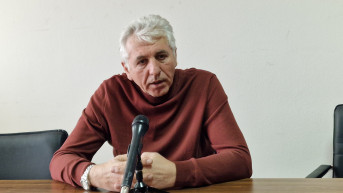
In Brussels, the Community of Serb-majority Municipalities was put on a pedestal yesterday, as the only solution for the safety and security of the Serbs and the Serbian Orthodox Church in Kosovo, and the international community is in a hurry to start a negotiation process between Belgrade and Pristina in order to prevent another flashpoint in Europe, the former president of the Provisional Executive Council of Kosovo and Metohija, Zoran Andjelkovic said for Kosovo Online.
He concludes, based on yesterday's talks between Serbian President Aleksandar Vucic and Albin Kurti in Brussels with European mediators that the CSM is set as the basis of all negotiations and platforms, including the Franco-German proposal.
"The most important thing is that several talks were held yesterday and that the president held talks with both Lajcak and Borrell before this joint meeting, and that the topic of the Community of Serb-majority Municipalities was placed at a high level of what is a priority, what is the basis of any talks and any platforms, regardless of whether they are called Franco-German or European, in the sense of creating conditions for the safety and security and functioning of the Serbs in Kosovo," Andjelkovic told Kosovo Online.
He believes that if the CSM is not put on a "pedestal" and the conditions for the safety, independence and security of the Serbian Orthodox Church in the territory of Kosovo are not ensured, any other talk about normalization on technical issues such as passports, ID cards, flags, and similar things become worthless.
When asked if there had been a hurry to end the dialogue between Serbia and Kosovo before the 10th anniversary of the signing of the Brussels Agreement, Andjelkovic said that the international community had been in a hurry because of the whole atmosphere that was happening in Europe - because of the war in Ukraine.
According to him, it is obvious that the US and some serious European countries are not comfortable with any new conflict or violence that would occur in another part of Europe.
"The spiral of violence that Kurti produced since February 24 last year, since the beginning of the conflict or the special operation in Ukraine, could certainly have escalated into serious conflicts at one moment if it had not been for the restraint of the Serbian community and Serbia, and that would have meant ethnic cleansing, which Kurti wished for. This could also produce a conflict between the Serbian Army and them, and objectively they would break, and that would then be our conflict with NATO," Andjelkovic assessed.
When it comes to the Community of Serb-majority Municipalities, Andjelovic says that it is necessary for Kurti to start the process of creating the conditions for the establishment of the Community of Serb-majority Municipalities, in order to realize everything that was discussed yesterday through eleven items, and with which he (Kurti) absolutely agreed.
All the Albanian leaders in Kosovo, Andjelkovic notes, after the negotiations in Brussels attacked Kurti in two directions.
"It is one thing that they are attacking him because he said in the election campaign that he was not interested in talks with Belgrade and that it was in seventh place, that he would never form the CSM. They attacked him yesterday, of course, all of them, immediately after the Borrell press conference called out that he had now de facto accepted the formation of the CSM", Andjelkovic stated.
Also, the opposition in Kosovo called out Kurti because of earlier claims that the CSM would be discussed only in the case of mutual recognition, Andjelkovic says, stressing that yesterday it was shown that "there is nothing to come of it".
"What President Vucic said in the Parliament that Serbia would never recognize and that he would fight to keep Kosovo out of the United Nations is de facto confirmed by these papers," Andjelkovic said.
However, he explains that a new space is now opening, which Serbia has not been able to prevent even so far, such as the Council of Europe, where Western countries have an absolute majority and "were sponsors for seizing Kosovo from Serbia".
When it comes to the competencies of the CSM, Andjelkovic says that a "road map" was established in 2015, where an implementation team was formed, and in 2018, based on 22 items on the powers of the CSM; it drafted a document.
"An attempt to avoid that or to bypass the competencies provided for there means that the CSM was not formed, or more precisely, that the Brussels Agreement was not implemented as it is written, and it clearly states in two items of the document published by the EU, that it is necessary to consistently implement everything that was previously agreed upon – the CSM is one of those," Andjelkovic said.
He pointed out that last night he had had the opportunity to speak with a special envoy for the Balkans, and that he had spoken with him precisely on the topic of the CSM, to which, he says, he received confirmation that "it was written down as an obligation to implement what was agreed and signed in 2013 and 2015, as written, in order to continue with the implementation of all other documents".
When asked whether the CSM would guarantee the safety of the Serbs in Kosovo, Andjelkovic emphasizes that Serbia is insisting on this project precisely for these reasons.
"The goal of the CSM is not to repeat something like Strpce or Klokot Banja, without talking about everything that happened in the north of Kosovo," Andjelkovic said.
Andjelkovic points out that he personally was not in favor of the Serbs leaving the institutions, but that he proposed to go on strike until the current issues surrounding the formation of the CSM were resolved.
He explains that now, it is not possible to expect the Serbian community to return to the institutions before the implementation of the CSM begins, which, he warns, creates a serious security vacuum.
"That is why the CSM is so important, but also another issue, which, as the Albanian press says, is the creation of conditions for the extraterritoriality of Serbian churches and monasteries in Kosovo, so that it does not happen to us in some future period that the Serbian patriarch reaches the administrative line in Merdare, and he cannot come to his property," Andjelkovic said.
When asked whether the European proposal would be the final solution to the Kosovo issue, Andjelkovic believes that this is uncertain.
"I hope that my generation will not experience the final solution as Pristina sees it. In some EU documents, it is said that mutual recognition could be discussed in 2030, and until then, it is highly unlikely," Andjelkovic said.


0 comments