
Abolition of the veto right in the EU – Would it benefit the Western Balkan countries?
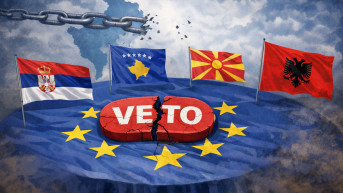
The European People’s Party (EPP) recently raised the issue of abolishing the veto right of European Union member states, which, according to interlocutors of Kosovo Online, would be a lengthy process requiring amendments to the EU’s founding treaties. However, such a scenario could potentially facilitate the integration process of the Western Balkan countries. Commenting on the potential accession of Western Balkan states to the EU without veto rights, in line with a proposal by Albanian Prime Minister Edi Rama, the interlocutors argue that the veto issue should not be the region’s primary focus, as key decisions will ultimately be determined by the Union’s largest economic and military powers.
Written by: Jelena Novakov
Hungarian Prime Minister Viktor Orbán recently stated that the European People’s Party, which includes Hungary’s opposition party Tisza, has adopted a strategy aimed at stripping EU member states of their veto rights and transforming the Union into a military alliance.
Official Budapest would regard such a move as a threat to sovereignty, and according to Orbán, Hungary will not relinquish even the smallest part of its national interests, despite “opposition lobbyists and lobbyists from Brussels.”
Within the EU, the veto right is used, among other things, as a mechanism to block the membership of certain countries. Orbán has openly clashed with Brussels over the potential fast-track accession of Ukraine following the end of the war, as well as over the continued import of Russian energy resources. Due to Hungary’s disagreement with this enlargement policy—viewed by Brussels as central to European security—the EU leadership has reportedly considered ways to bypass Budapest’s approval.
Orbán’s position on Ukraine is shared by Slovak Prime Minister Robert Fico, whose country also relies heavily on Russian gas. In his view, Serbia, Montenegro, and Albania are far better prepared for accession than Ukraine.
“Hungary has long been fair toward Ukraine by saying it would not agree to Ukraine’s EU membership, and Slovakia would say that Ukraine can join the EU provided it meets all the necessary criteria. We cannot now deceive Serbia, Montenegro, or Albania. These countries are 100 times better prepared for accession than Ukraine,” Fico said.
Regarding the possible accession of new members without veto rights, Albanian Prime Minister Edi Rama recently stated that Albania is ready to renounce its veto right and its European Commissioner in exchange for membership. As he explained, this would serve as a guarantee to partners that Albania would not become a blocking factor within the Union, while its interests could be represented by another member state.
Abolishing the rule that certain decisions must be adopted by consensus would require amendments to the founding treaties. Eliminating the veto could enable Europe to make decisions more swiftly and efficiently in the new geopolitical context. On the other hand, admitting new members who would temporarily lack veto rights risks creating “second-class members” and undermining European democracy.
A Complicated Process
Andreja Stojkovski, Executive Director of the Prespa Institute in North Macedonia, assessed that it is possible that EU member states may eventually lose their veto rights, but described it as a “multi-layered,” complex, and lengthy process. He added that this is currently the position of only one political grouping, which cannot decide on the matter alone.
Commenting on the EPP strategy, Stojkovski believes abolishing the veto is possible, though he understands Orbán’s position.
“Given global relations, it is probably possible—very possible. But how quickly would it happen? Probably not very quickly, because procedures are such. Procedures do not always conclude in national parliaments. This is likely a political position that would later need to be discussed with other European political parties to find some common ground,” Stojkovski told Kosovo Online.
The next EU enlargement is expected by 2030. However, Stojkovski notes that adopting the EPP strategy would take even longer.
“At this moment, projections by the EU and the Commission suggest that the next enlargement could take place in 2028 or 2030. That is too soon to complete the entire procedure. And this is the position of one grouping. There will be opportunities for agreements and negotiations. It would need to be incorporated into the founding treaties. There is a possibility that such elements could be included in the accession treaties of, for example, Montenegro and Albania, since accession treaties modify the founding treaties,” he explained.
According to him, abolishing the veto could benefit Western Balkan countries, but nothing will be achieved in such a short timeframe.
“Member states are unlikely to agree. Such an approach would require reform of the founding treaties, which would entail at least one intergovernmental conference. Even with a short negotiation period, a ratification process would follow—not only within European institutions but also at the national level. National ratification in at least two member states would be complicated. In France and the Netherlands, a national referendum would likely be required, which could pose a serious problem. Therefore, the process could not be completed in less than three years, perhaps even longer. It could be good for the Western Balkans, but given our desire for accelerated integration and earlier accession, that is too long a period,” Stojkovski clarified.
Qualified Majority
On the other hand, Petar Curcic, a researcher at the Institute for European Studies in Belgrade, believes that the veto right will not be abolished, as this would require amendments to the EU’s founding treaties. He expects that most decisions will continue to be adopted by qualified majority, while other key decisions will remain within the domain of member states.
Curcic told Kosovo Online that the veto right has already been significantly relativized through qualified majority voting, which currently requires at least 15 of the 27 member states representing at least 65 percent of the EU population to vote in favor of a decision.
“We can say that most decisions are already adopted by qualified majority. In these EU reforms, often mentioned, both France and Germany have taken the lead, depending on the phase. Germany has proposed abolishing the veto and introducing qualified majority voting. Some parties have insisted on this even more strongly,” Curcic noted.
Nevertheless, he emphasizes that abolishing the veto would require amendments to the founding treaties, which makes such reform unlikely. Most decisions will continue to be made by qualified majority, while key decisions will remain with member states. Amending the founding treaties would also be required to admit new members without veto rights.
Curcic pointed out that candidate countries in the region have disputes with certain member states and that there is always a group of countries blocking enlargement.
“We always have some country or group of countries blocking enlargement. In the case of Macedonia and Montenegro—Montenegro has tensions with Zagreb, while Macedonia has problems with Bulgaria and previously with Greece. Serbia, on the other hand, due to political relations and its refusal to impose sanctions on Russia, faces consequences in relations with the Baltic states, Poland, Scandinavian countries, and Croatia is often mentioned as well,” he explained.
Focus on Membership
The issue of the veto and its potential abolition must be resolved by the member states themselves and cannot be addressed through suggestions from candidate countries, says analyst and Editor-in-Chief of TV Suri in Tirana, Bledian Koka. He adds that the Western Balkan candidates should focus on EU membership and improving living standards, since having veto rights would not mean their voice carries the same weight as that of economically powerful states.
According to him, the idea of abolishing the veto comes more from candidate countries than from member states.
“In my opinion, the proposal to abolish the veto in the context of new countries joining the EU is primarily a demand or proposal from candidate countries to remove doubts that Eurosceptic states may have regarding their membership. Especially since in the accession process of Western Balkan countries such as Albania, Montenegro, or North Macedonia, historical problems could serve as obstacles to their membership—and even to Serbia’s, if that occurs. Therefore, I believe this proposal is less an EU position and more a proposal from countries aspiring to membership. The question remains whether the veto should be abolished in the European Union,” Koka told Kosovo Online.
He notes that Western Balkan candidates should define their priorities regarding what they want to achieve through potential EU membership.
“EU member states—the ‘lions’ at the big table—must resolve this issue among themselves. This solution cannot be achieved by using ‘proxy proposals’ from aspiring countries. We must be honest as citizens of these countries. Is it more important for us to make geopolitical decisions about our membership, or to achieve our goal before becoming members? And that goal is convergence—or even equalization—of living standards, democratic functioning, and economic freedoms with EU standards. That is the purpose of EU membership,” Koka said.
He therefore believes that accession and improving citizens’ living standards should remain the focus, since Western Balkan countries would not be able to outvote major EU powers in any case.
“The will of economically and militarily powerful EU member states cannot have the same impact as the wishes of those in a weaker position,” he added.
“George Orwell put it perfectly in Animal Farm. Even in Animal Farm, some animals are more equal than others. This logic does not fail to operate in the EU either. Of course, the will of Germany, the economic ‘locomotive’ of Europe, cannot be equated with that of Romania or Bulgaria, even though they also have veto rights. When it comes to major decisions and political cohesion, the will of the ‘elephants’—France, Germany, and England, should it return to the Union—prevails. It does not take much to understand this. For that reason, those who believe EU membership is something easily obtained, or who predict the temporary nature of the EU, are the same people who predict the collapse of the United States. As far as I know, that is not expected to happen,” Koka concluded.
The United States and a Stronger Europe
Diplomat Albert Prenkaj stated that, due to the need for greater European independence from the United States, a new coalition of six major European economies has recently emerged. According to him, these countries often function without the need for full consensus among all 27 EU members, which could accelerate the European integration of Western Balkan states.
“Since January 2026, a new coalition of six major European economies—Germany, France, Spain, Italy, Poland, and the Netherlands—has emerged to accelerate decision-making in defense, economic, and security matters, creating a ‘two-speed Europe’ to counter slow growth and geopolitical challenges. This initiative aims to strengthen competitiveness and defense capacities, often acting without the need for full consensus among all 27 EU members,” he told Kosovo Online.
He stressed that this could accelerate the integration of Bosnia and Herzegovina, Serbia, North Macedonia, and Kosovo.
“I believe this initiative could further accelerate the integration of the remaining countries in our region, since Albania and Montenegro are already on a secure traditional path toward integration. In the event of geopolitical disagreements along the line established by the Yalta Agreement (1945), which extends to our region, it could be viewed as a new buffer zone whose security would be guaranteed by NATO,” Prenkaj assessed.




0 comments