
Koka: The issue of the veto in the EU must be resolved by the member states, the goal for regional countries should be membership
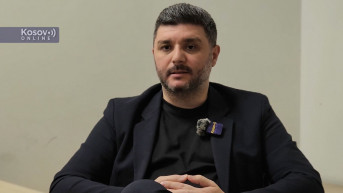
The issue of the veto and its possible abolition in the European Union must be resolved by the member states themselves and cannot be settled through suggestions from candidate countries, says analyst and Editor-in-Chief of TV Syri from Tirana, Bledian Koka, adding that the goal for candidates from the Western Balkans should be EU membership and improving living standards, because the right of veto certainly does not mean that their word would carry the same weight as that of economically strong countries.
Koka told Kosovo Online that the veto has served the purpose of blocking certain countries, but that it has also proven useful in resolving disagreements within the bloc.
“There were moments when the veto was used as a blocking mechanism for certain countries, even though they met the conditions and standards. Due to conflicts between countries, this mechanism served to delay the process. A concrete case was the conflict between Croatia and Slovenia over the maritime border dispute. However, time has shown that this type of blocking mechanism by Slovenia toward Croatia ultimately served both countries in resolving an old conflict. That conflict was eventually resolved due to a shared interest,” Koka explained.
However, he believes that the idea of abolishing the right of veto comes more from candidate countries than from member states.
“The proposal to abolish the veto within the framework of new countries joining the EU, in my opinion, is primarily a request or proposal by candidate countries to remove doubts that Eurosceptic countries may have regarding their membership. Especially since we are in the process of accession of Western Balkan countries such as Albania, Montenegro, or North Macedonia, whose historical issues could serve as obstacles to their membership, and even to Serbia’s membership, if that were to occur. Therefore, I think this proposal is not so much a position of the EU as it is a proposal by countries aspiring to membership. The question is whether the veto should be abolished in the European Union,” Koka said.
He notes that candidates from the Western Balkans should define their priorities regarding what they want to achieve through potential membership in the European Union.
“EU member states, or ‘lions’ at the big table, must resolve this issue among themselves. This solution cannot be achieved by using ‘proxy proposals’ from countries seeking to join. We must be honest as citizens of these countries. Is it more important for us to make geopolitical decisions about our membership in this organization, or to achieve our goal before reaching membership? And that goal is to move closer to, or why not even equal, the standards of quality of life, the functioning of democracy, and economic freedoms with those of the European Union. That is the goal of EU membership,” Koka said.
He therefore believes that the issue of the region’s accession to the Union and improving citizens’ living standards should be the focus because, he underlines, Western Balkan countries would certainly not have the ability to outvote the major powers within the Union.
“The goal is not simply to have a membership card and present it as an electoral victory, while ultimately failing to achieve an improvement in citizens’ quality of life. If our goal is such that some leaders do everything to avoid membership based on merit, that serves neither the EU nor, even less, the countries aspiring to membership. Therefore, pressure should not be placed on the issue of the veto. The obstacle for Albania, Serbia, Montenegro, or Macedonia to be in the EU is not the veto. I do not believe that Albania has the strength to impose its will on Germany or France regarding certain decisions, nor would Montenegro, North Macedonia, or Serbia if they were to take this step,” Koka stated.
The will of EU member states that are economically and militarily strong cannot have the same impact as the wishes of those in a weaker position, he adds.
“George Orwell expressed this perfectly in his work ‘Animal Farm’. Even in ‘Animal Farm’, some animals are stronger than others. It is not that this logic does not function in the EU as well. Of course, the will of Germany, which is the economic ‘locomotive’ of Europe, cannot be equated with the will of Romania or Bulgaria, which also have the right of veto. When it comes to major decisions and political cohesion in decision-making, the will of the ‘elephants’ certainly prevails, which in this case are France, Germany, and England if it were to return to the Union. It does not take much to understand this. For that reason, I say that all those who think that EU membership is something that should be easily won, or who predict the temporary nature of the European Union, are the same ones who predict the collapse of the United States, but as far as I know, that is not expected to happen,” Koka concluded.



0 comments