
Abstention and declining support for Albanian parties: Voters’ response to the current situation and political offerings
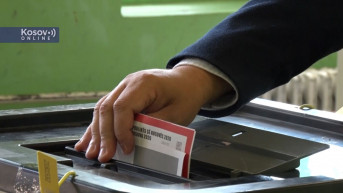
While the final election results and precise allocation of mandates are still pending, one fact is already clear: Kosovo’s snap parliamentary elections on Sunday recorded the lowest voter turnout since 2001. Lower turnout translated into fewer votes for Albanian political parties compared to the elections held in December and February last year. Analysts interviewed by Kosovo Online say voter abstention was a response to both the political situation and the choices offered to voters, who have grown weary of frequent elections that have failed to resolve Kosovo’s ongoing political crisis. They argue that the message was directed primarily at Self-Determination leader Albin Kurti, but also at other political actors, since there was no significant transfer of votes between parties—voters simply chose not to vote.
Written by: Jelena Milenkovic
The failure to reach an agreement on the election of a president led Kosovo to its third parliamentary election in just 16 months. Throughout the campaign, analysts noted, political parties focused largely on mutual accusations and assigning blame, while programs and policy proposals remained in the background.
Self-Determination leader Albin Kurti believed that the coalition led by his party, buoyed by its strong result in last December’s elections, could reach 60 percent of the vote. Former President Vjosa Osmani, who returned to the Democratic League of Kosovo (LDK), and the party’s leader Lumir Abdixhiku appeared to believe that her return would be enough to help the LDK recover from its disappointing December performance. The Democratic Party of Kosovo (PDK) continued its standard criticism of Kurti, while the Alliance for the Future of Kosovo (AAK) entered the election after changing both its name and party leadership.
Then came a rude awakening.
Overall turnout on Sunday was approximately 230,000 votes lower than in December last year. According to rough estimates and currently available data, Self-Determination won around 180,000 fewer votes than it did at the end of 2025. The Democratic Party of Kosovo also experienced a decline, while the LDK remained in third place, suffering a smaller drop despite having Vjosa Osmani as its main electoral asset. The Alliance also received fewer votes, though not dramatically fewer.
The reasons for lower turnout can be found both in the physical absence of many diaspora voters and in voter fatigue among the local Albanian population, which used abstention to send a message to the political establishment.
Voters Responded to the Political Situation Through Abstention
Political scientist Ognjen Gogic observed that voters in Kosovo responded to the political situation and the available political choices through abstention, and that there is no evidence that votes shifted significantly from one party to another.
“There was a huge decline in turnout, which can partly be explained by the fact that the diaspora was not present in Kosovo to the same extent as it was in December. However, that is not the only reason for the decline. The local population also abstained in large numbers and largely sat out these elections. Therefore, it cannot be said that voters moved from one party to another; rather, supporters of all parties opted for abstention,” Gogic told Kosovo Online, commenting on the message voters sent not only to Albin Kurti and Vjosa Osmani, but to the entire political class.
He stressed that Osmani’s performance amounted to a disappointment and that she failed to attract new voters to the Democratic League of Kosovo.
“She was someone who, in 2021, received around 300,000 preferential votes when she headed Self-Determination’s electoral list. At that time, she was elected president because there was a consensus within the Albanian community that she was the appropriate person for that position. That can no longer be said today. She failed to attract new voters to the LDK. The party remains in third place and, although it won a higher percentage than in December, it received fewer votes overall. For that reason, Osmani cannot be satisfied with the result, nor can she be credited with growth that, in reality, did not occur,” Gogic explained, adding that the outcome raises questions about Osmani’s future role on Kosovo’s political scene.
He also noted that the Alliance recorded the smallest decline in support, successfully weathering a change in leadership and the party’s rebranding. According to Gogic, this may serve as an example for other parties considering internal reforms as a path toward better results.
Voter Abstention a Negative Message for Kurti
Political analyst Artan Muhaxhiri from Pristina assessed that voter abstention sends a strong negative message to Albin Kurti, indicating that he must change his approach or risk losing even more support in future elections.
The large number of Self-Determination votes that were evidently absent this time did not go to rival parties.
“People did not want to vote for Kurti, but they also did not want to vote for other parties. That is why the Democratic Party of Kosovo also lost a significant number of votes,” Muhaxhiri told Kosovo Online.
He also argued that Vjosa Osmani failed, through her own actions, to deliver substantial support to the Democratic League of Kosovo because she lacked a convincing platform beyond populism and a pro-American orientation.
“There was an expectation that she would bring a significant number of votes to the LDK. However, that did not happen, and the responsibility lies with her because she did not offer voters a strong platform beyond populism and pro-American rhetoric. There was also her abrupt shift in attitude toward Albin Kurti. For five years they were close allies, and then they suddenly became bitter opponents,” Muhaxhiri pointed out.
LDK’s Hopes Dashed
Aleksandar Sljuka, an associate of the New Social Initiative NGO, agrees that Vjosa Osmani’s return to the Democratic League of Kosovo did not significantly affect the party’s electoral result.
“Osmani’s return had an impact, but not to the extent the LDK had hoped. I would say it perhaps improved the party’s result by one or two percentage points, but in terms of the overall ranking, that is not a significant difference,” Sljuka told Kosovo Online.
According to him, a much more important factor was the reduced presence of diaspora voters, which was reflected in significantly lower turnout compared to December’s elections. As a result, Self-Determination achieved a somewhat weaker result in percentage terms, while opposition parties performed slightly better.
“I think that was the key factor, together with voter fatigue. These were the third parliamentary elections in the last year and a half, and the fourth electoral process overall if we include the local elections held in two rounds in October last year. I believe some voters are simply tired of these processes. They see that nothing substantial is changing and that the situation is not improving, so some of them may have chosen to stay home. Osmani had an impact, but not to the extent hoped for by members of her old-new party,” Sljuka said.
He also believes that, for the opposition, the most important development is that Albin Kurti’s maximalist political strategy has given them an opportunity to regain relevance.
“They were written off after the December elections. Many believed that Osmani would be elected president for a second term and that Kurti would then secure another four years in power with a comfortable parliamentary majority. He had a maximalist vision and was unwilling even to concede the presidency to Vjosa Osmani, instead wanting someone from his own party. As a result, he has now placed himself in a position where he very likely no longer has a parliamentary majority, or at least not the level of political strength he enjoyed after the December elections,” Sljuka concluded.



0 comments