
Sljuka: Osmani did not deliver what the LDK had hoped for
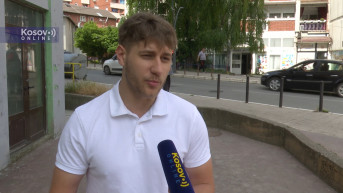
The return of former Kosovo President Vjosa Osmani to the Democratic League of Kosovo (LDK) did not significantly affect the party's election result, says Aleksandar Sljuka, an associate of the NGO New Social Initiative, adding that the more substantial difference in votes compared to the previous elections was caused by the absence of the diaspora and voter fatigue.
“Osmani's return did have an impact, but not to the extent that the LDK had hoped. I would say that it may have improved the party's result by one or two percentage points, but in terms of the overall ranking, it is not a significant difference,” Sljuka told Kosovo Online.
According to him, a much more important factor was the fact that the diaspora did not come to Kosovo, which was particularly reflected in the significantly lower turnout compared to December last year.
Because of that, he notes, Self-Determination achieved a somewhat weaker result in percentage terms, while opposition parties performed slightly better.
“I think that was the key factor, along with voter fatigue to some extent. These are the third parliamentary elections in the last year and a half, and the fourth election overall if we include the local elections held in two rounds in October last year. Therefore, I believe that some voters are tired of these processes. They see that essentially nothing is changing and that the situation is not improving, so some of them may have decided to stay at home. So the Osmani factor did have an impact, but not to the extent that people in her old-new party had hoped,” Sljuka said.
Asked whether the smaller number of votes won by Self-Determination was the result of the diaspora's absence or whether another party had taken some of its voters, he replied that both factors played a role, but that turnout, which was much lower than in the previous elections, was the most significant factor affecting the result.
“And that is the key difference in terms of the final results and the redistribution between the government and opposition camps. However, there are other factors as well. If we look at the LDK, they did stabilize their result compared to the December elections, when they recorded an unexpectedly poor outcome. That may be due to the Osmani factor, as well as the different election date. But in the end, what matters most is how many seats each party will have in parliament and what the final distribution will look like,” Sljuka said.
According to him, the most important thing for the opposition is that Albin Kurti, through what he describes as his maximalist vision, gave them a chance to “come back to life.”
“They were written off after the December elections. Many believed that Osmani would be elected president for a second time, and it seemed that Kurti would then have another uninterrupted four-year term with a parliamentary majority. He had a maximalist vision and was not willing to leave even that position to Vjosa Osmani, instead wanting someone from his own party. He has now put himself in a position where, most likely, although we will still have to see, he no longer has a parliamentary majority, or at least not the strength he had after the December elections,” Sljuka said.



0 comments