
Admission of Kosovo to international organizations - two Western policies or "good cop, bad cop" strategy?
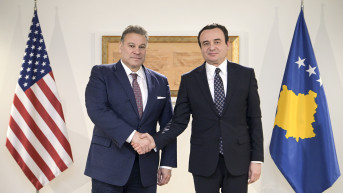
One of the barriers to Kosovo's membership in the Council of Europe was raised this week, and the discussion about the conditions under which Kosovo can cross the threshold of this organization was marked by somewhat different views in Washington and Berlin. The transatlantic "quarrel" raises the dilemma: are we witnessing the game of "good cop, bad cop" or does the West have two policies regarding Kosovo's entry into international organizations?
Namely, US Deputy Assistant Secretary Gabriel Escobar on one hand stated that, in addition to the return of land to the Visoki Decani Monastery, there are two other conditions for Kosovo's admission to the Council of Europe regarding land expropriation in the north and the Community of Serb-majority Municipalities, on the other hand, the Chairman of the Foreign Affairs Committee of the German Bundestag, Michael Roth, called the "additional conditions imposed by the US on Kosovo" unjust.
It was not only Escobar who reminded of Pristina's obligation regarding the Community of Serb-majority Municipalities but also US Assistant Secretary of State for European and Eurasian Affairs James O'Brien stated that progress in implementing the agreement on the Community of Serb-majority Municipalities is a key element for Pristina to get what it wants, "which is membership in an international institution".
The United States has observer status in the Council of Europe (whose members are 46 states), which Roth probably wanted to remind of when he referred to the "incomprehensible conditioning of Kosovo," stating that "the Council of Europe and its member states are in the driver's seat, not the US"
Interlocutors of Kosovo Online generally have no doubt that the West has the same goal - for Kosovo to become a member of both the Council of Europe and other organizations, but they point out that different strategies, nuances, and calculations are visible.
"Both the United States and leading European Union countries support Kosovo's membership in the Council of Europe, with the Americans believing that it is unnecessary to reward Albin Kurti ahead of the elections, given everything that is happening to the Serbian community in Kosovo. They also believe that this carrot should not be given until conditions related to expropriation and the Community of Serb-majority Municipalities are met, as it seems that Kosovo is being rewarded regardless of Washington's opposition," Stefan Surlic, Assistant Professor at the Faculty of Political Sciences says for Kosovo Online.
According to Surlic, the West currently has two different strategies but for the same goal.
"Germany, France, and Britain are united in supporting Kosovo on the international stage, seeing it as an act of goodwill and a way to exert greater pressure on Belgrade to accept Kosovo on the international stage and Kosovo's membership in international organizations. These are actually different readings: Germans and French are united in believing that providing Kosovo with more space on the international stage will unlock dialogue and lead to greater rights for the Serbs internally, while Americans are not convinced of that, and it has been shown on the ground that discriminatory measures by Pristina can permanently jeopardize the existence of the Serbian community in Kosovo," Surlic pointed out.
A retired professor and diplomat Darko Tanaskovic says that when it comes to major policies, there are not two Western policies, but only tactical operationalization of policy with a specific goal, which in this case means achieving acceptance of Kosovo as an internationally recognized state, even by Serbia.
"However, we must be careful because when we say that it is all the same policy, we overlook some nuances that are sometimes not insignificant and that could be used as a certain maneuvering space, if nothing else, to slow down that process because time is a very important factor in history that is often neglected," Tanaskovic says for Kosovo Online.
He points out that there is a great deal of tactics in the sometimes different statements of influential members of the international community.
"It exists because their goals in other fields in some other events change according to those circumstances, and those are events that they cannot fully control as they would like. That is why there is a constant calculation as to what extent such an approach to resolving, from their point of view, the Kosovo issue would be better in terms of realizing their interests. What would be better: to give Serbia a little room to breathe and seek maneuvering space to achieve their ultimate goal, or to put more pressure on Serbia and give full support to the authorities in Pristina? It is the same in the case of admission to the Council of Europe, and I think that efforts will be made to achieve that in the foreseeable future," Tanaskovic stated.
As he emphasizes, Serbia must not ignore the nuances that exist, but at the same time must be aware of the fact that it is still a part of the same policy with the ultimate, unified goal.
Regardless of the different views in America and Germany regarding the conditions Kosovo needs to fulfill to become a member of the Council of Europe, sociologist Vladimir Vuletic also assesses that there are not two Western policies on this issue, but that the goal is the same, which is to solidify Kosovo as a state in full capacity, including admission to all international organizations.
"Where there is a difference is that Americans have a more pragmatic approach and a broader perspective; their primary concern is the stability of the region. They believe that some form of compromise is necessary, which, from their perspective, does not entail any dilemmas regarding what is crucial, namely, Kosovo's independence. However, any compromise would involve a certain degree of autonomy for the Serbs, meaning the CSM. Therefore, they do not want to risk any internal resistance from the Serbs or open up the Serbian issue further in such an international situation. On the other hand, Germans have an approach that aims to minimize Serbia's power, significance, and role in the Balkans. That is the main difference," Vuletic points out for Kosovo Online.
Professor of Constitutional Law at the University of Pristina, Mazllum Baraliu, sees this question differently. He tells Kosovo Online that the West, or rather, the European Union as the largest regional organization, is in crisis because there are no unified views. Even politicians from one country, from the Quint member states, think differently about Kosovo, the Balkans, and the Kosovo-Serbia dialogue.
As he observes, they are not unified in actions or policies.
"Especially the European Union and its institutions have become fragile because there is no unified policy, nor coordinated internal actions, as the far right and far left oppose common EU policies, so it is in a permanent crisis, not only this year but in a cyclical crisis and unfortunately there is no unified policy, especially on the ground," Baraliu assesses.
According to him, the EU needs to focus on strengthening and behaving cohesively first within its ranks.


comments