
Agreement on Kosovo President: An impossible mission even after June 7?
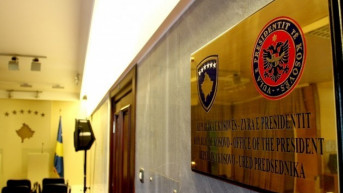
The issue of reaching an agreement on the election of a new president of Kosovo remains the main obstacle to stabilizing the political situation. According to analysts, as well as some politicians, the new election cycle will not automatically bring stability, and even if all political parties demonstrate political maturity and present their presidential candidates, this would not eliminate the threat of another deadlock. Analysts interviewed by Kosovo Online warn that the key risk arises once the presidential election reaches the parliamentary agenda, because the lack of a broader political agreement could once again push Kosovo into deep institutional paralysis.
Written by: Milena Miladinovic
The Democratic League of Kosovo announced that former Kosovo president Vjosa Osmani will be the party’s candidate for president, while party leader Lumir Abdixhiku will be its candidate for prime minister. Analysts in Kosovo believe that after the June 7 elections, and before the formation of a government, parliament should first vote on the election of the president in order to avoid another deadlock, while all parties, following the example of the DSK, should immediately present their presidential candidates.
Analysts interviewed by Kosovo Online believe that without substantive compromise and broader political consensus, Kosovo risks once again facing a familiar scenario instead of a solution — institutional deadlock and a new cycle of political paralysis.
Voters and the Distribution of Cards
Political scientist Ognjen Gogic told Kosovo Online that the Democratic League of Kosovo’s decision to present Vjosa Osmani as its presidential candidate is part of the election campaign, and that even if other parties were to present their presidential candidates before June 7, this would not guarantee that there would be no deadlock during the election of Kosovo’s president.
Gogic believes that by nominating Osmani, whom he describes as a strong candidate, the DSK is trying to influence voters.
“The call for all parties to disclose the names of their presidential candidates came from the DSK and is not necessarily motivated by a belief that this would later prevent deadlock during decision-making, but rather because it is their comparative advantage over other parties. It is part of the campaign. They came forward with this because they have a strong presidential candidate, Vjosa Osmani, and they are aware that if other parties did the same, it would influence voters. Voters would take that into account and it would give the DSK an advantage,” Gogic said.
According to him, even if other parties were to present their presidential candidates before the June 7 elections, this would not necessarily prevent another deadlock and obstruction once the election of Kosovo’s president reaches the agenda.
“Everything still depends on the distribution of cards, that is, the number of mandates the parties will have, as well as agreements primarily concerning the Government of Kosovo. The presidential office is symbolic and not decisive for political parties. When agreements are negotiated, everyone will consider whether they can gain something within the government and how to capitalize on that through ministries, portfolios, and other positions,” Gogic stated.
He added that announcing the name of a presidential candidate would only affect voters and, consequently, lead to a different distribution of political forces on the scene.
Agreement Impossible
Political analyst Shkelzen Maliqi believes that Kosovo will once again fall into political crisis after the June 7 elections because no party can win 80 seats in the Assembly of Kosovo required to elect a new president, while experience so far has shown that an agreement on this issue is impossible.
Maliqi told Kosovo Online that Kosovo Prime Minister in technical mandate and Self-Determinationleader Albin Kurti has so far failed to understand that the position of president is representative of all citizens.
According to him, if a solution is to be found, compromise must also be sought.
“Whether it will be found or not, we will see. Kurti announced that there will be new elections if he does not receive, as he expects, 70 percent of the vote. That is almost impossible,” Maliqi said.
As he explained, it has so far proven impossible to reach an agreement on the issue of the president, while it would suit Kurti to remain in power in a technical mandate.
“It became clear that it was not possible to reach any sort of agreement. Everyone is now watching how they will perform in the elections. It did not suit Kurti for the elections to be postponed at least until the beginning of summer, when the diaspora arrives, so that he could once again achieve what he achieved before New Year. I do not believe there is a consensus candidate. There are many people who are neutral and not members of political parties — respected intellectuals and similar figures — but Kurti is using this in order to remain in power, if possible indefinitely, as acting prime minister,” Maliqi said.




0 comments